
Monday brought the most intense military exchange since the ceasefire took effect on April 8 — as the first day of Project Freedom triggered a coordinated Iranian response that drew in neutral nations, sent missiles over Dubai, and pushed the fragile truce to its breaking point.
What happened on Monday
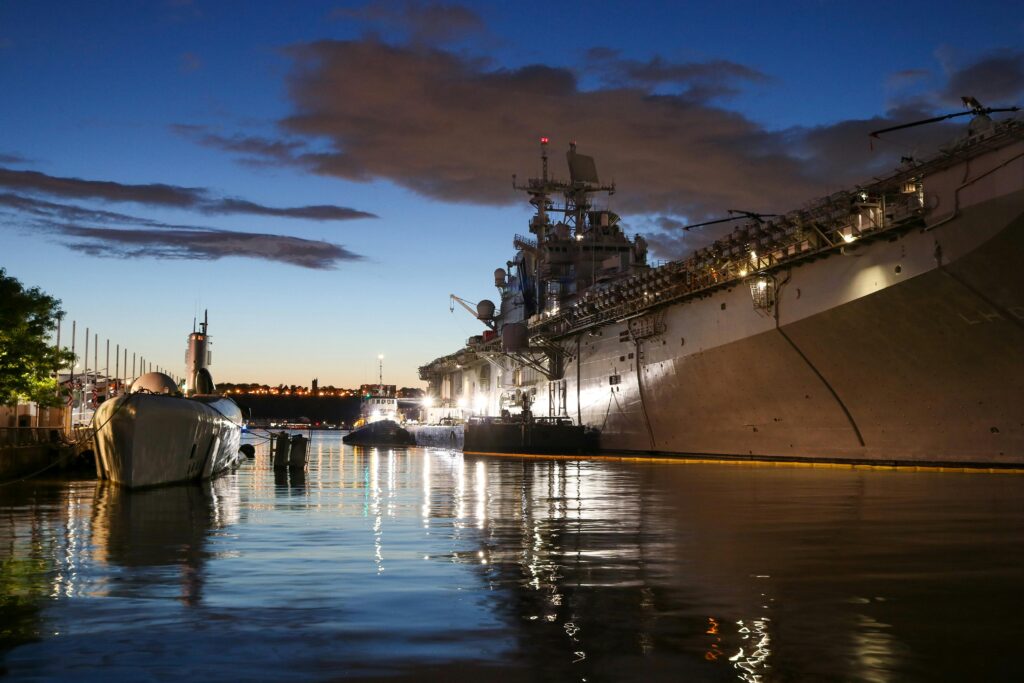
The first full day of Project Freedom — the U.S. initiative to escort stranded commercial vessels out of the Persian Gulf through the Strait of Hormuz — immediately escalated into direct confrontation. Iran’s Islamic Revolutionary Guard Corps launched a coordinated response involving cruise missiles, drones, and small fast boats targeting both U.S. Navy warships and commercial vessels under American protection. U.S. forces engaged all incoming fire.
Admiral Brad Cooper, head of U.S. Central Command, confirmed that Apache and Seahawk helicopters destroyed six Iranian small boats that were threatening commercial shipping, and that U.S. forces successfully intercepted all missiles and drones fired at both Navy ships and the vessels under protection. Trump subsequently posted on Truth Social that the total number of Iranian boats destroyed was seven.
“Iran has taken some shots at unrelated Nations with respect to the Ship Movement, PROJECT FREEDOM, including a South Korean Cargo Ship. We’ve shot down seven small Boats or, as they like to call them, ‘fast’ Boats. It’s all they have left.”
— President Donald Trump, Truth Social, May 4, 2026
South Korean cargo ship struck — engine room fire
The most significant collateral incident of the day was the attack on the HMM Namu, a South Korean-flagged cargo vessel, which was struck by IRGC forces near the UAE coast, triggering an engine-room fire. The crew was reported safe. The attack triggered missile alerts across Dubai and Sharjah, which were cleared after it became apparent the projectiles had struck the vessel rather than UAE territory. Trump called on South Korea to join the mission in response, writing: “Perhaps it’s time for South Korea to come and join the mission!”
UAE air defenses activated — 19 projectiles engaged
Iran separately targeted the United Arab Emirates with a wave of ballistic missiles, cruise missiles, and drones — the first such strikes on UAE territory since the ceasefire came into effect on April 8. The UAE Ministry of Defense confirmed that its air defense systems engaged 12 ballistic missiles, three cruise missiles, and four drones, resulting in three moderate injuries. It would mark a significant escalation if confirmed, as the UAE has maintained a carefully neutral posture throughout the conflict.
7
Iranian fast boats destroyed by U.S. forces
19
Iranian projectiles engaged by UAE air defenses
2
commercial ships transited Hormuz under Project Freedom
Iran denies, disputes, contradicts
Iranian state media rejected multiple elements of the U.S. account. State broadcaster IRIB, citing the IRGC, denied that any commercial vessels had transited the strait under Project Freedom, calling U.S. claims “baseless and entirely false.” Iran also denied that any of its boats had been sunk. Separately, a warning attributed to Iranian army chief Major General Amir Hatami — posted on X and widely circulated — was later identified by Iran’s semi-official Fars News Agency as coming from a fake account, not from the actual military command.
The contested information environment reflects a pattern that has characterized the entire conflict: both sides have consistently disputed each other’s battlefield claims, and independent verification of events inside or near the strait remains extremely difficult.
Trump’s warning — and a diplomatic signal
In an interview with Fox News, Trump delivered his sharpest threat to date, warning that Iranian forces would be “blown off the face of the Earth” if they attempted to target U.S. ships in the strait or the Persian Gulf. At the same time, he told the network that Iranian negotiators were being “far more malleable” than previously, and outlined two paths forward: a good-faith deal or a resumption of military operations.
Treasury Secretary Scott Bessent told Fox News that the U.S. has “absolute control” of the Strait of Hormuz and dismissed Iran’s naval capability as “a band of pirates” — language that signals Washington’s intent to frame the day’s events as a decisive demonstration of U.S. military superiority rather than a dangerous escalation.
The ceasefire under maximum strain
Monday’s events represent the most serious test of the ceasefire since it came into effect on April 8. Trump told Congress last week that hostilities between U.S. and Iranian forces had “terminated” — citing no exchange of fire since April 7. That claim now sits in awkward tension with Monday’s confirmed military exchange, even as the White House frames the engagements as defensive actions under Project Freedom rather than offensive operations against Iran.
The distinction matters legally and diplomatically, but on the ground the line between “defensive escort operation” and “active combat” has effectively collapsed. A press conference by Secretary of Defense Pete Hegseth and Chairman of the Joint Chiefs Dan Caine was scheduled for Tuesday morning to address the day’s events — the clearest signal yet that Washington views what happened on Monday as requiring formal explanation.
What comes next
Iran’s decision to attack a South Korean vessel — a neutral country with no involvement in the conflict — and to strike the UAE marks a significant expansion of the conflict’s geographic and diplomatic scope. If either government formally attributes Monday’s strikes to Iran and demands accountability, the diplomatic fallout could accelerate rapidly. Oil markets, which had shown signs of easing following Iran’s new negotiating proposal last week, will be watching Tuesday’s Hegseth-Caine press conference closely for any indication of whether Project Freedom continues, pauses, or escalates further.
Related Posts
Trump Awaits Iran’s Response and Threatens to Resume Bombing If Deal Is Rejected — Day 70 of the War
As the U.S. and Iran continue exchanging fire in the…
UAE Announces Exit from OPEC in Major Shift for Global Oil Market
The United Arab Emirates has announced it will leave the…
Who Is Raúl Castro? Cuban Revolution Figure Faces U.S. Murder Charges Decades Later
Raúl Castro has once again become a central figure in…
