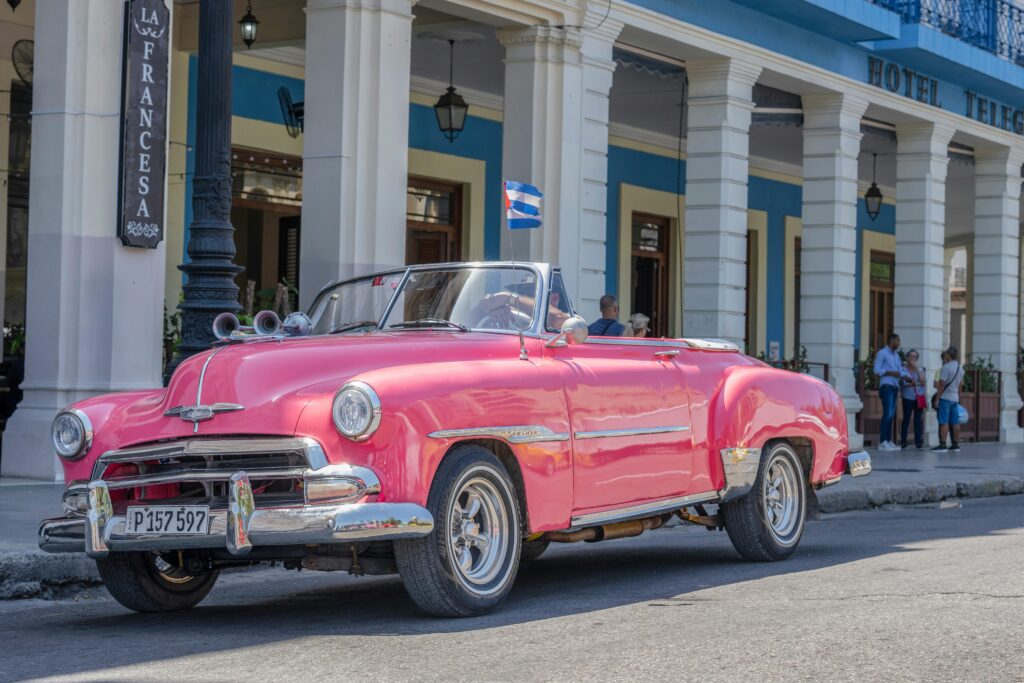
Speaking at a forum in Palm Beach, Florida on May 1, President Trump described Cuba as his next geopolitical target, suggesting an aircraft carrier could force the island’s government to surrender — remarks that came the same day he signed a broad executive order expanding economic sanctions on Havana.
The remarks: joke, signal, or policy?
Trump made the comments while recognizing a Cuban-born architect in the audience at the Forum Club of the Palm Beaches. Referencing the man’s origins, Trump said the U.S. would be taking over Cuba “almost immediately” — then pivoted to describe a hypothetical military scenario involving the USS Abraham Lincoln aircraft carrier stopping 100 yards off Cuba’s coast on its return from Iran, with Cuban leaders responding by saying “thank you very much, we give up.”
Trump appeared to be smiling as he spoke, and the audience laughed. He partially walked back the comment seconds later, saying Cuba has problems and that he prefers to finish one thing at a time — a reference to the ongoing situation with Iran. The White House did not immediately clarify whether the remarks were intended as a hypothetical or reflected an actual policy direction.
“He comes from a place called Cuba, which we will be taking over almost immediately. Cuba’s got problems. We’ll finish one first. I like to finish a job.”
— President Donald Trump, Forum Club of the Palm Beaches, May 1, 2026
New sanctions signed the same day
The comments were not made in a vacuum. On the same day, Trump signed an executive order broadly expanding U.S. sanctions targeting the Cuban government and its affiliates. The new measures apply to foreign individuals and companies operating across virtually every sector of Cuba’s economy — including energy, defense, metals and mining, financial services, and security. The order amounts to a sweeping secondary boycott that could affect third-country companies doing business with Havana, significantly escalating economic pressure on the island.
A pattern of escalating rhetoric since February
Friday’s remarks are the latest in a series of increasingly pointed statements about Cuba from the Trump administration. In late February, Trump told reporters outside the White House that Secretary of State Marco Rubio was in discussions with Cuban leaders “at a very high level” and raised the possibility of a “friendly takeover.” By March, Trump had declared “Cuba is next” at a Miami investment forum, while simultaneously hinting that a non-friendly takeover was also possible. In April, he vowed a “New Dawn for Cuba” at a Phoenix rally. The progression suggests a deliberate escalation of public pressure, mirroring tactics previously applied to Venezuela, Panama, and Greenland.
Cuba’s economic vulnerability as leverage
Trump and his administration have repeatedly framed Cuba’s severe economic crisis as creating an opportunity for Washington. Trump has said Cuba has no money, no oil, and no food, and has characterized the country as a nation in deep trouble that wants U.S. help. Rubio, a Cuban American who has long advocated regime change in Havana, is described as the lead official on the Cuba file. Whether the administration is pursuing a genuine diplomatic opening or using the appearance of talks as cover for a coercive pressure campaign remains unclear.
Context: a broader Western Hemisphere strategy
Cuba fits into a wider pattern of Trump’s second-term foreign policy in the Americas. Since taking office in January 2025, Trump has proposed to “own” Gaza, “run” Venezuela — claiming more than 80 million barrels of Venezuelan oil have been transferred into U.S. government possession — and has repeatedly pressured Canada, Greenland, and Panama over territorial and sovereignty questions. He has framed these ambitions through the lens of what he calls the “Donroe Doctrine,” a reference to the Monroe Doctrine and his own brand. Cuba, long one of Washington’s most intractable adversaries, now appears to be the next country in that sequence.
International reaction
The remarks drew immediate international attention, with multiple major outlets flagging them as a significant geopolitical signal regardless of their tone. Cuba has not issued an official response. The situation remains fluid, and the gap between Trump’s rhetorical posture and a concrete policy action — as has been the case with Greenland and Canada — may prove considerable.
Related Posts

FBI Investigates Mysterious Deaths and Disappearances of Scientists in the U.S.
U.S. authorities have launched an investigation into a series of…

Sued by Apple but still leaking: Jon Prosser reveals iPhone 18 Pro and foldable iPhone details despite ongoing lawsuit
Apple sued YouTuber Jon Prosser in July 2025 for allegedly…
Iran President Rejects US Demands as “Unrealistic” Amid Escalating Strait of Hormuz Crisis
Iran’s president has sharply criticized recent demands from the United…
