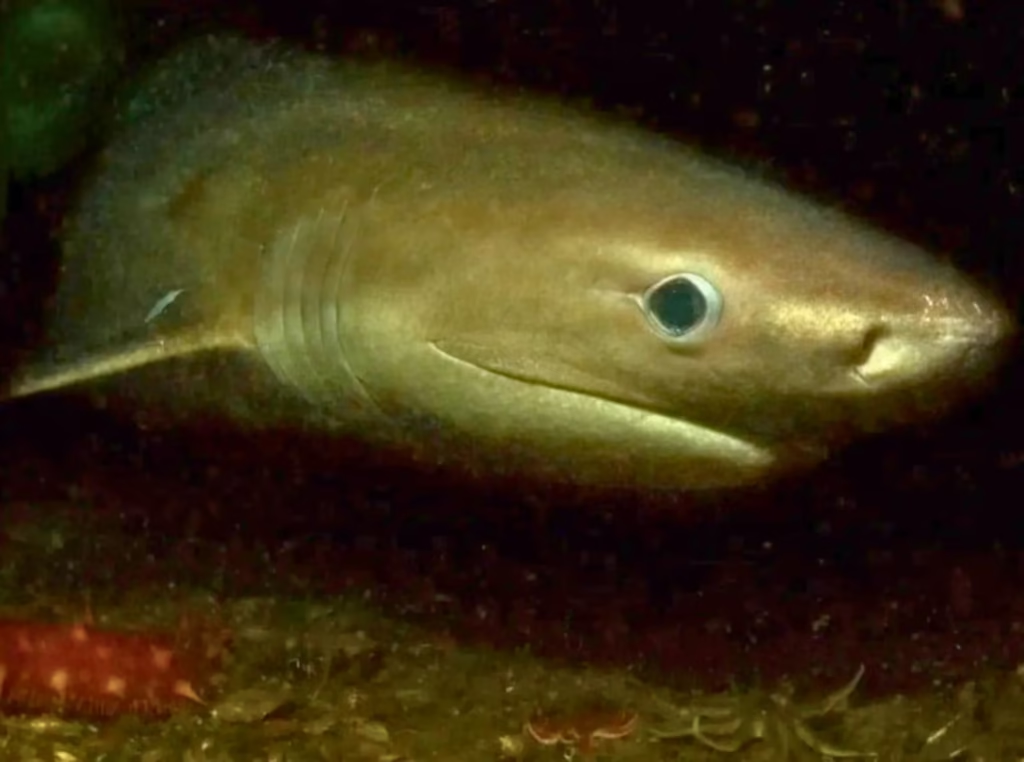
Marine researchers are drawing attention after sightings of a rare deep-sea shark species described as a “living fossil” were reported near the U.S. coastline.
The animal identified by scientists is the bluntnose sixgill shark — an ancient predator whose evolutionary lineage dates back hundreds of millions of years, long before dinosaurs dominated Earth.
According to marine experts, the species is rarely observed because it normally inhabits:
- extremely deep ocean waters,
- low-light environments,
- and remote marine ecosystems.
Researchers were surprised after several large specimens were reportedly found swimming in unusually shallow waters near Washington State’s Puget Sound in the United States.
The bluntnose sixgill shark can reportedly grow to:
- more than 14 feet (4.2 meters) long,
- and weigh hundreds of kilograms.
Unlike most modern sharks that possess five gill slits, this ancient species has six — one of the characteristics that makes it especially unique among marine predators.
Scientists believe the region may serve as:
- a breeding ground,
- migration corridor,
- or nursery area
for younger sharks.
Marine biologists are now conducting extensive monitoring efforts involving:
- satellite tracking tags,
- tissue sampling,
- movement analysis,
- and behavioral studies
to better understand the species’ migration patterns and feeding habits.
The discovery generated major online attention because sixgill sharks belong to one of the oldest surviving shark lineages still existing today. Experts say sharks first appeared roughly:
- 450 million years ago,
making them significantly older than dinosaurs.
Despite their intimidating appearance, researchers emphasize that sixgill sharks rarely interact with humans due to their preference for deep-water habitats.
Scientists also noted that studying ancient shark species may help researchers better understand:
- ocean ecosystem evolution,
- prehistoric marine life,
- and long-term environmental adaptation.
The renewed fascination surrounding prehistoric marine predators continues fueling public interest in:
- megalodon theories,
- deep-sea exploration,
- and undiscovered ocean species.
Experts estimate that large portions of Earth’s oceans remain unexplored, leaving many deep-sea mysteries still unknown to science.
Related Posts

JBS Shares Crash in New York After US Beef Operations Weigh Heavily on First-Quarter Earnings
Shares of JBS fell sharply on the New York Stock…

Nex Playground Review: The Motion-Controlled Console That Gets the Whole Family Moving
Overview The Nex Playground is a home video game console…

U.S., Mexico, and Canada announce coordinated Ebola travel measures ahead of World Cup 2026 — including mandatory isolation for the DRC national team
The three host nations issued a joint statement on Thursday…
