A Japanese biotech company has begun human clinical trials of a drug that could allow adults to grow a third set of teeth by blocking a protein that keeps dormant tooth buds inactive. The science is real, the trials are underway — but the treatment is still years away, and the claims circulating online often go far beyond what the evidence currently supports.
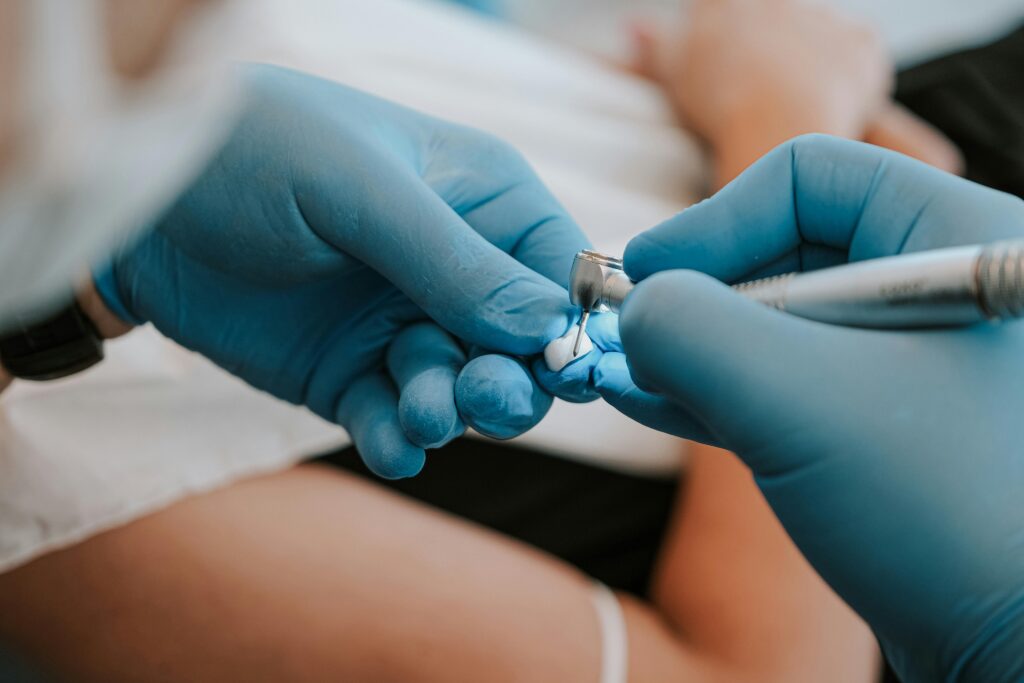
The biology: why adult teeth don’t regrow — and how the drug changes that
Human beings, like most mammals, are diphyodonts — we grow two natural sets of teeth. Baby teeth are replaced by permanent ones, and after that, the biological machinery for tooth development goes quiet. The reason is not that the raw material disappears: humans retain dormant tooth buds — embryonic precursor structures capable of developing into new teeth — throughout their lives. What keeps them inactive is a protein called USAG-1, encoded by a gene of the same name. USAG-1 functions as a biological suppressor, preventing those dormant buds from activating after the second set of teeth has emerged.
The core insight driving the current research is that blocking USAG-1 could, in theory, remove that suppression and allow the dormant buds to develop into a genuine third set of teeth. The concept was validated in animal models: a 2021 study published in Scientific Reports demonstrated that mice treated with an anti-USAG-1 antibody grew additional teeth beyond their normal set. A 2023 follow-up paper in the journal Regenerative Therapy confirmed that the same anti-USAG-1 approach could address congenital tooth agenesis — the genetic condition that prevents a full set of teeth from developing — in animal subjects, and described cell-free molecular therapy as potentially more suitable for tooth regeneration than conventional tissue engineering approaches.
The drug: TRG-035 and the P26 peptide
The clinical program is being run by Toregem Biopharma, a Japanese biotech startup co-founded by Dr. Katsu Takahashi of the Medical Research Institute Kitano Hospital in Osaka — the scientist who has led this line of research since graduate school. The company has two candidate treatments in development. The first, designated TRG-035, is a monoclonal antibody that targets and neutralizes the USAG-1 protein. The second, known as the P26 peptide, is a smaller molecular compound that operates through a similar biological pathway and has also advanced to Phase I human clinical trials.
“The idea of growing new teeth is every dentist’s dream. I’ve been working on this since I was a graduate student. I feel there is a reasonable chance this will work.”
— Dr. Katsu Takahashi, Medical Research Institute Kitano Hospital, Osaka
1%
of humans have anodontia — congenital absence of teeth
600K+
people in Japan alone live with congenital tooth loss
2030
earliest estimated availability if trials succeed
Where the clinical trials stand right now
Phase I trials — focused exclusively on safety in healthy adult volunteers — began in late 2024 at Kyoto University Hospital. Participants are adults with at least one missing tooth who receive an intravenous injection of the drug and are monitored for adverse effects over an extended period. The goal of this phase is not to demonstrate that teeth actually grow, but to confirm that the treatment does not cause unacceptable side effects in humans — a necessary precondition for advancing to efficacy testing.
If Phase I concludes without significant safety concerns, Phase II trials are planned to begin in 2025 or 2026, targeting children aged two to seven who were born with four or more missing teeth due to congenital tooth agenesis. This population was selected for two reasons: they have the most dormant tooth buds available for potential activation, and the medical need is most acute — children with severe congenital tooth loss face significant functional and developmental challenges that current prosthetic options address only partially.
Clinical development timeline
2021Anti-USAG-1 antibody shown to generate additional teeth in mice (Scientific Reports)
2023Cell-free molecular therapy confirmed effective for congenital tooth agenesis in animals (Regenerative Therapy)
Late 2024Phase I human safety trials begin at Kyoto University Hospital
2025–2027Phase II efficacy trials planned — children with congenital tooth agenesis
2027–2029Phase III large-scale trials planned
~2030Earliest estimated availability for clinical use — pending regulatory approval
What the research does — and doesn’t — currently support
The scientific basis of the anti-USAG-1 approach is solid and peer-reviewed. The animal data is genuine, the mechanism is biologically plausible, and the research team’s credentials are credible. What the evidence does not yet support is the conclusion that the drug works in humans — Phase I trials are designed to test safety, not efficacy, and no confirmed human tooth regeneration outcomes have been published as of early 2026.
Professor Angray Kang from Queen Mary University of London, commenting on the research, described it as “exciting and worth pursuing” while cautioning that development would be a lengthy process. The caution is warranted: the gap between a promising animal model and an approved human treatment is vast, and drug development timelines regularly exceed initial estimates. Even if Phase I and II proceed without setbacks, the earliest realistic scenario for clinical availability remains around 2030 — and initial use would almost certainly be restricted to patients with congenital tooth agenesis, not healthy adults seeking to replace lost teeth.
Important context: No tooth regrowth drug is currently available for clinical use. The trials underway are testing safety, not yet confirming that human teeth actually regrow. Claims that the treatment is “coming soon” or will be “widely available” overstate what the current evidence supports. Standard dental care — implants, bridges, dentures — remains the only evidence-based option for tooth replacement as of 2026.
Other research fronts: enamel proteins and scaffold-based approaches
The Japanese anti-USAG-1 program is the most advanced human trial, but it is not the only line of tooth regeneration research underway. Scientists at Tufts University have been developing scaffold-based methods using dental cells derived from humans and pigs, which could allow for laboratory-grown tooth structures. Researchers at the University of Washington School of Dentistry have successfully synthesized proteins that form dental enamel — the hardest substance in the human body — raising the possibility of enamel repair or regeneration independent of whole-tooth regrowth. These approaches are at earlier stages than the Japanese trials but represent complementary pathways toward the broader goal of biological tooth replacement.
What it means for the future of dentistry
Dentistry has relied on artificial tooth replacement — dentures, bridges, and implants — for effectively all of recorded history. The anti-USAG-1 research represents a conceptual shift: rather than replacing a missing tooth with a prosthetic, the goal is to reactivate the body’s own dormant tooth development machinery to grow a biological replacement. If the approach proves safe and effective in humans, it would be, as Dr. Takahashi described it, a genuine game changer — eliminating the surgical, mechanical, and long-term maintenance challenges associated with implants and making tooth replacement accessible to populations for whom current options are prohibitively expensive or medically inappropriate.
The convergence of the USAG-1 antibody work, scaffold-based tissue engineering, and enamel protein synthesis suggests that biological dentistry may transition from experimental concept to clinical reality within the next decade. Whether that timeline holds will depend entirely on what the human trials reveal — starting with the safety data that Toregem Biopharma is currently collecting in Kyoto.
Related Posts

US Warns of Military Response to Mine Threats in Strait of Hormuz
The United States has issued a strong warning regarding maritime…

Russian Cargo Ship Carrying Suspected Nuclear Reactors for North Korea May Have Been Sabotaged in Mediterranean Incident
A Russian cargo vessel that mysteriously sank near the Spanish…
Secret Service kills gunman who opened fire at White House checkpoint — a bystander was also shot in the exchange
A man approached the security checkpoint at 17th Street and…
