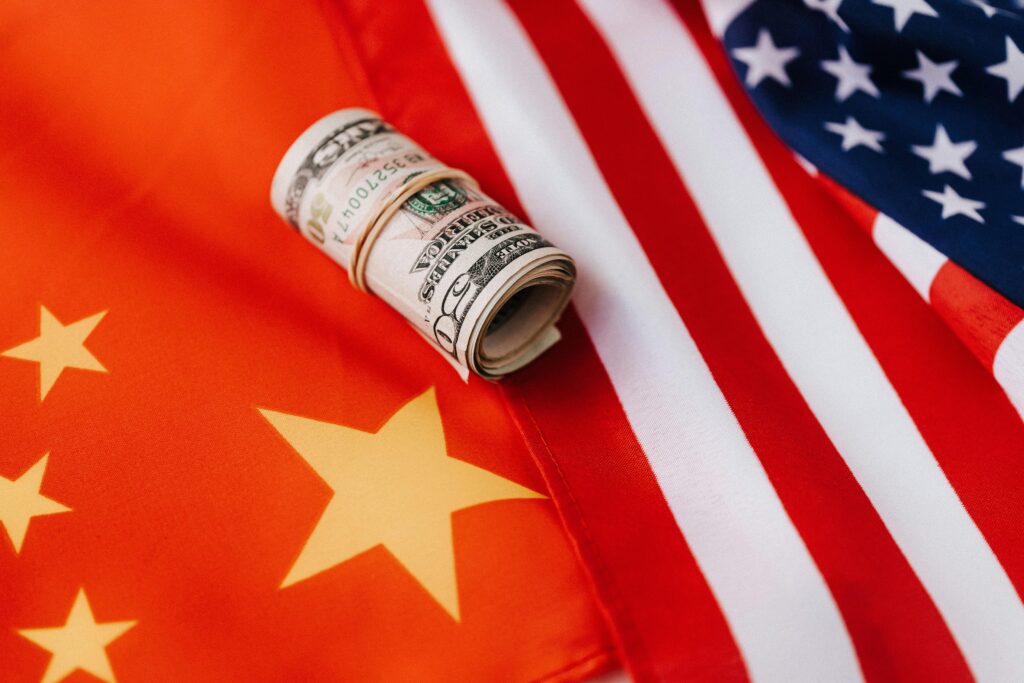
The United States has accused China of engaging in widespread efforts to acquire American artificial intelligence technology through illicit means, according to a recent government memorandum.
Officials from the White House claim that foreign groups, many believed to be operating from China, have been involved in coordinated campaigns aimed at extracting advanced AI capabilities developed by US companies. Chinese authorities have denied the allegations.
Methods Allegedly Used
The document, signed by Michael Kratsios of the White House Office of Science and Technology Policy, outlines several techniques reportedly used in these operations.
According to the memo, actors have deployed large numbers of fake accounts to avoid detection while accessing AI systems. These accounts are said to be part of broader efforts to bypass safeguards and extract sensitive data.
The report also describes the use of so-called “jailbreak” methods, which attempt to override system protections in order to gain access to restricted information. Once obtained, this data could be used to replicate or accelerate the development of similar technologies.
Another technique highlighted is “AI distillation,” where smaller models are trained using outputs from more advanced systems. This process can significantly reduce development costs, and US officials consider its use in this context to be inappropriate.
Rising Tensions Between the US and China
The release of the memorandum is expected to add pressure to an already sensitive relationship between the United States and China, particularly in the race for leadership in artificial intelligence.
The issue could also influence ongoing discussions around the export of advanced semiconductor technology. In recent months, the US government has allowed limited sales of certain chips, including those produced by Nvidia, under specific conditions.
However, officials have indicated that shipments to China have not yet taken place.
China’s Response
In response to the accusations, representatives of the Chinese government described the claims as unfounded. Officials stated that China places importance on the protection of intellectual property and rejects allegations of systematic wrongdoing.
Broader Implications
The situation highlights the growing importance of artificial intelligence in global competition. As governments and companies invest heavily in the technology, concerns over security, intellectual property, and fair competition are becoming increasingly central.
The developments may have lasting effects on international cooperation, technology trade, and the future direction of AI innovation.
Related Posts

NASA Nuclear Rocket Breakthrough: Revolutionary Mars Mission Could Transform Deep Space Trave
The concept, often associated with advanced nuclear propulsion systems, is…

Iran promises “utter ruin” if war resumes — as negotiators report a tentative deal is awaiting Trump’s approval
On Day 91 of the Iran war, the conflict has…
Iran’s parliament drafts bill offering €50 million bounty for killing Trump, Netanyahu, and CENTCOM commander
The chairman of Iran's Parliamentary National Security Committee announced the…
