The chairman of Iran’s Parliamentary National Security Committee announced the bill on state television on May 13, framing it as a “reciprocal action” for the killing of Supreme Leader Khamenei in the opening strikes of the war. The U.S. responded by offering $15 million for intelligence on the IRGC’s financial networks — and the FBI placed a separate $200,000 bounty on a former U.S. Air Force officer charged with spying for Tehran.
The bill — what Iran’s parliament is proposing
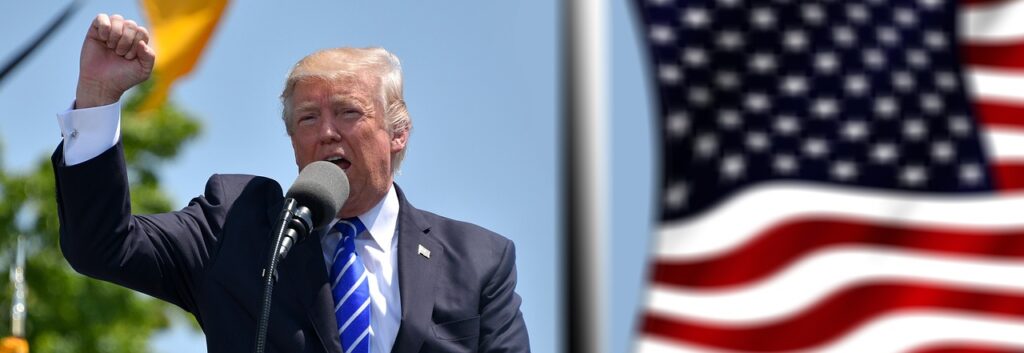
Ebrahim Azizi, chairman of the National Security and Foreign Policy Committee of the Iranian Parliament, announced on state television the drafting of a plan titled “Counter-Action by the Military and Security Forces of the Islamic Republic,” which includes a proposed €50 million reward for the killing of Donald Trump. Azizi added that Trump, Israeli Prime Minister Benjamin Netanyahu, and the commander of U.S. Central Command, Admiral Brad Cooper, must be targeted for “counter-action” due to what he described as their role in the killing of Supreme Leader Ali Khamenei during the opening strikes of the war on February 28.
“Parliament is reviewing a bill that would obligate the government to pay 50 million euros to any individual or group that assassinates President Trump.”
— Ebrahim Azizi, Chairman, Iran Parliamentary National Security and Foreign Policy Committee, May 13, 2026
Key details
Bill title”Counter-Action by the Military and Security Forces of the Islamic Republic”
Proposed bounty€50 million (~$54 million / ~R$300 million) per target
Targets namedDonald Trump, Benjamin Netanyahu, Admiral Brad Cooper (CENTCOM)
Announced byEbrahim Azizi — Iranian Parliament National Security Committee chairman
AnnouncedMay 13, 2026 — on Iranian state television
StatusBill under review — not yet voted on or enacted
Stated justification”Reciprocal action” for the killing of Supreme Leader Khamenei on Feb 28
⚠️ Important distinction: This is a proposed parliamentary bill, not an enacted law or an official government bounty. It has been announced by the chairman of a parliamentary committee on state television but has not yet been voted on by the full parliament or signed into law by the executive branch.
The parallel fundraising campaign outside parliament
The “Masaf” media outlet, belonging to pro-regime figure Ali Akbar Raefipour, previously claimed that $50 million in financial resources had been secured for a campaign dubbed “Kill Trump.” Separately, an Iran-based website run by the “Blood Covenant” movement offered a growing financial reward for anyone who kills Trump “in the cause of Allah,” with the Middle East Media Research Institute reporting the campaign was promoted on state-backed television station Fars News Agency. These non-governmental initiatives preceded the formal parliamentary bill and reflect a broader pattern of state-adjacent incitement that has intensified since the war began.
Washington’s countermoves — bounties and indictments
On May 14 — the same day Azizi announced the parliamentary bill — the State Department’s Rewards for Justice programme published an offer of up to $15 million for information capable of disrupting the financial networks of Kimia Part Sivan Company (KIPAS), identified as the drone-production arm of the IRGC’s Quds Force. The reciprocal bounty architecture is deliberate: Washington is targeting Iran’s ability to fund and equip its military operations; Tehran is targeting the individuals it holds responsible for the war.
The FBI also placed a $200,000 bounty on a former U.S. Air Force counterintelligence officer indicted on charges of spying for Iran. The charges reflect a persistent concern within the U.S. intelligence community about Iranian penetration of American defense and intelligence structures — a concern that predates the current war but has intensified dramatically since February 28.
A documented pattern of assassination attempts against Trump
The parliamentary bill does not emerge in a vacuum. In November 2024, the U.S. Department of Justice unsealed criminal charges detailing an alleged IRGC plot to assassinate Trump prior to the 2024 presidential election. In February 2026, an undercover video shown in a Brooklyn courtroom captured an alleged Iran-linked operative describing a plan to target Trump, placing a vape pen on a napkin to represent his “target” in a demonstration recorded by a hidden camera and later published by the New York Post. The consistency of these plots across multiple years and political contexts suggests a standing Iranian state interest in targeting Trump that the current war has dramatically intensified.
The significance of naming Cooper alongside Trump and Netanyahu
The bill targets Trump, Netanyahu, and Admiral Brad Cooper, the commander of CENTCOM — making Cooper the first active U.S. military commander to be formally named in an Iranian parliamentary assassination bounty. Cooper commanded the U.S. naval forces that enforced the blockade of Iranian ports from April 13 onward, and his forces were directly engaged in the Project Freedom escort operations in the Strait of Hormuz during the first two weeks of May. His inclusion signals that Iran views the military commanders directly responsible for the war’s operational conduct as legitimate targets alongside the political leaders who authorized it.
The broader context: reciprocal escalation
The bounty bill is the latest episode in a pattern of reciprocal escalation that has characterized the conflict since its outset. Iran has attacked UAE, Saudi, Kuwaiti, Qatari, and Bahraini military and energy infrastructure; struck the Barakah nuclear plant on May 17; threatened any foreign military force entering the Strait of Hormuz; and now formalized — at the parliamentary level — an offer of financial reward for the killing of the three individuals it holds most directly responsible for the war. Washington has responded with a naval blockade, Project Freedom, a comprehensive sanctions architecture targeting Cuba and Iran, and a $15 million bounty on the IRGC’s financial infrastructure. The conflict’s logic of reciprocal escalation shows no sign of exhausting itself.
Related Posts

Experts Say Andes Hantavirus Will Not Become the Next COVID Despite Rising Global Concern
Global health experts are reassuring the public that the Andes…
Who Is Raúl Castro? Cuban Revolution Figure Faces U.S. Murder Charges Decades Later
Raúl Castro has once again become a central figure in…
Israel kills Izz al-Din al-Haddad, Hamas military chief and the last architect of the October 7 attacks still operating in Gaza
An Israeli airstrike in western Gaza City on Friday evening…
