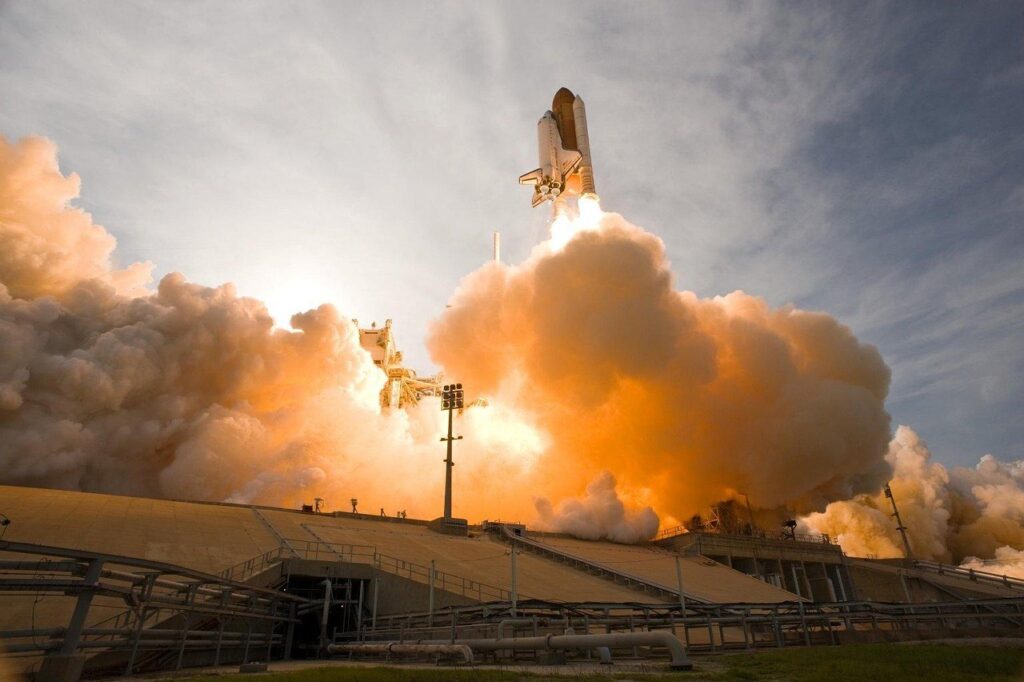
The concept, often associated with advanced nuclear propulsion systems, is designed to deliver faster, more efficient interplanetary travel compared to traditional chemical rockets. By integrating nuclear fission energy with electric propulsion, NASA aims to unlock a new era of high-speed space exploration.
NASA is accelerating the development of a next-generation nuclear-powered spacecraft that could dramatically reshape the future of deep space travel and Mars missions.
Faster Mars Travel with Nuclear Propulsion
One of the biggest challenges in space exploration is reducing travel time to Mars. Current missions can take up to seven months or more, but nuclear propulsion technology could cut that timeline significantly—potentially to around one year for complex mission profiles with greater efficiency and flexibility.
This innovation is critical not only for robotic missions but also for future human spaceflight, where time, safety, and resource management are essential.
Advanced Space Technology Driving Innovation
The spacecraft is expected to use a compact nuclear reactor to generate continuous power in space. This energy is converted into electricity, which then drives high-efficiency ion or electric thrusters.
Unlike traditional propulsion systems, which rely on short bursts of intense thrust, nuclear-electric propulsion provides a steady and sustained push. Over long distances, this results in higher overall speeds and reduced fuel requirements—two major factors in lowering mission costs.
Why This Matters for the Future of Space Travel
The implications of nuclear-powered spacecraft go far beyond Mars. This technology could enable missions to Jupiter, Saturn, and even interstellar precursor missions in the future.
It also positions NASA at the forefront of the global space race, competing with private companies like SpaceX and international space agencies investing heavily in advanced propulsion systems.
Investment, Innovation, and Global Impact
With growing investment in space technology and commercial space exploration, nuclear propulsion is becoming a key focus area for the next decade. Governments and private companies alike see it as a strategic advantage in the rapidly expanding space economy.
If successful, this breakthrough could redefine how humanity explores the solar system—making deep space missions faster, safer, and more scalable than ever before.
Related Posts

Tapo C210 Avis (2026) : La Meilleure Caméra de Surveillance Intérieure Pas Chère ?
Tapo C210 : Avis Complet 2026 — La Caméra de…
SpaceX Eyes Massive AI Opportunity Beyond Space Business
American space exploration giant made decision amid dispute between Musk…

Federal Reserve Enters New Era as Kevin Warsh Faces Economic and Political Uncertainty
The Federal Reserve is entering a new phase of leadership…
