As the U.S. and Iran continue exchanging fire in the Strait of Hormuz despite an active ceasefire, Washington is applying maximum pressure on Tehran to accept a 14-point memorandum of understanding — with Trump warning that a rejection would bring consequences “a lot worse” than Operation Epic Fury.
The state of negotiations: Iran still reviewing
Iran’s Foreign Ministry confirmed on Thursday that Tehran is “currently reviewing” the U.S. proposal it received through Pakistani mediators, but has not yet reached a conclusion or delivered a reply. Spokesman Esmaeil Baghaei, while acknowledging the review process, appeared in a social media post to suggest the U.S. is negotiating in bad faith — accusing Washington of opting for “reckless military adventure” every time a diplomatic solution is within reach.
The proposal under review, confirmed by multiple outlets, is described as a 14-point memorandum of understanding covering the core elements of a war-ending framework. According to Trump’s own statements to PBS News, the terms include Iran shipping its enriched uranium stockpile to the United States, pledging not to operate its underground nuclear facilities, the reopening of the Strait of Hormuz, an end to military operations, sanctions relief, and the release of frozen Iranian assets.
“If they don’t agree, the bombing starts. It will be, sadly, at a much higher level and intensity than it was before.”
— President Donald Trump, Oval Office, May 7, 2026
Trump’s confidence — and his caveats
Despite the threat, Trump has simultaneously projected optimism, telling reporters the Iranians want to make a deal “very much” and that the U.S. has had “very good talks over the last 44 hours.” He predicted the war will “be over quickly” at a campaign event in Georgia on Wednesday evening, and told ABC News in a telephone interview that the ceasefire is still technically in effect — describing the latest military exchanges as a “love tap” rather than a resumption of hostilities.
“They want to sign it, I will tell you. They want to sign it a lot more than I do. We have to get what we have to get, and if we don’t do that, we’ll have to go a big step further.”
— President Donald Trump, Oval Office, May 7, 2026
Exchanges of fire continue despite the ceasefire
Even as negotiations proceed, both sides have continued to engage militarily. On Thursday, U.S. forces targeted Iranian military facilities — including missile and drone launch sites, command and control locations, and intelligence nodes — on the coasts of Qeshm Island, Bandar Khamir, and Sirik, after what CENTCOM described as a series of “unprovoked” Iranian attacks on American warships transiting the strait. Iran responded with strikes against U.S. vessels east of the strait, near the port of Chabahar. CENTCOM stated that no U.S. assets were struck.
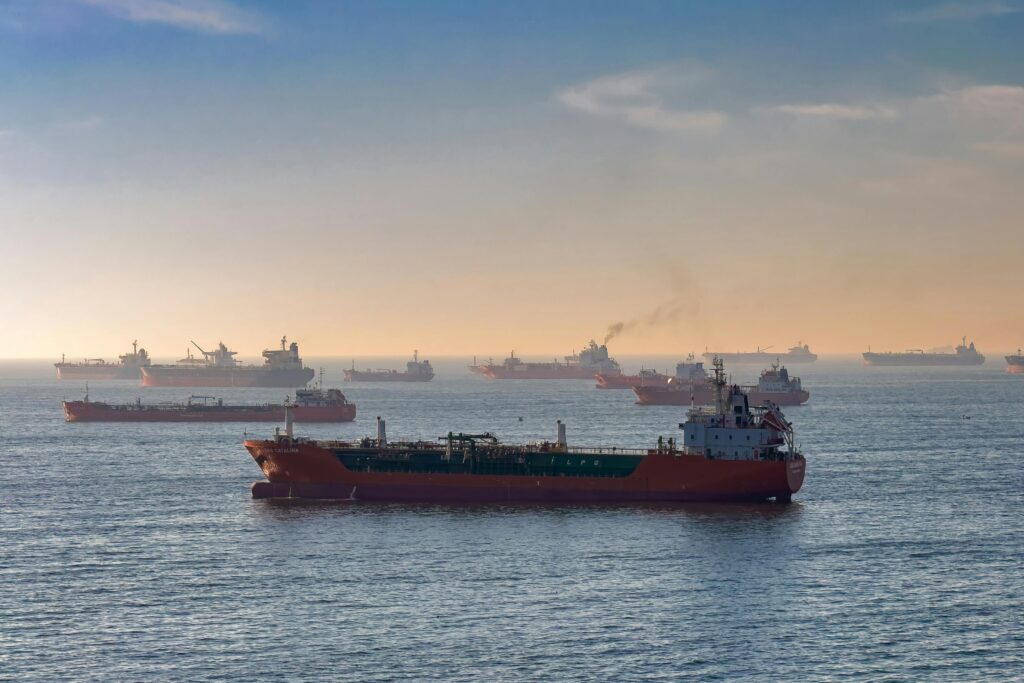
On Friday, the U.S. military disabled two Iranian oil tankers attempting to run the naval blockade. Iran’s parliament member Ali Khezrian responded on state TV by threatening that all future U.S. naval blockade activity would be met with a military response. The UAE, meanwhile, intercepted two more ballistic missiles and three drones launched from Iran on Friday — bringing total casualties on UAE territory since February 28 to three killed and 230 injured, according to the UAE Ministry of Defense.
70+ tankers blocked from Iranian ports by U.S. forces
$13B+ in Iranian oil cargo currently blocked
233 UAE casualties since Feb 28 (3 killed, 230 injured)
Iran’s internal pressure — and public defiance
Inside Iran, the economic toll is becoming a political pressure point. Parliament Speaker Mohammad Bagher Ghalibaf, in an audio message circulated on Thursday, acknowledged that Washington is attempting to “break Iran through economic pressure” and urged citizens to practice “saving and frugality” — calling thriftiness a “missile that people can fire into the heart of the enemy.” The appeal reflects the strain the blockade and the war’s economic fallout are placing on the Iranian government’s domestic standing.
At the same time, Foreign Minister Abbas Araghchi publicly vowed that Iran will “never bow to pressure,” while Iran’s President Masoud Pezeshkian condemned the naval blockade as an “extension of military action” — suggesting the leadership is managing a difficult balance between signaling openness to a deal and maintaining defiant posture for a domestic audience.
Israel watching — concerned about last-minute concessions
Israeli Prime Minister Benjamin Netanyahu is holding parallel talks with Trump administration officials to track the state of the U.S.-Iran negotiations. According to an Israeli source, Jerusalem is particularly concerned about potential last-minute U.S. concessions that could leave Iran’s nuclear infrastructure intact. Netanyahu has stated publicly that “no terrorist has immunity” and signaled that Israel’s own calculus on Iran’s nuclear program remains unchanged, independent of whatever framework Washington and Tehran may reach.
Secretary Rubio at the Vatican — and his red line
Secretary of State Marco Rubio met with Pope Leo XIV at the Vatican on Thursday, as part of a broader diplomatic tour. Asked about U.S. red lines in the negotiations, Rubio was blunt: “The red line is clear: if they threaten Americans, they’re going to get blown up.” He also reiterated that Friday’s military exchanges were “separate and distinct from Operation Epic Fury” — maintaining the administration’s legal and rhetorical framework that the offensive phase of the war has ended while defensive operations continue.
What comes next
The next 24 to 48 hours are likely to be decisive. Iran has signaled it will respond to the U.S. proposal via Pakistani mediators, and Trump has made clear the window for a negotiated solution is open but not indefinite. The 14-point memorandum — if accepted — would represent the most significant diplomatic development in the conflict since the ceasefire of April 8. If rejected, Trump’s explicit threat of resumed bombing “at a much higher level” would set the stage for a major escalation, with profound consequences for global energy markets, the regional balance of power, and the durability of the current ceasefire framework.
Related Posts

Teams Recover Bodies of Missing Italian Divers After Deadly Maldives Cave Diving Accident
Authorities in the Maldives confirmed that rescue teams recovered the…
White House gunman identified as Nasire Best, 21 — previously known to Secret Service and subject to a stay-away order
Law enforcement officials confirmed Sunday morning that the man killed…

UK and France to Host Emergency Talks on Naval Escort Mission in Strait of Hormuz Amid Rising Global Tensions
The United Kingdom and France are preparing to host emergency…
