RingConn Gen 2 Air Review

Overview
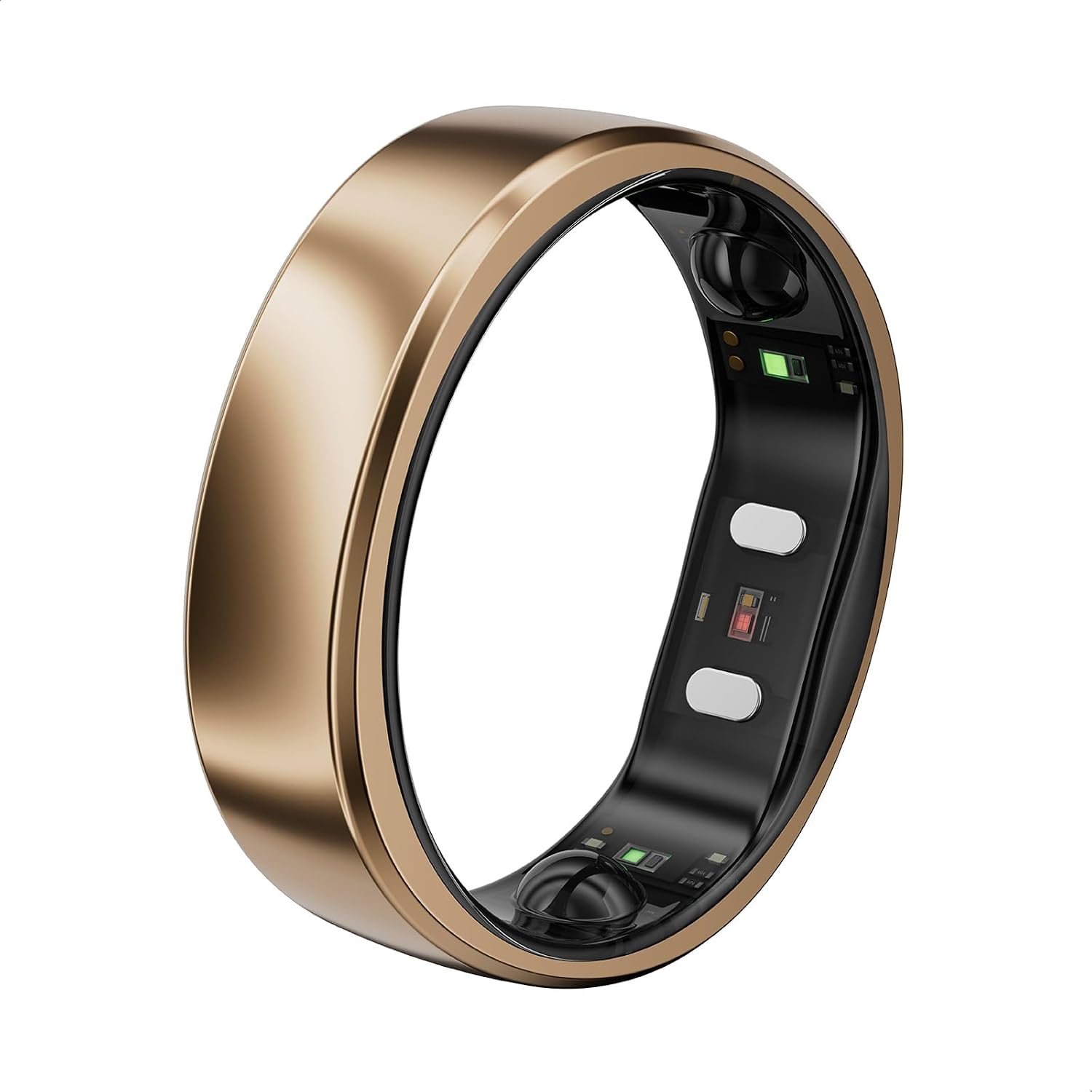
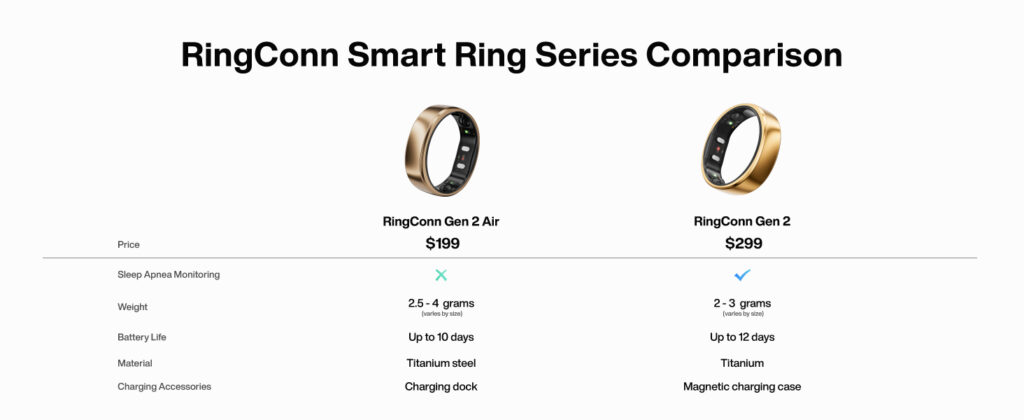
This review covers the RingConn Gen 2 Air, a titanium-steel (PVD-coated stainless alloy) smart ring at roughly 2mm thick and 2.5-4g depending on size, with continuous tracking for heart rate, blood oxygen (SpO2), skin temperature, respiratory rate, sleep stages, stress, and activity, plus menstrual cycle prediction. It’s worth being precise about positioning within RingConn’s own lineup: the Gen 2 Air sits as the company’s entry-level model, below the standard Gen 2 (made of full titanium rather than titanium-coated steel, with a 12-day rather than 10-day battery and a pocketable charging case instead of a desk dock) and the flagship Gen 3. The core, genuinely important differentiator versus the pricier Gen 2: the Air does not include sleep apnea monitoring, which is exclusive to the standard Gen 2 and above. RingConn also emphasizes no subscription fee is required to access standard tracking features, a real, meaningful differentiator in this product category discussed in detail below.
Sizing is worth flagging clearly: RingConn uses its own proprietary sizing standard, different from standard ring sizes or other smart ring brands, and requires using their sizing kit (shipped separately before your order) rather than assuming your regular ring size will translate directly.
The Standout Feature: No Subscription Required
This is genuinely the most consistently emphasized advantage across nearly every review we found, and it’s worth explaining why it matters so much in this specific product category. The dominant competitor, Oura, requires an ongoing monthly subscription (roughly $5.99-6/month) to access full tracking features on top of the hardware purchase — SmartRingHQ’s review calculated that over three years, Oura’s subscription costs alone exceed £200, often more than the entire RingConn Gen 2 Air costs outright. RingConn unlocks every standard metric with the ring purchase alone, no ongoing fee required. This is a genuine, substantial, and easily quantifiable cost advantage over the category leader, not a minor nice-to-have.
Tracking Accuracy: Genuinely Competitive
This is where the RingConn Gen 2 Air earns real, substantive credibility rather than just budget-tier “good enough” praise. Trusted Reviews’ hands-on testing found sleep tracking performance held up well against both Oura and the Apple Watch, and daily step tracking was largely in line with other smart rings and wrist-based smartwatches worn alongside it during testing. A direct comparative review from Cybernews found RingConn and Oura Ring generally agree on sleep data, with only minor differences in specific sleep stage breakdowns and total sleep time — a genuinely reassuring result given Oura’s reputation as the accuracy benchmark in this category. Wareable’s comparison against a separate competitor, the Ultrahuman Ring Air, found RingConn’s data aligned closely with baselines from Oura, WHOOP, Apple, and Google across most tracked metrics.
Battery Life: A Genuine Strength
This is a consistent, unanimous highlight across every review. Tom’s Guide specifically called the roughly 10-day battery life near best-in-class in the category, and it charges relatively quickly (around 90 minutes) via a magnetic dock. For a device this small and thin, this kind of endurance is a real, tangible practical advantage over most other wearables, including many smartwatches that require daily or near-daily charging.
The Real Weak Point: The Companion App
This is the most consistent criticism across reviews, and it deserves direct, honest treatment. Trusted Reviews was specific and direct: the app’s biggest drawback is that it lacks the polish of Oura’s and Ultrahuman’s companion apps. SmartRingHQ’s review echoed a related, more specific critique — the app relies on a “graph-heavy” presentation style with numerous charts to sift through, which they found less effective for most users’ long-term engagement compared to competitors’ more digestible, score-based summaries. This isn’t a dealbreaker for the underlying data quality, which multiple reviewers found genuinely competitive, but if a clean, polished, easy-to-parse app experience matters as much to you as the underlying sensor accuracy, this is a fair, real trade-off versus the pricier Oura ecosystem.
Fitness Tracking: A Secondary Limitation
Tom’s Guide’s review flagged fitness-tracking features specifically as an area where the Gen 2 Air lags — it’s built primarily around sleep and vitals monitoring rather than being a comprehensive workout-tracking tool, and doesn’t offer the kind of dedicated exercise-mode features or motivational prompts you’d get from a fitness-focused wearable. If serious workout tracking is your primary use case rather than sleep and recovery monitoring, this ring is a less complete solution than a dedicated fitness tracker or smartwatch.
Comfort and Design
Tom’s Guide’s assessment on comfort was measured rather than uniformly glowing — while praising the ring’s slim, durable build, they specifically noted it wasn’t the most comfortable smart ring they’d tested, a fair, honest data point worth including alongside the otherwise strong marks. At 2mm thick and as light as 2.5g, it’s genuinely among the slimmest rings on the market, and the IP68/ATM 10 water resistance rating (RingConn’s own claim of waterproofing up to 100 meters) supports worry-free wear during swimming, showering, and exercise.
How It Compares
The comparative picture across multiple independent reviews is remarkably consistent: against the category-leading Oura Ring 4, RingConn Gen 2 Air offers genuinely comparable core sleep and heart-rate tracking without the ongoing subscription cost, at roughly half the price — a strong value proposition that several reviewers explicitly favored on cost grounds, even while acknowledging Oura’s more polished app experience. Against RingConn’s own pricier standard Gen 2, the meaningful trade-off is losing sleep apnea detection and slightly shorter battery life (10 vs. 12 days) in exchange for a lower price — a sensible trade-off if apnea monitoring isn’t a specific health concern for you. SmartRingHQ’s direct recommendation: choose the Gen 2 Air if you want Oura-style tracking without the monthly fee, and only step up to the standard Gen 2 if sleep apnea alerts or the pocketable charging case specifically matter to you.
Pros and Cons
Verdict
The RingConn Gen 2 Air has earned a genuinely strong reputation as one of the best budget smart rings available, and the reasoning behind that reputation holds up under scrutiny: real, competitive sleep and vitals tracking accuracy, excellent battery life, and — most importantly — zero subscription costs, at roughly half the price of the category-leading Oura Ring 4. The trade-offs are real but modest: a less polished companion app, no sleep apnea detection, and comparatively limited fitness-tracking depth. If you want reliable sleep and recovery tracking without committing to an ongoing subscription, and you don’t specifically need apnea monitoring or dedicated workout features, this is a genuinely well-reviewed, smart-value pick in the smart ring category. If app polish or sleep apnea detection matter more to you, it’s worth weighing RingConn’s own pricier Gen 2 or Oura’s more expensive, subscription-based ecosystem instead.

Related Posts
Apple TV 4K (2022, 3rd Gen) Review: Still Excellent Hardware, But Read This Before You Buy Right Now
Apple TV 4K (2022, 3rd Generation) Review A quick product…
Soundcore P20i Review: Great Battery, Budget Sound — Is It Worth It?
Based on multiple independent tests (RTINGS, TechGearLab, Head-Fi, and others),…
Magnelex Car Windshield Sunshade Review: Simple, Effective, and Genuinely Cheap Heat Protection
Overview The Magnelex Car Windshield Sunshade is a foldable, reflective…
