
- ALL GAMES, ALL PLACES, ALL YOURS – Get ready to game on the 8″ 120Hz Lenovo PureSight display and launch any title using…
- SEE EVERY DETAIL – Make every scene pop with 500 nits of stunning brightness and 100% sRGB color accuracy. And with 10-p…
- PLAY YOUR WAY – Play hundreds of high-quality PC games with your complimentary 3 months of PC Game Pass and EA Play. Wit…

Lenovo Legion Go S (Windows) Review
Two clarifications worth making before anything else, because both genuinely affect whether this is the product you’re looking for.
First, despite the product title on some listings simply saying “Legion Go,” this is the Legion Go S — a distinctly different, smaller handheld from the original Legion Go. The original Legion Go has an 8.8-inch display and detachable, Joy-Con-style controllers that can be used separately. The Legion Go S reviewed here has a smaller 8-inch display and fixed, non-detachable TrueStrike controllers in a single unibody shape, closer in concept to a Steam Deck or ROG Ally. If you specifically wanted the detachable-controller original Legion Go, this is not that product.
Second, Lenovo sells the Legion Go S in both Windows 11 and SteamOS versions, and this specific listing is confirmed to be the Windows 11 configuration, paired with an AMD Ryzen Z2 Go processor, 16GB of RAM, and a 512GB SSD. This distinction matters enormously for this review, because independent reviewers were consistently, significantly more positive about the SteamOS version of this exact same hardware than the Windows version.
The core problem: a genuinely cut-down processor
This is the central, repeated criticism across nearly every review of the Windows Legion Go S, and it’s worth taking seriously rather than treating as a minor footnote. PC Gamer’s review was blunt about it, noting that while almost every other aspect of the Legion Go S represents an upgrade over the original, Lenovo put a chip in it that’s a genuine step down: the AMD Ryzen Z2 Go is a lower-power part than the Ryzen Z1 Extreme used in the original Legion Go and in competitors like the ROG Ally X. Independent aggregated review scores reflect this clearly. Notebookcheck’s roundup of reviews for the Windows version ranged from a low of 50% (titled, pointedly, “makes so many mistakes I can’t figure out how we got here”) up to 70-80% in more favorable reviews — with one specifically titled “High Potential Gaming Handheld Hamstrung By One Feature,” referring directly to the processor choice.
Real, measured gaming performance
Expert Reviews’ hands-on testing, in a review headlined “No-Go for demanding AAA games,” found real-world performance struggled meaningfully in graphically demanding titles: frame rates in a detailed, rendering-heavy outdoor environment dropped into the low 30s and often below in Performance mode, which the reviewer described as resulting in a disappointing gameplay experience in a fast-paced game requiring quick reactions. That same review found battery life under that kind of demanding load fell below 90 minutes — a genuinely short window for a device meant for gaming on the go.
Lighter or better-optimized titles fared better. The same review measured roughly 1 hour 50 minutes of battery life playing Silksong (a lighter 2D game) in Performance mode, rising to over 2 hours in Balanced mode and over 3 hours in Quiet mode — figures that show real variability depending entirely on what you’re actually playing, something marketing materials for handhelds generally don’t emphasize.
Battery life: a genuine strength in general use, a genuine weakness in demanding games
This is a nuanced, honestly contradictory point worth presenting as such rather than flattening into one verdict. PC Gamer’s review specifically listed “great battery life” as a pro, noting the Legion Go S lasted over two hours in the PCMark 10 gaming battery benchmark — far surpassing the original Legion Go’s roughly 1.5 hours, and sitting close behind the pricier, more powerful ROG Ally X. For general video playback, Expert Reviews measured nearly 8 hours. But as shown above, that same battery life collapses dramatically under genuinely demanding gaming loads. The honest takeaway: the Z2 Go’s lower power draw genuinely helps battery life in lighter use, but that same lower power ceiling is precisely what limits performance — and therefore burns through battery faster — in demanding games.
Build quality and comfort: a real, consistent strength
This is one area where criticism is much lighter and more consistent across reviews. PC Gamer specifically praised the comfortable design and satisfying buttons, and other reviews echo that the unibody shape, TrueStrike controllers, and overall ergonomics are genuine high points, regardless of the Windows version’s other shortcomings. If physical comfort and build quality are your priority, reviewers broadly agree this is a well-made device.
The SteamOS version tells a very different story
This is worth stating plainly, since it’s directly relevant to anyone deciding between the two versions of the same hardware. TechRadar’s separate review of the SteamOS version of the Legion Go S, titled “what a difference SteamOS makes,” scored it 3.5 out of 5 — a notably more favorable reception than most Windows version reviews — and other coverage found the Z2 Go chip actually performs better under SteamOS than under its own Windows partition on the same hardware, attributing this to Windows’ heavier resource overhead on handheld-class hardware generally, a well-documented issue across the Windows handheld gaming category. If you’re set on this specific hardware and have flexibility in which OS version to buy, it’s worth knowing that independent reviewers consistently found the SteamOS configuration the stronger overall experience.
Verdict
The Lenovo Legion Go S (Windows) is an honest case of excellent industrial design undermined by a genuinely underpowered processor choice, and that’s not a minor quibble — it’s the consistent, central finding across nearly every independent review, with aggregate scores reflecting real disagreement about whether this device is worth its price. If you mainly play lighter, less demanding games, value battery life and comfort, and specifically want full Windows software compatibility, this remains a usable, well-built handheld. If you’re hoping to play demanding, graphically intensive AAA titles smoothly, the data is consistently discouraging, and reviewers were notably more positive about this exact same hardware running SteamOS instead. Before buying this specific Windows configuration, it’s worth seriously comparing both the SteamOS version of the Legion Go S and competitors like the ROG Ally X, since multiple independent reviews concluded this Windows configuration specifically underdelivers relative to its price and its own sibling hardware.
- ALL GAMES, ALL PLACES, ALL YOURS – Get ready to game on the 8″ 120Hz Lenovo PureSight display and launch any title using…
- SEE EVERY DETAIL – Make every scene pop with 500 nits of stunning brightness and 100% sRGB color accuracy. And with 10-p…
- PLAY YOUR WAY – Play hundreds of high-quality PC games with your complimentary 3 months of PC Game Pass and EA Play. Wit…



Related Posts
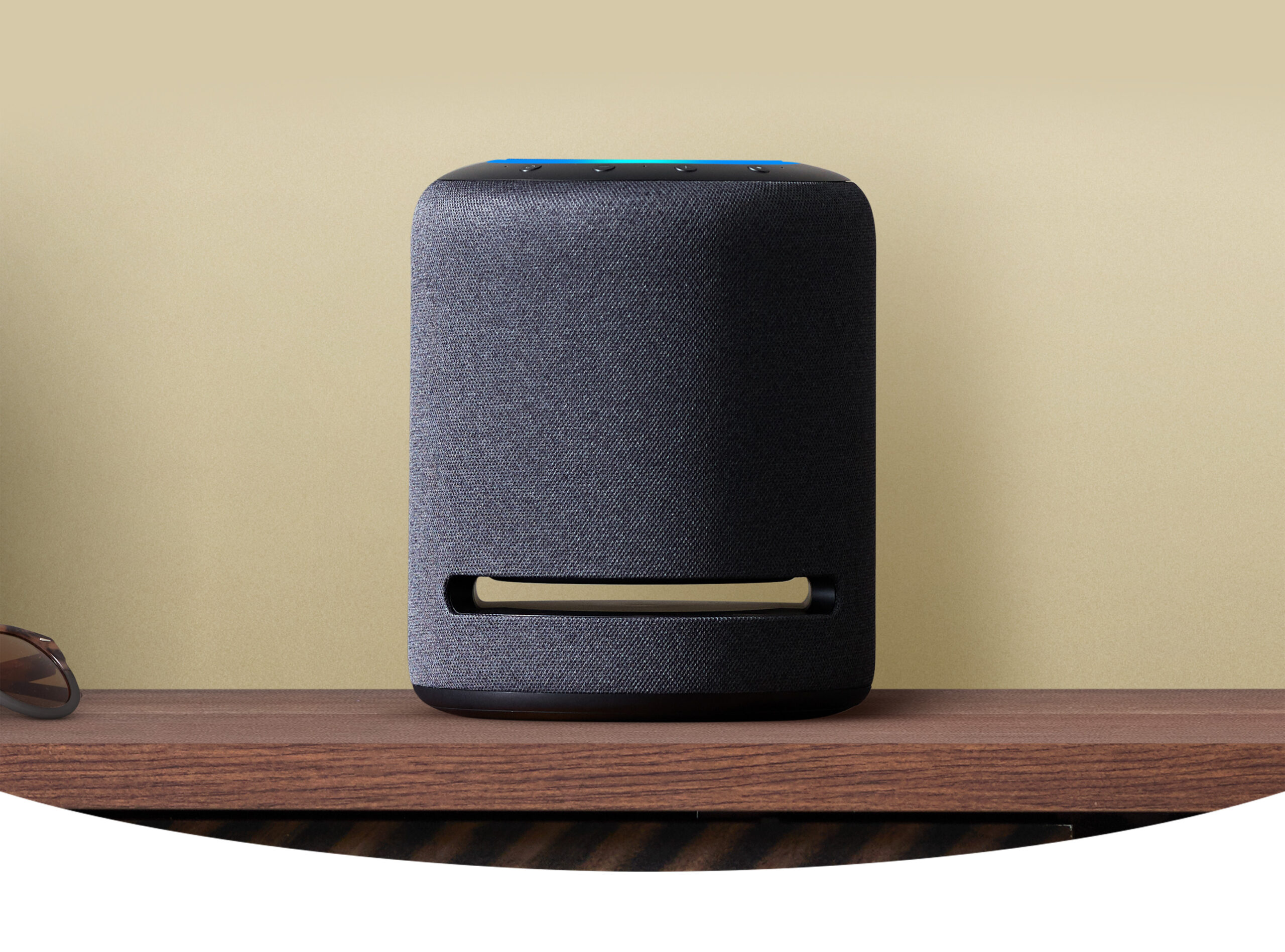
Amazon Echo Studio (1st Gen) Review: The Older Model Many Reviewers Still Prefer Over Its Own Successo
Amazon Echo Studio (1st Generation) Review An important clarification before…
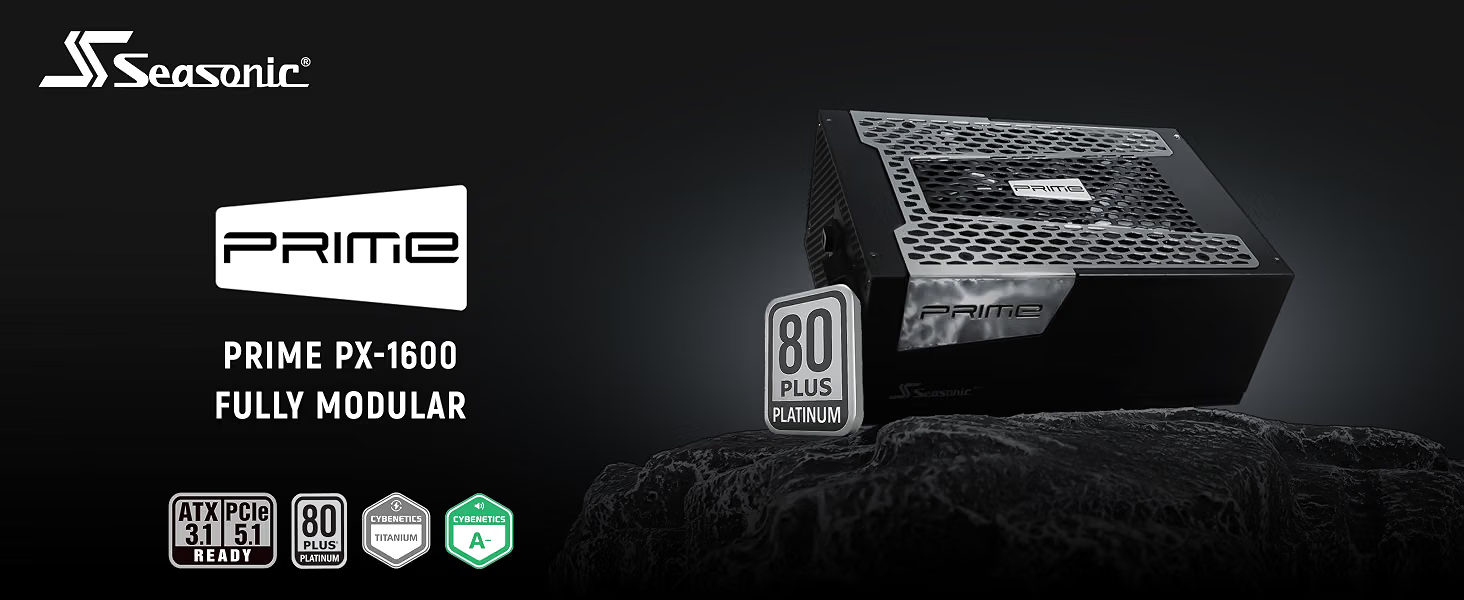
Seasonic PRIME PX-1600 Review: Exceptional Engineering for Extreme Builds, If You Have the Space and Budget
Seasonic PRIME PX-1600 Review The Seasonic PRIME PX-1600 (model SSR-1600PD2)…

HUANUO Dual Monitor Stand Review: The Best Budget Monitor Arm?
Review HUANUO has become one of the go-to names for…
