On Day 91 of the Iran war, the conflict has reached its most paradoxical moment yet: U.S. officials say a preliminary agreement framework has been reached and is awaiting President Trump’s sign-off, while Iran simultaneously warns that any return to war would be categorically more devastating than the first round — with new fronts, new weapons, and attacks on Gulf Arab oil infrastructure.
The breakthrough — a tentative agreement framework
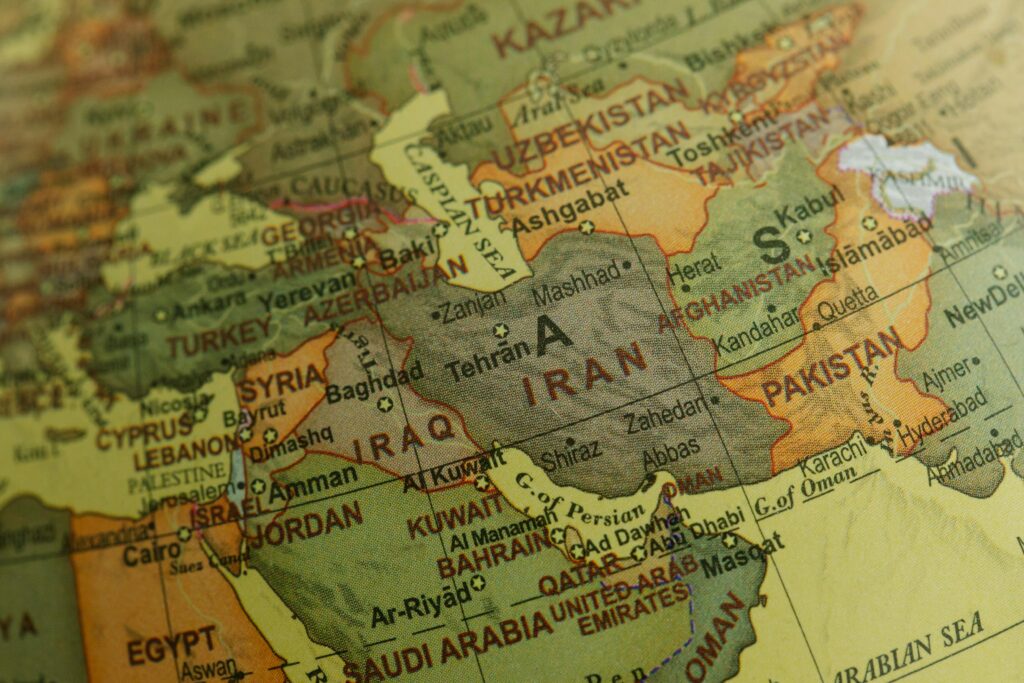
U.S. officials confirmed Thursday that negotiators from Washington and Tehran have reached a tentative agreement framework through Pakistani mediators — the most significant diplomatic development since the ceasefire of April 8. The framework is not yet a signed deal; it is awaiting President Trump’s formal approval before it can be finalized and implemented. Neither the White House nor Iran’s Foreign Ministry has officially confirmed the existence of the framework or its specific terms, and the information comes from anonymous U.S. officials briefing reporters.
The development follows weeks of back-and-forth in which Trump’s 14-point proposal — covering uranium transfer, nuclear facility restrictions, strait reopening, sanctions relief, and asset unfreezing — was described by Iranian officials as containing “excessive demands.” The apparent convergence on a framework suggests that both sides have found enough common ground on at least the core elements of a war-ending deal to proceed toward a formal agreement, even as military activity continues.
What the framework is understood to include
Nuclear materialIran ships enriched uranium stockpile to a third country (not necessarily the U.S.) — details still being negotiated
Nuclear facilitiesIran pledges not to operate underground enrichment facilities — Fordow and Natanz provisions under discussion
Strait of HormuzPhased reopening linked to ceasefire formalization and blockade lifting
SanctionsPartial U.S. sanctions relief in phases — full relief contingent on nuclear compliance verification
Frozen assetsPartial unfreezing — Iran’s demand for full release of ~$100B not met
StatusAwaiting Trump’s formal approval — not yet signed or announced officially
⚠️ Unconfirmed: The tentative agreement has not been officially announced by the White House, Iran’s Foreign Ministry, or Pakistani mediators. All details above are sourced from anonymous U.S. officials. The framework could still collapse before Trump approves it.
Iran’s simultaneous message: “utter ruin”
Even as negotiators reported progress, Iran’s military and political leadership delivered its most explicit escalation threats to date — language that analysts describe as a dual-purpose strategy: deterring any U.S. temptation to resume bombing while negotiating, and strengthening Iran’s leverage in the final stages of the deal.
“Any future retaliation will feature many more surprises.”
— Abbas Araghchi, Iranian Foreign Minister, late May 2026
“The armed forces have used the ceasefire period to rebuild their capabilities at the highest level.”
— Mohammad Bagher Ghalibaf, Iran’s lead nuclear negotiator and Parliament Speaker
The Revolutionary Guards separately warned that any renewed conflict would spread “far beyond the region” — explicitly threatening U.S.-operated air bases in the United Kingdom and Germany. Iran’s military also threatened to open “new fronts” using “new tools,” language that analysts read as a reference to cyber capabilities, proxy networks in Iraq, Syria, and Lebanon, and potential attacks on energy infrastructure beyond the Strait of Hormuz.
If diplomacy fails — Iran’s escalation options
Iran’s potential escalation paths if the deal collapses
🚢Bab al-Mandeb StraitTehran may seek to disrupt this second vital maritime corridor — connecting the Red Sea to the Gulf of Aden — through Houthi allies in Yemen, replicating the Hormuz playbook in a second chokepoint simultaneously.
🛢️Gulf Arab oil infrastructureIran’s national security committee member Ahmad Bakhshayesh Ardestani explicitly threatened to strike Gulf Arab states’ “oil wells” if the U.S. targets Iranian oil facilities — a major escalation from the 40-day war’s scope.
🇬🇧🇩🇪U.S. bases in UK and GermanyThe Revolutionary Guards cited U.S.-operated air bases in Europe as potential targets — a threat that would directly implicate NATO allies who have tried to maintain neutrality in the conflict.
💻Cyber and proxy operationsIran retains significant cyber capabilities and proxy networks across the region. “New tools” language suggests activation of dormant infrastructure not used in the first round of the war.
☢️Nuclear thresholdThe most extreme scenario — analysts warn that if diplomacy fails and Iran faces existential military pressure, the calculus around weaponization could shift, though this remains assessed as unlikely in the near term.
What experts say — deterrence vs. real capability
Analysts who spoke to CNN for its report on the escalation threats were divided on how seriously to take Iran’s warnings. The majority view is that much of the rhetoric is intended as deterrence — signaling to Washington that the cost of resuming bombing would be prohibitively high — rather than as a concrete operational plan. Iran cannot prevail against the U.S. and Israel via conventional military means, and Tehran’s leadership is acutely aware of that asymmetry.
But the analysts also acknowledged that Iran retains real and significant escalation options that it did not use in the first round of the war. The Bab al-Mandeb scenario is particularly credible: energy strategist Umud Shokri told CNN that simultaneous disruptions in both the Persian Gulf and the Red Sea corridor could trigger an international naval response and push global energy prices to levels that would cause severe economic damage across multiple continents. That capability — the ability to inflict global economic pain without direct military confrontation — is Iran’s most effective deterrent, and it has already demonstrated its willingness to use it.
The contradiction at the heart of Day 91
The situation on May 30, 2026 — Day 91 of the Iran war — encapsulates the fundamental paradox of the entire conflict. A tentative agreement exists. Military strikes are still occurring. Iran is simultaneously negotiating and threatening. Trump has not yet approved the deal. The Strait of Hormuz remains functionally closed. And both sides are operating under the shared assumption that the other might walk away from the table at any moment.
The increasingly combative rhetoric from Tehran shows that despite progress in negotiations, neither Washington nor Tehran appears convinced that the confrontation is truly over. The next 48 to 72 hours — as Trump reviews the framework and both sides decide whether to formalize or abandon it — may be the most consequential window in the conflict since the ceasefire of April 8.
Related Posts
Melania Trump Demands Action Against Jimmy Kimmel After Controversial Joke
The First Lady of the United States, Melania Trump, has…

Andes Hantavirus Explained: Rare Human Transmission Case Raises Global Health Concerns
A rare strain of hantavirus known as the Andes virus…
Iran Warns It Will Attack U.S. Forces in Hormuz After Trump Launches “Project Freedom” to Free Stranded Ships
Washington announced on Sunday it would begin escorting stranded vessels…
