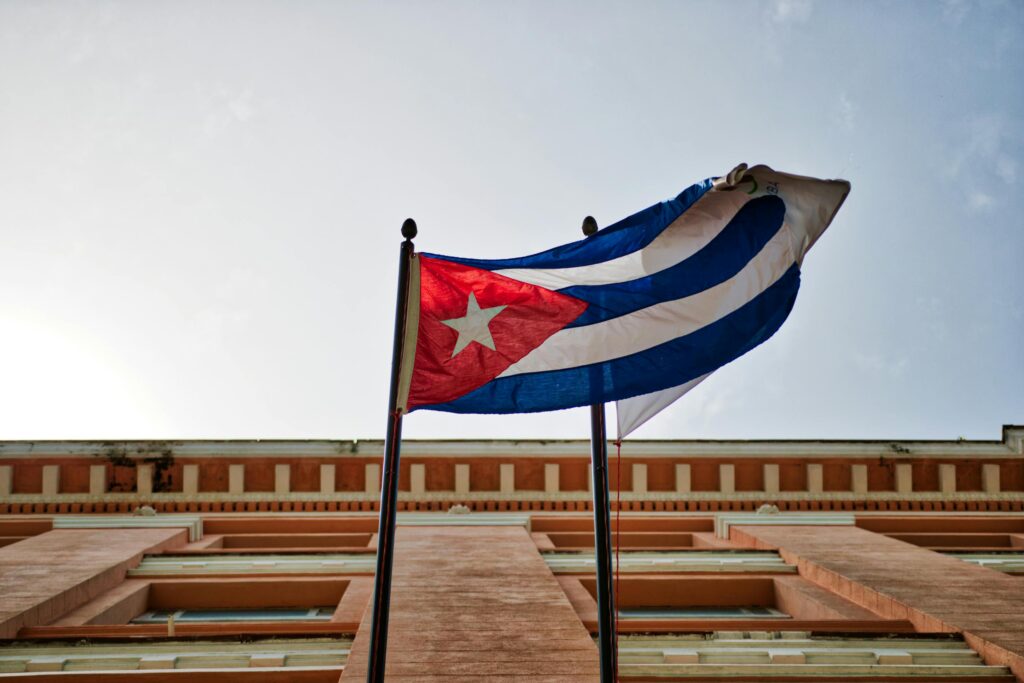
The Treasury Department added Cuba’s main spy agency, four cabinet ministers, three generals, and senior Communist Party officials to its OFAC blacklist on Monday — the second major wave of designations in two weeks. Cuba’s president responded by warning Washington that any military action would result in a “bloodbath,” as reports emerged that Havana had acquired hundreds of military drones from Russia and Iran.
Who was sanctioned and why
The Treasury Department sanctioned Justice Minister Rosabel Gamon Verde, Energy Minister Vicente de la O Levy, Communications Minister Mayra Arevich Marín, and Esteban Lazo — president of Cuba’s National Assembly — along with the Intelligence Directorate, its head, three top generals, and a top Central Committee official. The designations freeze any U.S.-held assets of the named individuals and entities, prohibit Americans from doing business with them, and — under Executive Order 14404 signed by Trump on May 1 — extend to foreign companies that transact with the sanctioned parties in key sectors of the Cuban economy.
Individuals and entities sanctioned — May 18, 2026
Rosabel Gamon VerdeMinister of Justice
Vicente de la O LevyMinister of Energy
Mayra Arevich MarínMinister of Communications
Esteban Lazo HernándezPresident, National Assembly of People’s Power
Roberto Morales OjedaSecretary of Organization, Communist Party Central Committee; Politburo member
Cuba’s Intelligence Directorate (DGI)Main foreign intelligence agency
Head of Intelligence DirectorateName not released publicly
Three top generalsNames not released publicly
Oscar Alejandro Callejas ValcarcePNR (National Revolutionary Police) leadership — updated entry
Eddy Manuel Sierra AriasPNR leadership — updated entry
The new sanctions architecture — a significant legal expansion
The designations fall under Executive Order 14404, signed by President Trump on May 1, 2026. The order establishes a new sanctions authority under the International Emergency Economic Powers Act, separate from the traditional Cuban embargo regulations. The practical significance is considerable: unlike the existing embargo framework, EO 14404 can reach foreign companies with no U.S. nexus that operate in Cuba’s energy, defense, financial services, or security sectors — meaning European, Chinese, or Latin American firms doing ordinary business with sanctioned Cuban entities now face potential U.S. penalties. This marks the second wave of individual sanctions against the regime in less than two weeks — the first wave on May 7 included GAESA, the military conglomerate controlling over 70 percent of Cuba’s dollarized economy.
Díaz-Canel warns of “bloodbath” — and Cuba acquires Russian and Iranian drones
Cuba’s President Miguel Díaz-Canel warned Monday of a “bloodbath” in the event of an American attack, stressing the island’s right to defend itself a day after Axios reported that Havana had obtained over 300 military drones from Russia and Iran and was considering using them against the U.S. base at Guantanamo Bay, among other targets. The report, which cited U.S. intelligence officials, came amid growing speculation that Washington is weighing military action to topple Cuba’s communist government — speculation that Trump himself has fueled with repeated public comments about Cuba being “next” after Venezuela and Iran.
The broader pressure campaign — humanitarian consequences
Washington cut off one of Cuba’s last economic lifelines by halting oil shipments from Venezuela, its main fuel supplier, and threatening tariffs on any other country that attempted to make up the shortfall. Trump’s oil blockade has exacerbated a severe humanitarian and energy crisis in Cuba, marked by ever more frequent blackouts. Cuba’s food industry minister confirmed the shortages extend to basic provisions including powdered milk and beans for children and elderly citizens. The convergence of energy sanctions, the Venezuela oil cutoff, and the new wave of OFAC designations represents the most comprehensive economic pressure campaign Washington has applied to Havana in decades — and one that is landing on a population already experiencing acute deprivation.
Related Posts
US Accuses China of Large-Scale Theft of AI Technology
From above of roll of dollar bills tied with rubber…
U.S. Treasury yields hit their highest level since 2007, sending global markets a stark warning
The 30-year U.S. Treasury yield surged to 5.2% on Tuesday…

Why X Is Moving Away From Aggregators and Reposts — And What AI Has to Do With It
The shift happening on platforms like X (formerly Twitter) isn’t…
