
The United States has taken a major step toward redefining modern aerial warfare by testing a next-generation unmanned refueling drone capable of dramatically extending the range of fighter jets.
The aircraft, known as the MQ-25A Stingray, is being developed as part of a broader effort to modernize naval aviation and reduce reliance on manned tanker missions. Built by Boeing, the drone represents a critical shift toward autonomous military operations.
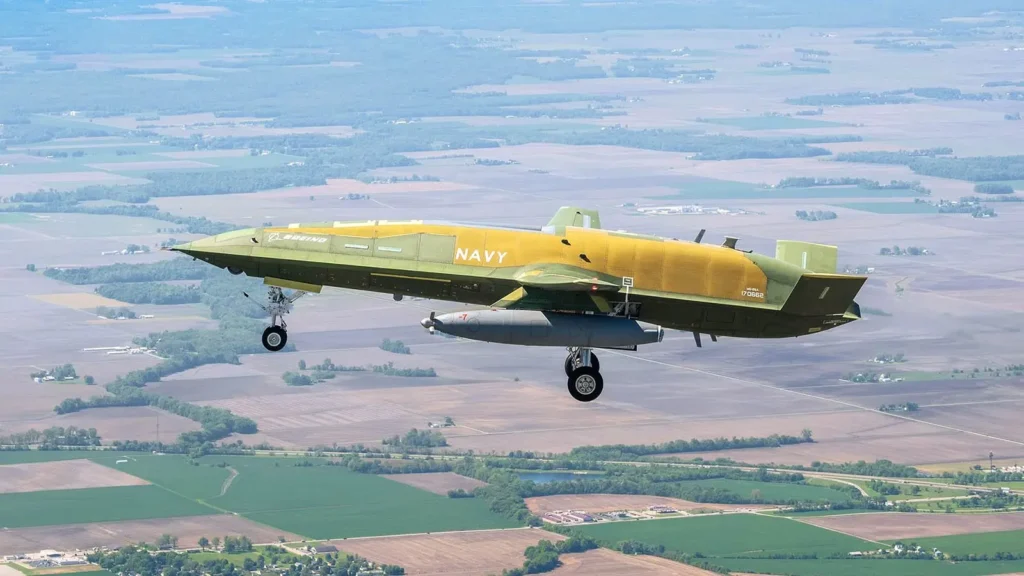
A New Era of Aerial Refueling
The MQ-25A is designed to operate from aircraft carriers and provide mid-air refueling to combat jets, allowing them to fly longer distances without returning to base. This capability is seen as essential in modern conflict scenarios where range and endurance are decisive factors.
The drone can carry up to 15,000 pounds of fuel, significantly increasing the operational reach of naval aircraft.
Currently, many refueling missions are handled by fighter jets like the F/A-18, which reduces their availability for combat operations. The introduction of autonomous refueling drones could free up these aircraft for frontline missions.
Strategic Advantage in Modern Warfare
Military analysts point out that this technology comes at a crucial time, as global powers invest heavily in long-range missile systems and anti-ship weapons—particularly in regions like the Indo-Pacific.
By extending the range of carrier-based aircraft, the MQ-25A could allow US forces to operate farther from potential threats while maintaining strike capabilities.
The drone is also expected to play a key role in future combat strategies, where unmanned systems work alongside piloted aircraft in coordinated operations.
Why This Matters Globally
The ability to refuel aircraft without risking pilots introduces a major tactical advantage. It not only enhances mission flexibility but also reduces operational risk in contested environments.
The US Navy plans to integrate the system into its fleet later this decade, with a projected expansion of dozens of units as part of a broader modernization program.
The Future of Autonomous Air Combat
The MQ-25A is widely seen as the first step toward a fully integrated unmanned air wing. As defense budgets increasingly prioritize automation and artificial intelligence, drone-based logistics and combat support systems are expected to become standard.
If successful, this technology could reshape global military balance—ushering in an era where autonomous aircraft play a central role in air superiority and long-range strike missions.
Related Posts

Financial Disclosures Reveal Trump Was Linked to Thousands of Stock and Bond Transactions
New financial disclosure documents linked to Donald Trump reportedly reveal…

Italy’s Campi Flegrei is “speeding toward a breaking point” — and 500,000 people near Naples could be at risk
A new scientific study concludes that Campi Flegrei — one…
U.S., Mexico, and Canada announce coordinated Ebola travel measures ahead of World Cup 2026 — including mandatory isolation for the DRC national team
The three host nations issued a joint statement on Thursday…
