
- 1TB NVMe SSD
- 1280 x 800 HDR OLED display with premium anti-glare etched glass, 7.4″ Diagonal display size up to 90Hz refresh rate
- Wi-Fi 6E

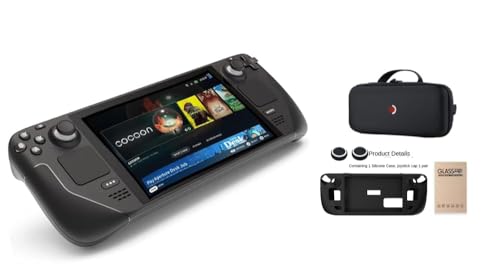
Steam Deck OLED (1TB) Review
This is Valve’s Steam Deck OLED in the 1TB configuration, released in November 2023 as a mid-cycle refresh of the original 2022 Steam Deck — not a full second generation, but a meaningful hardware revision that addressed several of the original model’s most common complaints. It includes anti-glare etched glass (a feature specific to the 1TB tier) and a carry case with a removable liner.

A quick, important pricing update before anything else
Worth knowing up front: Valve raised prices on the Steam Deck OLED lineup in May 2026, with this 1TB model now priced at $949, up from its original $649 launch price — a substantial increase Valve has attributed to broader component cost pressures rather than any hardware change. It’s also worth knowing that Valve fully discontinued the older LCD Steam Deck models in February 2026, meaning the OLED lineup is now the only current Steam Deck available new. If you’re price-sensitive, it’s worth checking Valve’s own store directly, since stock and pricing can occasionally differ from third-party retail listings.
What critics loved: this is a genuine, meaningful refinement
Critical reception at launch was very positive and has held up well. IGN scored it 9.0/10, specifically praising the fantastic, vibrant OLED screen but calling the much-improved battery life the most impressive upgrade of the whole revision. PC Gamer’s review described the new panel as capable of pushing 1,000 nits of peak brightness in HDR with 110% of the DCI-P3 color gamut, noting that the improved contrast and color accuracy help distract from the still-modest 1280×800 native resolution. Aggregated critic scores from that launch window were consistently strong: PCGamer at 89/100, The Verge at 8.0/10, and recommended verdicts from Engadget, Polygon, Eurogamer, and USA Today.
The real, documented hardware fixes
Two changes stand out as genuine, substantive improvements rather than marketing dressing. First, battery capacity increased by 30-50% along with updated thermal management, addressing what had been one of the most consistent complaints about the original 2022 Steam Deck — TechRadar’s own testing of the original model found it could barely sustain 90 minutes of playtime in a demanding game like God of War Ragnarök. Second, and just as significant: the OLED model’s thumbsticks use Hall-effect sensors, which measure stick position magnetically rather than through physical contact — the practical result is that stick drift, a notorious, widespread failure point on many gamepads and handhelds over time, is essentially eliminated on this model.
The honest, unavoidable caveat: this is the same core performance as 2022
This is important to understand clearly: the OLED refresh did not increase raw processing power. It’s still built around the same 4-core/8-thread Zen 2 CPU and RDNA 2 GPU architecture as the original 2022 Steam Deck — genuinely capable for its class when it launched, but by late 2026 standards, this is aging silicon competing against newer handhelds using more modern AMD Ryzen Z2-generation chips. If raw gaming horsepower for the newest, most demanding titles is your top priority, know that you’re buying a refined version of 2022-era performance, not a generational leap.
Real-world battery life: better, but still limited under heavy load
Even with the improved battery, expect real limitations during demanding gameplay. Independent testing found sustained heavy gaming sessions can still drain the battery in as little as 2-3 hours, even after the capacity increase — Valve’s own stated range of “3 to 12 hours” depends heavily on what you’re playing, with lighter or well-optimized titles landing at the high end and demanding AAA games at the low end. If you’re planning long uninterrupted sessions away from an outlet with graphically intensive games, plan around this rather than assuming the “improved battery” solved the issue entirely.
Size and portability: not actually pocketable
One detailed, practical review flagged something worth setting expectations around: at roughly 669 grams and 298mm wide, this is a genuinely large device — closer in feel to a small laptop than a pocketable handheld. If you were picturing something you could slip into a jacket pocket, that’s not this device; plan on a dedicated case or bag.
Ecosystem and repairability: genuine strengths
Your entire existing Steam library carries over, and SteamOS’s compatibility layer (Proton) has matured significantly since launch, making the large majority of your Steam catalog playable. Valve also sells official replacement parts directly, and one detailed review cited an iFixit repairability score of 7 out of 10 — a genuinely strong showing compared to most sealed, glued handheld electronics, and a real point in this device’s favor if longevity and serviceability matter to you.
Verdict
The Steam Deck OLED remains, even years after its release, one of the most complete and well-supported handheld gaming PCs available, and the specific hardware fixes in this revision — genuinely better battery life, a superb OLED screen, and drift-proof Hall-effect sticks — solve real problems rather than offering cosmetic upgrades. The core trade-off you need to accept clearly: you’re buying 2022-era processing performance, refined but not reinvented, and Valve’s May 2026 price increase has made that trade-off considerably more expensive than it used to be. If you already know you want into the Steam Deck ecosystem specifically — for its unmatched compatibility, repairability, and refined hardware — this remains a smart, well-reviewed buy despite the price hike. If raw performance for the newest AAA titles is your top priority, or the current price feels steep, it’s worth comparing directly against newer AMD Ryzen Z2-based competitors like the ROG Ally X or Legion Go before committing, since those offer more current-generation horsepower, generally at a real cost trade-off of their own in battery life or software polish.
- 1TB NVMe SSD
- 1280 x 800 HDR OLED display with premium anti-glare etched glass, 7.4″ Diagonal display size up to 90Hz refresh rate
- Wi-Fi 6E

Related Posts

Hisense 32″ QD4SR Hi-QLED Roku TV Review: Great Color for a Small Budget TV, But Check the Resolution First
Hisense 32" QD4SR Hi-QLED Roku TV Review Overview This review…

Apple AirPods 4 Review: The Best Value AirPods Yet, With Real Trade-Offs
Overview The Apple AirPods 4, released in September 2024, are…
FelixKing Ergonomic Executive Chair Review: Big Comfort, Small Price
Review FelixKing has become one of the most recognizable names…
