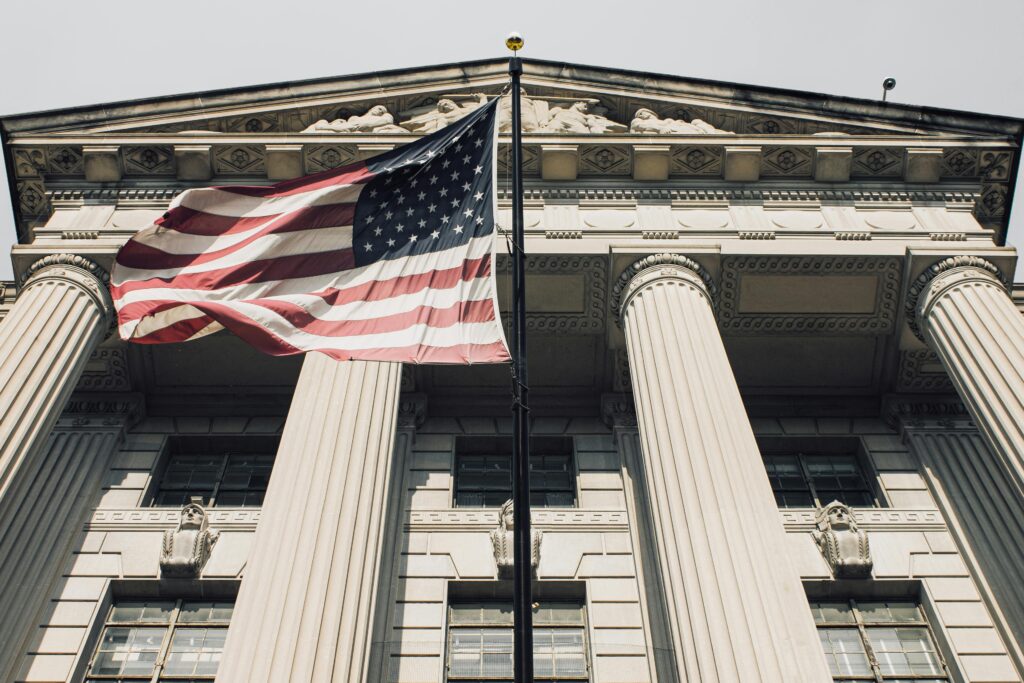
Kevin Warsh was sworn in as the 17th Federal Reserve chair at the White House on Tuesday. Trump attended the ceremony and offered the new chair a pointed send-off: “Do whatever you want.” The remark was widely interpreted as either a grant of genuine independence — or a test of whether Warsh would use that independence to cut rates.
The swearing-in ceremony
Kevin Warsh was formally sworn in as the chair of the Federal Reserve at a White House ceremony on Tuesday, May 19, with President Trump and senior administration officials in attendance. The ceremony marked the official start of Warsh’s term, following his narrow Senate confirmation in a 54–45 vote — the most divisive in Fed history — on May 13. Jerome Powell, whom Warsh replaces, will remain on the Federal Reserve Board as a governor until the expiration of his board term.
“Do whatever you want.”
— President Donald Trump, to Kevin Warsh at the swearing-in ceremony, May 19, 2026
What the remark means — two readings
The comment landed differently depending on the listener. To markets and Fed watchers hoping for a signal of genuine central bank independence, “do whatever you want” could be read as Trump formally stepping back from the months of public pressure he applied to Powell — demands for rate cuts as low as 1%, threats to fire the chairman, and repeated criticism of monetary policy on social media. If Warsh interprets the mandate literally, it means he has a free hand to raise rates if inflation data requires it, regardless of the political consequences for the administration.
The more skeptical reading is that the remark was performative — delivered publicly to insulate Trump from blame if Warsh raises rates, while the private expectation remains that the new chair will find a way to ease monetary conditions over time. That reading gained traction among analysts who noted that Trump’s public grant of independence followed months of private lobbying for a pliant rate-cutter. Either way, Warsh himself has said consistently that he will make monetary policy decisions based on data alone — and that no political conversation will predetermine any rate decision.
The economic context Warsh inherits
The ceremony came the same day that the 30-year U.S. Treasury yield hit 5.2% — its highest level since 2007 — reflecting markets’ assessment that rate cuts in 2026 are effectively off the table and that rate increases are increasingly plausible. April CPI came in at 3.8% year-over-year, driven primarily by Iran war-linked energy prices. Futures markets have priced in a 40% probability of at least one rate increase before year-end — a striking contrast to the environment in which Warsh was nominated, when modest cuts were still being anticipated.
Warsh’s first FOMC meeting as chair is scheduled for June 16–17. Most analysts expect him to hold rates steady and use the press conference to establish his communication philosophy and signal the committee’s current assessment of the inflation outlook. The SpaceX IPO filing — announced the day after his swearing-in — adds another variable to the financial backdrop, with a potential $75 billion capital raise from the market in mid-June coinciding almost exactly with Warsh’s first rate decision.
“The president never asked me to predetermine, commit, fix, decide on any interest rate decision in any of our discussions, nor would I ever agree to do so.”
— Kevin Warsh, Senate confirmation hearing testimony, May 2026
The independence paradox
The fundamental tension in Warsh’s position is unchanged by the swearing-in ceremony. He was nominated by a president who publicly demanded 1% interest rates. He takes office with inflation at 3.8% and rising. He controls a $6.7 trillion balance sheet he wants to shrink — a move that would push long-term rates higher, not lower. And he chairs a committee that dissented four ways on the last vote under Powell, the first time that had happened since 1992. “Do whatever you want” is either the most consequential grant of Fed independence in years — or the most elegant way to avoid accountability for what comes next.
Related Posts
Drone strikes UAE’s Barakah nuclear plant for the first time — fire contained, no radiation released, IAEA expresses “grave concern”
A drone attack sparked a fire at an electrical generator…
US Awaits Iran Response on Peace Deal as Marco Rubio Signals Critical Turning Point in Middle East Crisis
The United States is awaiting Iran’s official response to a…
Kevin Warsh Gains Momentum for Federal Reserve Leadership Amid Political Shift
The path for Kevin Warsh to lead the Federal Reserve…
