Lenovo Legion Tower 5i (RTX 5070 Ti) Review

Overview
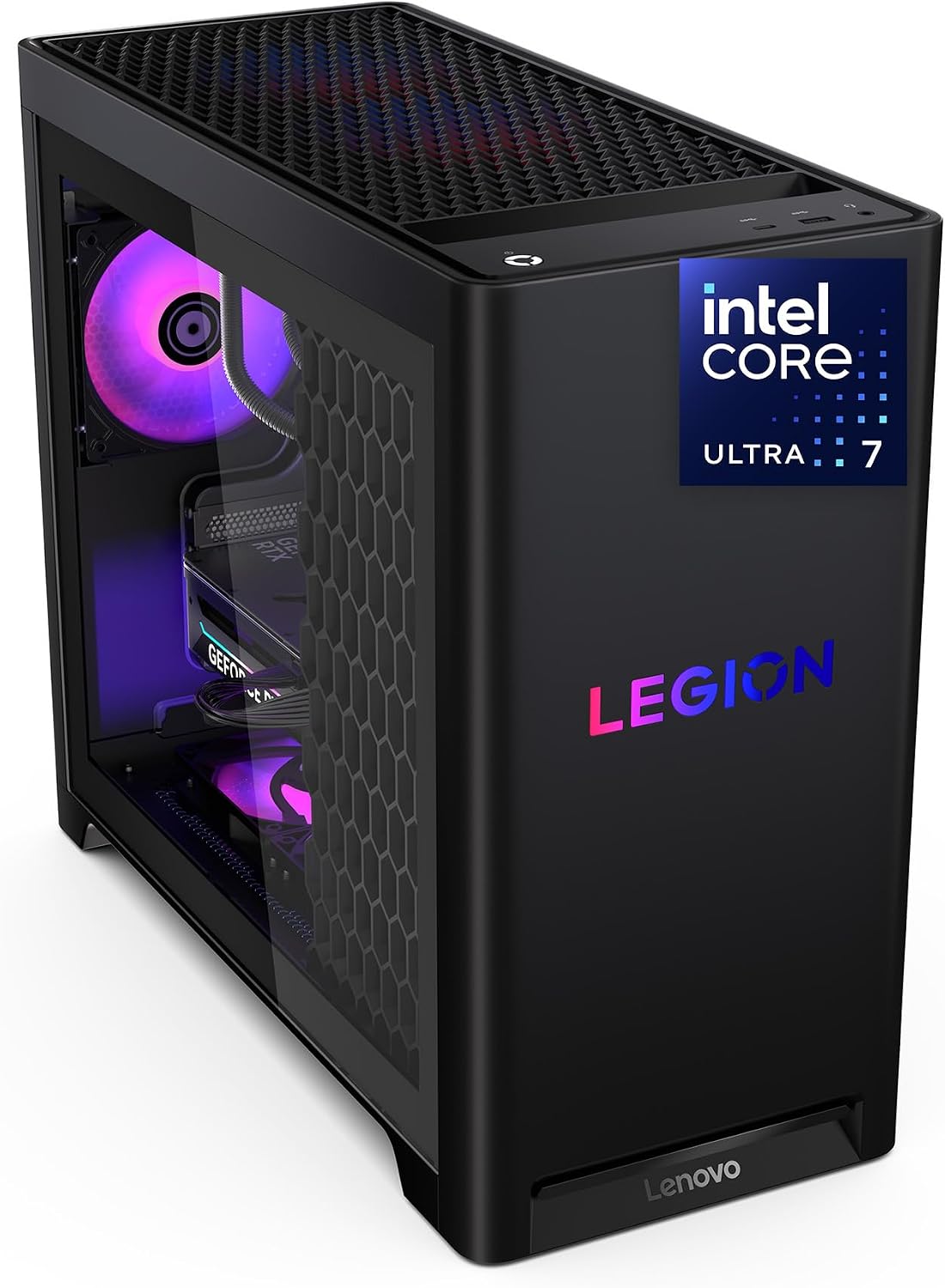
This review covers the Lenovo Legion Tower 5i, AI-Powered Gaming PC, in the configuration listed under this ASIN: an Intel Core Ultra 7 265F processor (Arrow Lake, 20-core: 8 P-cores, 12 E-cores, up to 5.3GHz boost), an NVIDIA GeForce RTX 5070 Ti (16GB GDDR7 VRAM), 32GB DDR5 RAM in a proper dual-channel configuration, a 1TB NVMe SSD, Wi-Fi 6E, 2.5GbE wired networking, Windows 11 Home, and a 3-month PC Game Pass voucher included in the box. Lenovo sells this same Legion Tower 5i chassis across a wide range of configurations — from an entry-level RTX 5060 Ti build up to pricier RTX 5070 and 5070 Ti variants with more RAM and storage — so always double-check the specific CPU, GPU, RAM, and storage combination on any listing, since “Legion Tower 5i” alone spans a considerable performance and price range.

Gaming Performance: The Clear, Genuine Strength
This is where the system delivers exactly what its price tier promises, and detailed hands-on testing backs this up with real numbers rather than just marketing claims. A three-week hands-on review from Vivid Repairs found the RTX 5070 Ti essentially unconstrained at 1440p — in Cyberpunk 2077 with full path tracing enabled and DLSS 4 set to Quality mode, testing consistently hit 80-100fps, and well over 120fps in most titles without path tracing active. At 4K, the same testing found the card holds up impressively well: Cyberpunk 2077 at 4K Ultra with DLSS Quality averaged 70-85fps, and Black Myth: Wukong at 4K Cinematic settings sat around 75fps — genuinely strong, playable 4K performance rather than “4K with everything turned down.” Ray tracing performance specifically showed a real generational leap over the previous-generation RTX 4070 Ti Super this card effectively replaces, with Alan Wake 2’s full ray tracing stack at 1440p averaging around 90fps with DLSS Quality — a title that brought earlier-generation cards to their knees.
The 20-core Core Ultra 7 265F backs this up well: the same testing found no CPU bottlenecking across gaming workloads, including CPU-heavy titles like Microsoft Flight Simulator 2024. One honest, specific nuance worth flagging: Intel’s newer Arrow Lake architecture shows a mixed picture in a small number of older DX11 titles, where frame rates ran slightly lower than you might expect from a chip at this tier — not a Lenovo-specific issue, but an architectural quirk worth knowing if you play a lot of older games. For anything released in the last two years, testing found no such issue.
The Real, Specific Weak Point: Storage
This is the most important, consistent criticism worth taking seriously, and it’s worth explaining exactly why it matters rather than just noting the number. At this price tier, a 1TB SSD is genuinely tight — Vivid Repairs’ detailed review called this the system’s one real flaw, noting that a single modern game like Call of Duty can consume roughly 200GB, and Baldur’s Gate 3 around 150GB, meaning you’ll be actively managing and juggling storage within weeks of setting the system up. The reviewer’s specific, practical recommendation: budget for a 2TB NVMe drive on top of the purchase price and install it yourself — a straightforward roughly ten-minute job thanks to accessible M.2 slots once the side panel is removed, but still an extra cost and a bit of extra effort you shouldn’t have to plan for on a system at this price point.
Thermal Performance: Solid, With One Component Compromise
This is worth covering with real specificity, since it’s genuinely useful, concrete data rather than vague impressions. During gaming sessions, CPU temperatures stayed in the mid-60s Celsius — healthy and unremarkable. Under sustained, all-core workloads like extended 3D rendering, temperatures climbed into the low 80s Celsius, which stays within safe operating limits but runs warmer than ideal for a system at this premium price point, a direct consequence of Lenovo using a tower air cooler here rather than a 240mm AIO liquid cooler, which the reviewer felt would have delivered better sustained performance headroom. The GPU, by contrast, is a genuine strength: its own triple-fan cooler kept temperatures in the 72-75°C range under load — very good for a card of this performance tier — and overall system noise was described as a low, non-intrusive hum during gaming, essentially inaudible with headphones on.
Build Quality and Design
This is a genuine, well-documented strength. The tempered glass side panel uses thumbscrews rather than requiring tools, internal cable management is tidy and routed behind the motherboard tray rather than left loose, and the steel chassis with a proper rubber-gasket-sealed glass panel feels solid rather than flimsy — detailed hands-on testing specifically rated this as one of the better prebuilt chassis currently on the market, with a reasonably restrained approach to RGB lighting that avoids looking overdesigned.
Memory and Upgrade Potential
The 32GB DDR5 RAM is correctly configured in dual-channel mode (verified via CPU-Z in independent testing) — a detail worth appreciating, since Arrow Lake’s architecture is particularly sensitive to memory configuration, and some budget prebuilt manufacturers have been known to cut costs by shipping single-channel memory, which would meaningfully hurt performance on this platform. Lenovo has avoided that mistake here. Beyond the immediate storage upgrade most buyers should plan for, the system offers a genuinely reasonable upgrade path: RAM can be expanded to 64GB if the board has four slots as expected for this platform, and the standard ATX form factor with a PCIe Gen 5 x16 slot means a future GPU upgrade remains realistic, even though the proprietary Lenovo-specific motherboard means you can’t simply swap the board itself for a different one down the line — a limitation shared by nearly every major prebuilt brand, not unique to Lenovo.
Software
Windows 11 Home comes cleanly installed with minimal bloatware — a McAfee trial (worth uninstalling promptly in favor of Windows Defender) and Lenovo’s own Vantage system management software, which provides genuinely useful fan curve control and driver updates but runs persistently in the background and can feel resource-heavy to some users. The three months of included PC Game Pass is a reasonable, if modest, bonus rather than a meaningful factor in the purchase decision.
How It Compares
Detailed comparative analysis against the closest direct competitor, the ASUS ROG Strix G35 in an equivalent RTX 5070 Ti configuration, found the ASUS alternative typically ships with 2TB of storage as standard (addressing this Lenovo’s clearest weakness) and a 240mm AIO cooler rather than an air cooler, but tends to price slightly higher for equivalent specs, with software (Armory Crate) generally considered more intrusive than Lenovo’s Vantage. Against a DIY-built equivalent using the same core components, the same detailed cost analysis found the price gap smaller than many enthusiasts assume — the prebuilt’s real advantage being a single warranty point of contact rather than juggling multiple component RMAs, which matters more to buyers who don’t want that hassle than to experienced builders.
Pros and Cons
Verdict
The Lenovo Legion Tower 5i in this RTX 5070 Ti configuration is a genuinely capable, well-built premium prebuilt that delivers exactly the strong 1440p and playable 4K gaming performance its price tier promises, backed by correctly configured memory, solid thermals under real sustained testing, and above-average build quality for a mass-market prebuilt. The one clear, consistent weak point — and it’s worth taking seriously before buying — is the 1TB storage, which fills up fast with modern games and essentially requires budgeting for a second NVMe drive shortly after purchase. Combined with a competent-but-not-exceptional air cooler rather than a liquid AIO, these are the two decisions holding this system back from being an outright reference-class premium prebuilt. Neither is a dealbreaker: for buyers who want strong, ready-to-game performance without the hassle of sourcing and assembling components themselves, and who are willing to add a storage upgrade on day one, this is a genuinely strong, well-reviewed choice that should serve you well for years without major additional investment.



Related Posts
Dell 27 Plus 4K Monitor (S2725QC) Review: 4K, 120Hz, and USB-C Power Delivery in One Cable
Overview The Dell 27 Monitor S2725QC is a 27-inch 4K…

TrendPlain 16oz Olive Oil Sprayer Review — One of Amazon’s Most Popular Kitchen Gadgets
The TrendPlain olive oil dispenser has become one of the…

Ozeino OW810 Wireless Gaming Headset Review: Decent Budget Sound, With a Big Xbox Catch
Ozeino OW810 Wireless Gaming Headset Review The Ozeino OW810 is…
