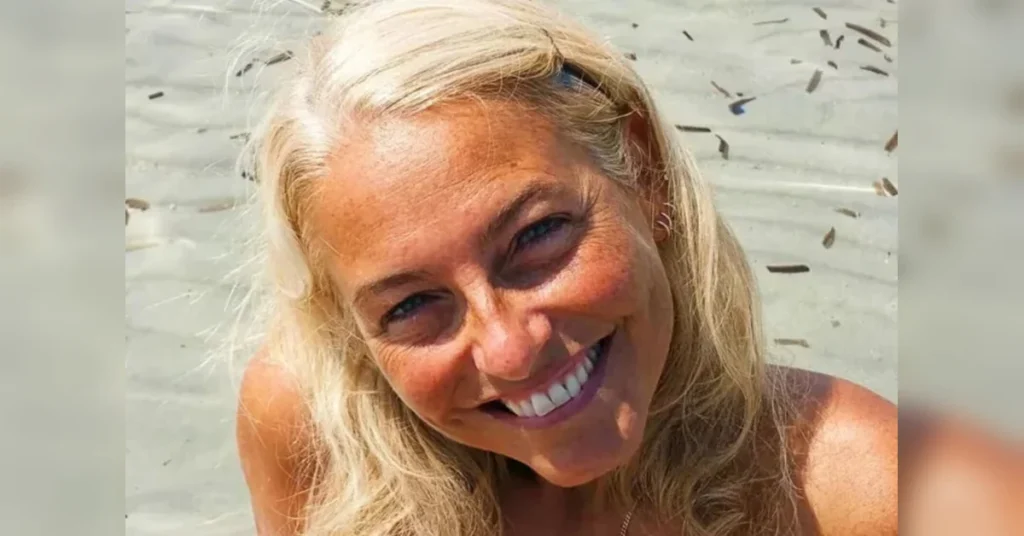
A marine biology professor, her 22-year-old daughter, a research fellow, a recent graduate, and a diving instructor all vanished during an underwater cave exploration near Alimathaa Island on May 14. The search has since been suspended after a rescue diver also died during the recovery operation.
What happened
On the morning of May 14, five Italian nationals descended into the waters of Vaavu Atoll in the Maldives for what was planned as a one-hour dive near Alimathaa Island. The group was aboard the Duke of York, a luxury liveaboard diving vessel, along with approximately 20 other Italian divers who resurfaced safely. The five did not. When they had not returned to the surface by noon, the boat’s crew began searching the area before contacting the Maldives Coast Guard at 1:45pm. Emergency services dispatched a search team, but rough seas and strong winds — the result of an intensifying monsoon — severely hampered the effort from the outset.
The bodies were eventually located inside an underwater cave system at a depth of approximately 50 to 60 metres — well below the Maldives’ recreational diving limit of 30 metres and double the legal limit for recreational divers. Maldivian authorities described the recovery operation as high-risk due to the cave’s complex internal architecture, strong currents, and depth. One rescue diver from the Maldives National Defence Force subsequently died during the recovery mission, bringing the total death toll from the incident to six.
A message sent hours before the dive
The last known communication from Professor Monica Montefalcone — the senior scientist in the group — was a message sent to a colleague at 10:15pm the night before the dive, hours before she descended into the water for the final time.
“It is fundamental to observe the underwater environment — which remains far too unknown to the general public — whether with our own eyes or through the lens of a robot.”
— Professor Monica Montefalcone, University of Genoa, message to a colleague, May 13, 2026 — hours before the fatal dive
The five victims
The five Italians who died in Vaavu Atoll
Monica Montefalcone, 51 — Marine ecologist, University of Genoa
Award-winning associate professor in Ecology, coordinator of research projects Talassa, GhostNet and MER A16-A18. More than 5,000 dives logged. In the Maldives on an official climate change and tropical biodiversity research mission.
Giorgia Sommacal, 22 — University of Genoa student, Montefalcone’s daughter
Undergraduate student travelling with her mother. Not part of the official scientific mission. Her father Carlo Sommacal described his wife as “among the best divers on the face of the earth” and said she “would have never jeopardized the life of our daughter.”
Muriel Oddenino, 31 — Research fellow, University of Genoa
Co-author of scientific research on marine ecosystem conservation, including a study on Posidonia oceanica meadows at the Capo Mortola Marine Conservation Area. Was on the official scientific mission alongside Montefalcone.
Federico Gualtieri, 30 — Marine biology graduate
Had just graduated in Marine Biology and Ecology from the University of Genoa in March 2026. His thesis was titled “Diversity and Ecology of Corallimorphari and Zoanthari in the Central Atolls of the Maldives.” Not part of the official scientific mission.
Gianluca Benedetti, 44 — Diving instructor and boat manager
Originally from Padua. Former banker who relocated to the Maldives eight years earlier to pursue his passion for diving professionally. His body was the first to be recovered by rescue teams.
A yellow weather alert was in effect at the time of the dive
The Maldives National Defence Force had issued a yellow level-two weather alert that morning, warning of strong winds and rough seas caused by an intensifying monsoon and urging special caution for divers and vessels. Whether the group was aware of the alert before entering the water remains part of the investigation. Carlo Sommacal told Italian newspaper La Repubblica: “If there really was a yellow alert in effect, they must have gone diving beforehand, and something must have happened down there.”
What investigators believe may have caused the deaths
No official cause of death has been confirmed, but experts and local investigators have identified several plausible contributing factors. The most widely cited hypothesis is CNS oxygen toxicity — a condition in which oxygen breathed at high pressure, as occurs at depths beyond 50 metres, can trigger sudden seizures, disorientation, or immediate loss of consciousness. At those depths, standard nitrox mixtures become dangerous; technical divers typically require trimix, a specialized blend of helium, oxygen, and nitrogen. If any member of the group was using an incorrect gas mixture, or descended deeper than their specific blend was calibrated for, the physiological consequences could have been rapid and simultaneous.
Strong underwater currents at the dive site — a known feature of the Vaavu Atoll reef system — may have pinned the divers or caused disorientation within the cave’s architecture. The cave itself, at approximately 60 metres deep and 200 feet long, functions as what dive safety analysts describe as a hydraulic trap: once inside, strong currents can make exit extremely difficult. The combination of depth, confined space, adverse surface conditions, and possible gas mixture issues presents a scenario in which even highly experienced divers could face an unsurvivable cascade of complications.
The aftermath: suspended search, suspended license
The Maldives tourism ministry suspended the operating license of the Duke of York pending a full investigation into the incident. The search for the remaining bodies was subsequently suspended following the death of the MNDF rescue diver, with Maldivian authorities citing the continued high risk to recovery personnel. Two Italian specialists — a deep-sea rescue expert and a cave diving expert — traveled to the Maldives to assist with the recovery effort. The University of Genoa clarified that while Montefalcone and Oddenino were on an official research mission, the fatal dive was undertaken privately and was not part of the scientific program. Italy’s embassy in Colombo was coordinating with the victims’ families and the Red Crescent, which offered psychological support to the surviving expedition members aboard the Duke of York.
“The only certainty I have is that my wife is among the best divers on the face of the earth. She’s never been a reckless person. She would have never jeopardized the life of our daughter or any other young people.”
— Carlo Sommacal, husband of Monica Montefalcone, speaking to La Repubblica
Related Posts

Musk Plans Massive AI Chip Factory With Intel to Power Tesla, SpaceX and xAI
Elon Musk is reportedly moving forward with plans to build…
Claude Mythos, Anthropic’s “dangerous” AI, was accessed by unauthorized individuals
The group took advantage of permissions from a third-party contractor…
China and Russia Deepen Strategic Alliance With 42 New Agreements Signed
Xi Jinping and Vladimir Putin strengthened strategic ties between China…
