
Overview
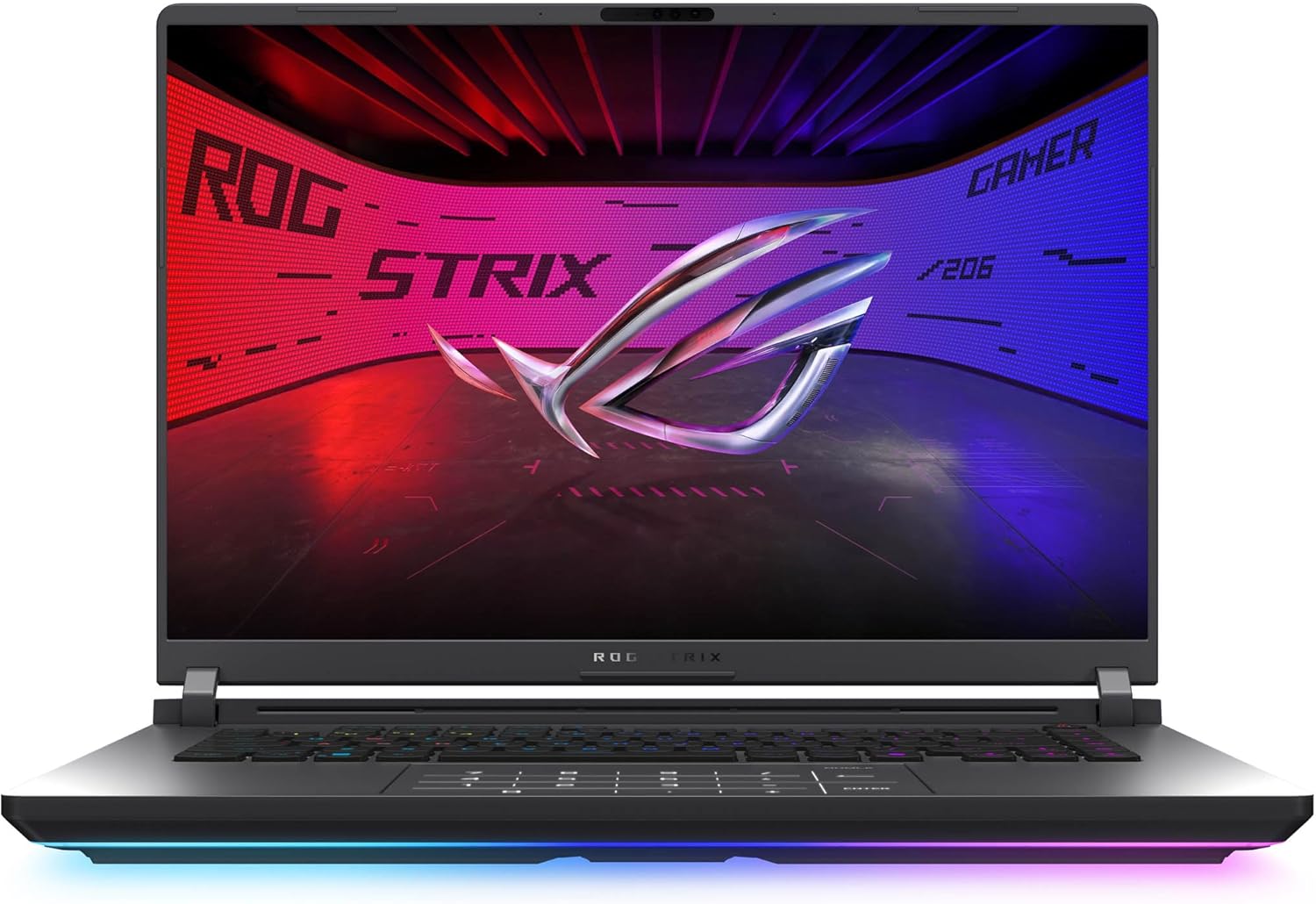
This review covers the specific configuration listed under this ASIN: the ASUS ROG Strix G16 (2025), model G615LR-AS96, built around an Intel Core Ultra 9 275HX processor, an NVIDIA GeForce RTX 5070 Ti Laptop GPU (140W total graphics power, including 25W Dynamic Boost), 32GB of DDR5-5600 RAM, a 1TB PCIe 4.0 SSD, and the 16-inch ROG Nebula Display — a 2560×1600 IPS panel running at 240Hz with a 16:10 aspect ratio, Dolby Vision HDR support, and an anti-glare ACR coating.
This distinction matters more than usual here: ASUS sells the ROG Strix G16 in multiple configurations, including a separate version built around an AMD Ryzen 9955HX3D processor instead of Intel’s chip. That AMD variant benchmarks differently — notably stronger in productivity workloads — so reviews of it don’t map directly onto this Intel-based model. Everything in this review reflects the Intel Core Ultra 9 275HX / RTX 5070 Ti configuration specifically, which several outlets have tested independently.
Display
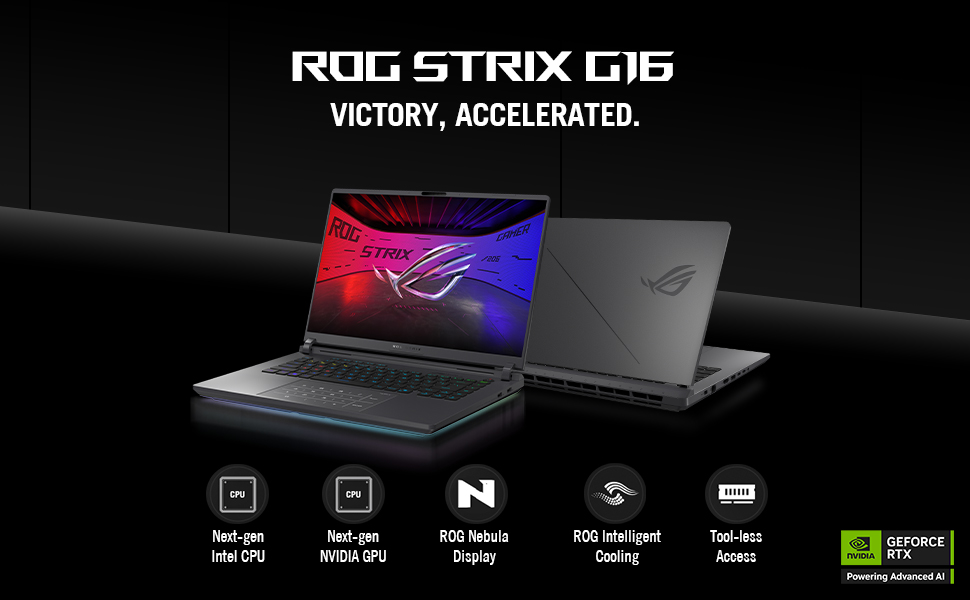
The ROG Nebula Display is consistently the standout feature across reviews, and for good reason. Independent testing found the panel covers roughly 80% of the DCI-P3 gamut and over 112% of sRGB, with peak brightness around 450 nits — genuinely strong figures for a gaming laptop panel, especially one hitting 240Hz. Multiple reviewers praised the vivid, accurate color reproduction across games like Cyberpunk 2077 and Forza Horizon 5, and the anti-glare coating means you can run the display at moderate brightness levels while still avoiding distracting reflections. The 2.5K resolution paired with a 16:10 aspect ratio also gives noticeably more usable vertical space than a standard 16:9 panel, which matters both in games and in everyday desktop use.

Gaming Performance
This is where buyers need realistic expectations. The RTX 5070 Ti here is genuinely capable — Athenil Media’s testing found it ran Cyberpunk 2077 and Forza Horizon 5 smoothly at 1600p on High settings, and 91mobiles’ benchmarking across Cinebench, 3DMark, and PCMark 10 described consistently strong scores backed by ASUS’s triple-fan, liquid-metal cooling solution. This is a legitimately strong 1440p (2.5K) gaming machine, and DLSS 4 with Multi Frame Generation helps it handle ray tracing without the frame-rate cliff older DLSS versions suffered from.
That said, it’s important to be upfront: this GPU sits a tier below the RTX 5080 and RTX 5090 found in pricier ROG Strix Scar and Alienware/Razer competitors, so if you’re comparing benchmark charts, expect the 5070 Ti to trail those higher-end cards in demanding, ray-traced titles at native resolution — that’s the trade-off for a meaningfully lower price. One notable strength independent reviewers called out is thermal stability: the Core Ultra 9 275HX’s efficient 3nm design reportedly keeps CPU temperatures more contained under sustained gaming load than some rival chips, without needing to throttle to stay cool.

Build and Design
The chassis follows ASUS’s now-familiar ROG Strix formula: an aluminum lid with the ROG logo, a durable plastic keyboard deck with a smooth, satisfying finish, and a customizable RGB light bar. It’s a mid-tier design in ASUS’s own lineup — a step down from the flashier ROG Strix Scar series, which includes extras like an AniMe Vision LED display and a tool-free bottom panel for easy internal access. On this G16, opening the chassis to access the RAM or SSD slots requires removing 11 Philips screws rather than a quick-release latch — a minor inconvenience for anyone planning to upgrade components themselves, though the laptop conveniently has open M.2 and SO-DIMM slots for exactly that.
At around 5.5 pounds, it’s on the lighter side for a 16-inch gaming laptop in this performance class, though still noticeably heavier than thin-and-light competitors like the Razer Blade 16.
Audio
This is a genuine weak point that reviewers flag consistently. The dual front-firing speakers are loud enough to fill a room, but the sound signature is described as flat and lifeless — thin on bass, unremarkable for both music and game audio. If sound quality matters to you, budgeting for a good headset alongside this laptop is a realistic expectation rather than an optional upgrade.

Battery Life
As with most high-performance gaming laptops, don’t expect all-day battery life. Testing on the closely related AMD configuration (which shares the same 90Wh battery and similar power profile) found it lasting a bit over 5 hours in a mixed browsing/streaming workload — competitive gaming laptops in this class are simply not built around battery endurance, and heavier use (actual gaming, unplugged) will drain it considerably faster.

Ports and Connectivity
Connectivity is solid for the price tier: Wi-Fi 7 support, Thunderbolt/USB4 connectivity alongside multiple USB-A ports, HDMI 2.1, a 2.5G LAN port, and a 3.5mm combo audio jack. One minor gripe surfaced in community discussion: the laptop uses a MediaTek Wi-Fi module rather than a Qualcomm or Intel one, which some enthusiasts consider a slightly less premium choice at this price point, though it shouldn’t meaningfully affect real-world performance for most users.
How It Compares
Positioned within ASUS’s own ROG lineup, the Strix G16 is deliberately a step below the pricier Strix Scar 16 (which offers the RTX 5080, more RGB, and the tool-free chassis) — and that’s reflected in a meaningfully lower price. Compared to rivals like the Alienware 16 Area-51 or Razer Blade 16 at similar price points, the Strix G16’s display and thermal performance are genuine strengths, while its speakers and battery life lag behind.
Pros and Cons
Verdict
The ASUS ROG Strix G16 (2025) in this Intel Core Ultra 9 275HX / RTX 5070 Ti configuration is a genuinely strong pick for anyone who wants serious 1440p gaming performance without paying flagship prices. The display alone justifies real consideration — it’s colorful, bright, fast, and well-matched to what the RTX 5070 Ti can actually push. Thermal performance under sustained load is another real strength. Where it compromises is in the audio department, where the flat-sounding speakers make a headset a near-necessity, and in battery life, which is unremarkable even by gaming-laptop standards. If you want the absolute highest frame rates at native 2.5K with ray tracing maxed out, ASUS’s own Strix Scar 16 with an RTX 5080 will get you there for more money — but for most gamers, this G16 configuration represents a smart, well-reasoned middle ground.

Related Posts
NOCO GB40 Boost Plus Jump Starter Review: Small Box, Big Peace of Mind
Overview The NOCO GB40 Boost Plus is a compact 1000-amp…

Creality K2 Plus Combo Review: A Multicolor Powerhouse, With Real Growing Pains
Overview The Creality K2 Plus Combo is a large-format CoreXY…

Shark HV322 vs Dyson V8 vs Dyson V11 (Full Comparison 2026
🔝 Products Compared 📊 Comparison Table FeatureShark HV322Dyson V8Dyson V11TypeCordedCordlessCordlessSuction…
