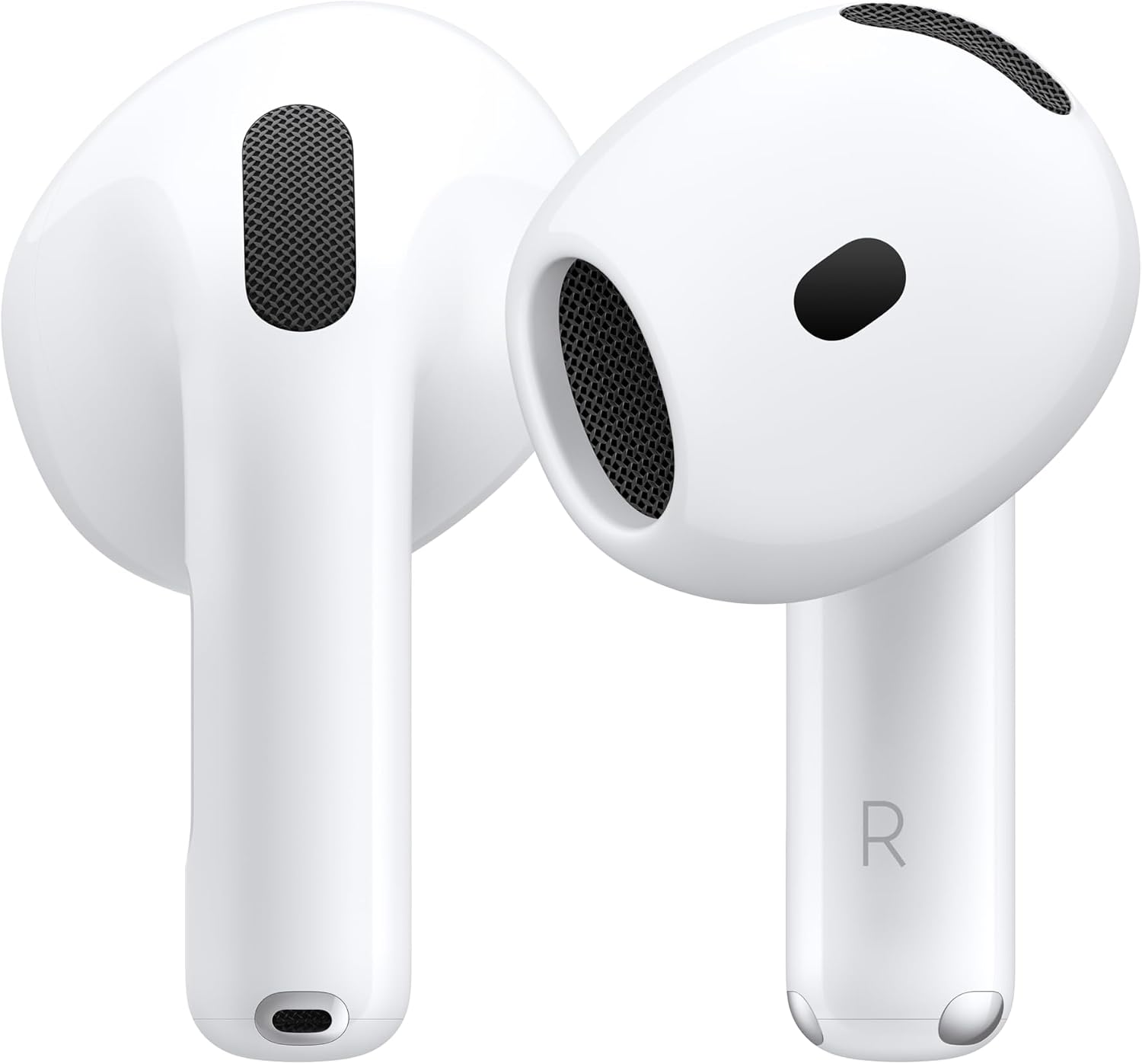
Overview
The Apple AirPods 4, released in September 2024, are the successor to the AirPods (3rd generation) and mark Apple’s cheapest AirPods yet, starting at $129 for the standard model. They keep the familiar ear tip-less, one-size-fits-most open design, but introduce a reshaped fit based on an extensive dataset of ear shapes, Apple’s H2 chip, and — notably — a $179 ANC (Active Noise Cancellation) variant, which is a first for an open-ear AirPods model. The case is also about 10% smaller than before, with a redesigned, more squarish shape.

Fit and Comfort
This is one of the most consistently praised upgrades across reviews. Multiple outlets that tested the AirPods 4 across a wide range of ear shapes and sizes found them noticeably more comfortable than earlier AirPods generations, thanks to shorter arms and reduced bulk that let them sit more securely. One long-term reviewer described going from a devoted AirPods Pro 2 user to genuinely forgetting they’d switched, even across subway commutes, long work sessions, and full cross-country flights.
That said, comfort and fit are inherently ear-shape dependent with an open design like this. Some testers found them comfortable for extended wear, while others didn’t get the same secure feeling — and without swappable ear tips or in-ear stabilizers, the AirPods 4 remain more prone to falling out than sealed-fit earbuds, particularly during physical activity or while lying down. If a snug, locked-in fit matters most to you, this is worth trying in person before buying.


Sound Quality
Reviewers agree the AirPods 4 represent a real step up in audio over the AirPods 3, with a noticeably stronger bass response — a common weak point of Apple’s open-ear design in the past. One producer and audiophile reviewer described the AirPods 4 as sounding fuller and less thin compared side-by-side with the pricier AirPods Pro 2, crediting a redesigned “sound hole” that isn’t angled downward, giving more consistent sound quality regardless of how the buds sit in your ear.
That said, sound quality still isn’t the AirPods 4’s strongest selling point in the broader market. Independent lab-style reviews note that while features like Adaptive EQ and spatial audio add polish, they don’t dramatically transform the listening experience, and more audio-focused competitors in the same price range can outperform them on raw sound quality.
Active Noise Cancellation (ANC Model)
The $179 ANC version is arguably the more newsworthy release here — genuine active noise cancellation on an open-ear design is not something Apple, or most competitors, had previously offered. Reviewers who tested it were surprised by how effective it is, with one reviewer noting it can rival the AirPods Pro 2’s noise cancellation despite the open-ear fit, at least for situations that don’t require a full physical seal. It’s a genuinely impressive engineering feat, even if it can’t fully replace the passive isolation you get from an in-ear seal.
Battery Life and Call Quality
Battery life and call quality are both described as average rather than standout features — solid enough for daily use, but not a specific reason to choose the AirPods 4 over competitors. If either of these is your top priority, it’s worth comparing directly against other earbuds in this price range rather than assuming Apple leads the category by default.


……………………
.
.
.
………………….

AirPods 4 vs. AirPods Pro 2
This is the central tension in nearly every review of the AirPods 4. At $129–$179, they’re meaningfully cheaper than the AirPods Pro 2, but the Pro 2 frequently goes on sale for a similar price, which complicates the value equation. The Pro 2 offers a sealed fit, swappable ear tips, and generally stronger noise isolation and sound quality — features you’re trading away with the AirPods 4’s open design. If you specifically prefer an open-ear feel and don’t want anything inserted into your ear canal, the AirPods 4 make a lot of sense; if seal and isolation matter more, it’s worth cross-shopping the Pro 2 at sale pricing before deciding.AirPods 4 vs. AirPods Pro 2
Who Should (and Shouldn’t) Buy Them
Reviewers are consistent on this point: the AirPods 4 are best suited to Apple ecosystem users who specifically prefer an open design that lets ambient sound through, rather than anyone chasing best-in-class sound quality or isolation. Android users get little benefit from AirPods’ Apple-specific features and should look elsewhere. If superior sound quality or a highly secure in-ear fit is the priority, there are more specialized options — including Apple’s own AirPods Pro 2 — worth considering instead.
Pros and Cons
Verdict
The Apple AirPods 4 are a genuinely strong, well-executed update — more comfortable, better sounding, and in the ANC model’s case, more capable than any open-ear AirPods before them. For Apple users who specifically want an open, ear-tip-free design, they’re an easy recommendation, especially at their $129 starting price. But the value proposition gets murkier once you factor in how often the AirPods Pro 2 goes on sale for similar money, offering a sealed fit and stronger isolation in exchange for giving up the open-ear feel. Try both if you can, and choose based on which design you actually prefer wearing — not just the price tag.
Related Posts
Tikom G8000 Max Review: A Budget Robot Vacuum That Covers the Basics Well
Overview The Tikom G8000 Max is a budget-friendly 2-in-1 robot…
Lenovo Legion 5i (RTX 5070, OLED) Review: Excellent Value, With a Naming Trap to Watch For
Lenovo Legion 5i Review A naming clarification worth making first,…

Fullstar The Original Pro Chopper (4-in-1) — Full Review
🧠 Overview The Fullstar Original Pro Chopper is one of…
