Alienware Aurora (ACT1250, RTX 5070) Review

Overview
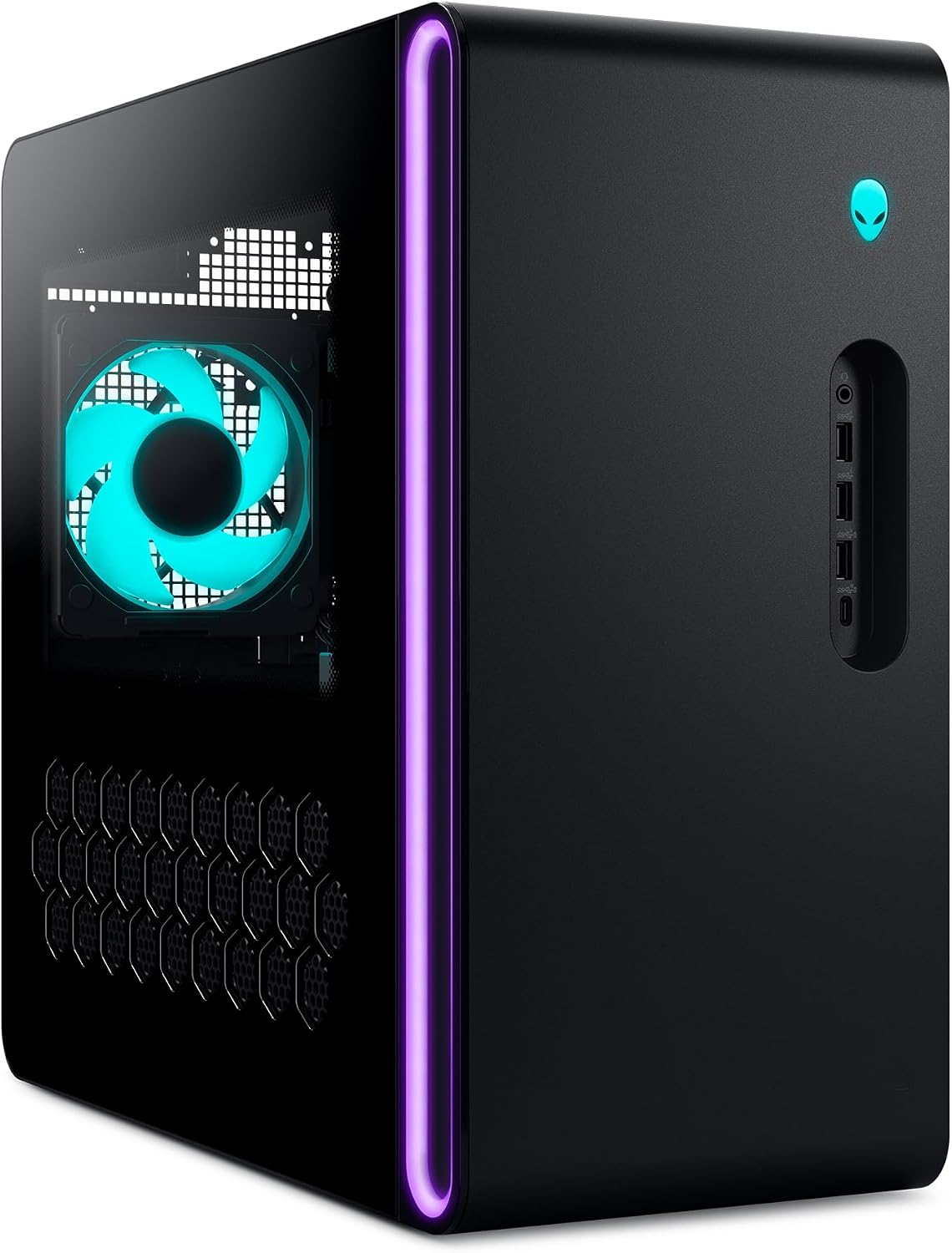
This review covers the Alienware Aurora Gaming Desktop, model ACT1250, in this listing’s specific configuration: an Intel Core Ultra 7 265F processor (20-core, up to 5.3GHz), NVIDIA GeForce RTX 5070, 32GB dual-channel DDR5-5200 RAM, a 1TB NVMe SSD, and a 1000W Platinum-rated power supply, in the matte Basalt Black finish with the optional clear side panel. This is a mid-tier configuration within Dell’s ACT1250 lineup, which spans from an entry-level Core Ultra 7 / RTX 5060 Ti build around $1,500 up to a top-tier Core Ultra 9 / RTX 5080 configuration pushing past $3,000. This same core chassis and design underlies every configuration, so what genuinely differs between listings is the internal hardware — always double-check the specific CPU, GPU, and RAM before buying, since “Alienware Aurora” alone spans a wide performance and price range.
Design
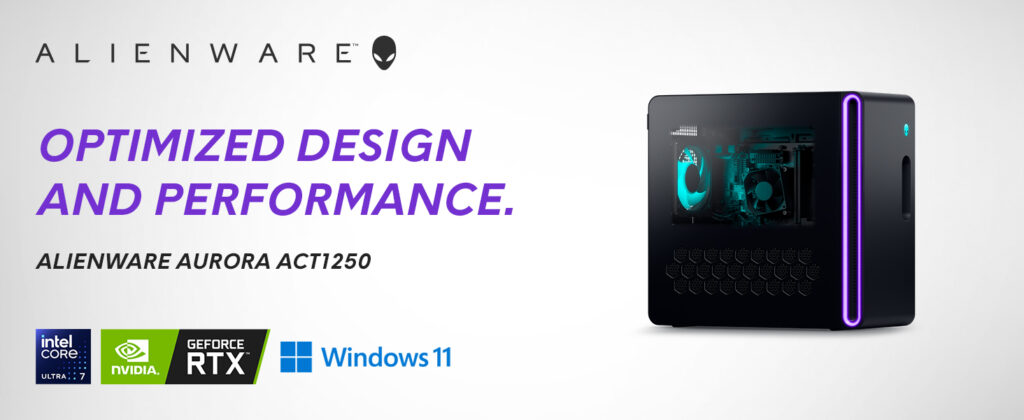
The Aurora’s 2025-generation redesign, carried into this ACT1250 line, is a genuine strength across independent reviews. The chassis uses what Alienware calls its “Legend 3” industrial design — a compact, rectangular tower roughly 18 inches tall, finished in a matte Basalt Black that avoids the fingerprint smudging common on glossier gaming PCs, with customizable AlienFX RGB lighting zones and, in this configuration, an optional clear side panel to show off the internals. At roughly 40% smaller in volume than the previous Aurora R15 generation, reviewers consistently describe the result as notably more office-friendly and unobtrusive than older, bulkier Alienware towers, while still retaining a distinctive look that sets it apart from generic black gaming towers. TechRadar’s hands-on testing specifically praised the redesigned cooling and ventilation as delivering real, measurable improvements — roughly 20% quieter and about 7% cooler than the prior generation, according to Alienware’s own figures, which is a meaningful, practical upgrade if noise matters in a shared living space.
Gaming Performance at 1440p: This Configuration’s Actual Sweet Spot
This is genuinely important context specific to this RTX 5070 configuration, since TechRadar’s detailed review unit was built around this same GPU and RAM combination, making their findings directly applicable here. Their testing found 1440p gaming performance is real and capable, but the generational leap over the previous Aurora R16 (which used a 40-series GPU) isn’t dramatic in every title — native 4K performance in Cyberpunk 2077, for instance, barely moved between generations, making DLSS 4 upscaling and frame generation effectively essential for demanding titles rather than a nice-to-have extra. In more moderate 1080p testing on a similar Aurora build, titles like Shadow of the Tomb Raider comfortably exceeded 200fps at Highest settings, and F1 2024 ran well above 100fps at Very High settings with DLSS Quality enabled — both strong results. At the 1440p resolution this RTX 5070 configuration is genuinely best suited for, expect solid, generally smooth performance in most current titles, with DLSS 4 doing meaningful work in the most demanding, ray-traced games like Doom: The Dark Ages.
A Direct, Honest Value Assessment for This Specific Configuration
This is worth stating plainly, because it’s a genuinely useful, specific finding from TechRadar’s review that potential buyers of this exact configuration should know before purchasing. While TechRadar rated the Aurora lineup’s overall value highly, they were specifically candid that this generation’s mid-tier, 1440p-focused configurations — which closely matches the RTX 5070/32GB build in this listing — represent the comparatively weakest value point across Dell’s own Aurora lineup. Their assessment found the strongest value specifically at the two extremes: the cheapest entry-level 1080p-focused builds, and the priciest top-tier 4K builds. This doesn’t mean this configuration performs poorly — it delivers genuinely solid 1440p gaming — but if squeezing the maximum performance-per-dollar out of your purchase is a top priority, TechRadar’s own comparative analysis suggests the entry-level or flagship configurations may represent a comparatively better deal than this specific middle tier.
The Trade-Off: Limited Long-Term Upgradability
This is the single most important, consistent caveat across independent reviews of every ACT1250 configuration, this one included, and it deserves clear, direct treatment. TechRadar was explicit that the compact chassis and proprietary motherboard genuinely limit future upgrade potential — the cramped internal space makes adding components like a dedicated sound card difficult, and swapping in a larger GPU down the line is a real challenge given the chassis and motherboard design, even though basic internal access itself (a single screw and latch) is easy for routine maintenance or storage upgrades. If you’re the kind of buyer who likes to incrementally upgrade a desktop’s components over several years, this is a genuine, fair reason to consider a standard ATX tower build instead — this system is built to be configured well at the point of purchase, not to be a long-term upgrade platform.
Everyday Use and Reliability
Buyer feedback on this general Aurora ACT1250 line, reflected in Amazon’s own product description and third-party reviews referencing this exact configuration, consistently highlights smooth multitasking, exceptional graphics performance for its price tier, and quiet, quality-feeling operation, aided by the Alienware Command Center software for customizing fan curves, gaming profiles, and RGB lighting. The 1000W Platinum-rated power supply in this configuration provides genuine headroom, both for efficient power delivery and for potential future GPU upgrades within the limits of what the chassis and motherboard will physically support.
Connectivity
Port selection is solid and modern: Wi-Fi 7 and Bluetooth 5.4 wireless connectivity, and Ethernet options that vary by exact trim (2.5GbE on some configurations). TechRadar noted one specific omission worth flagging: there’s no dedicated six-channel 3.5mm surround-sound output, a minor letdown for enthusiasts setting up a dedicated surround speaker system, though most buyers relying on standard stereo or soundbar setups won’t notice the absence.
How It Compares
Within Dell’s own ACT1250 lineup, this RTX 5070/32GB configuration sits between the entry-level RTX 5060 Ti build (better value for 1080p-focused gamers) and the flagship RTX 5080 configuration (the strongest choice for 1440p/4K performance seekers willing to pay significantly more). Compared to competitors like the NZXT Player PC or Lenovo Legion Tower 5 — both similarly specced alternatives TechRadar compared directly — the Aurora’s key advantage remains the breadth of configuration options within a single, well-designed chassis, while sharing the same fundamental long-term upgradability trade-off common to compact prebuilt gaming desktops generally.
Pros and Cons
Verdict
The Alienware Aurora (ACT1250) in this RTX 5070, 32GB configuration is a genuinely well-built, quiet, and good-looking gaming desktop that delivers solid 1440p performance, backed by ample RAM and storage for gaming and everyday multitasking alike. The honest, important nuance worth knowing before buying is that TechRadar’s own detailed testing found configurations in this specific mid-tier range aren’t actually the strongest value point in Dell’s Aurora lineup — buyers focused purely on maximizing performance per dollar might get more for their money at either the cheaper, 1080p-focused end or the pricier, 4K-focused top of the range. Combined with the now-familiar trade-off of limited long-term upgradability common to this compact chassis design, this is a desktop best suited to buyers who want a genuinely well-designed, capable 1440p gaming PC configured correctly from day one, rather than a platform meant for years of incremental component upgrades.

Related Posts

Hisense 32″ QD4SR Hi-QLED Roku TV Review: Great Color for a Small Budget TV, But Check the Resolution First
Hisense 32" QD4SR Hi-QLED Roku TV Review Overview This review…

Momcozy Portable Milk Warmer Review (2026): The Best Travel Bottle Warmer for Busy Parents?
Wireless, fast-heating, and with a 17 oz capacity that can…
ASUS ROG Strix G16 (2025) Review: A Genuine Sweet Spot for 1440p Gaming, With a Few Real Compromises
Overview This review covers the specific configuration listed under this…
