
Razer BlackShark V3 Pro Wireless ANC Review
Two variant clarifications before anything else, because they genuinely affect whether this is the right product for you.
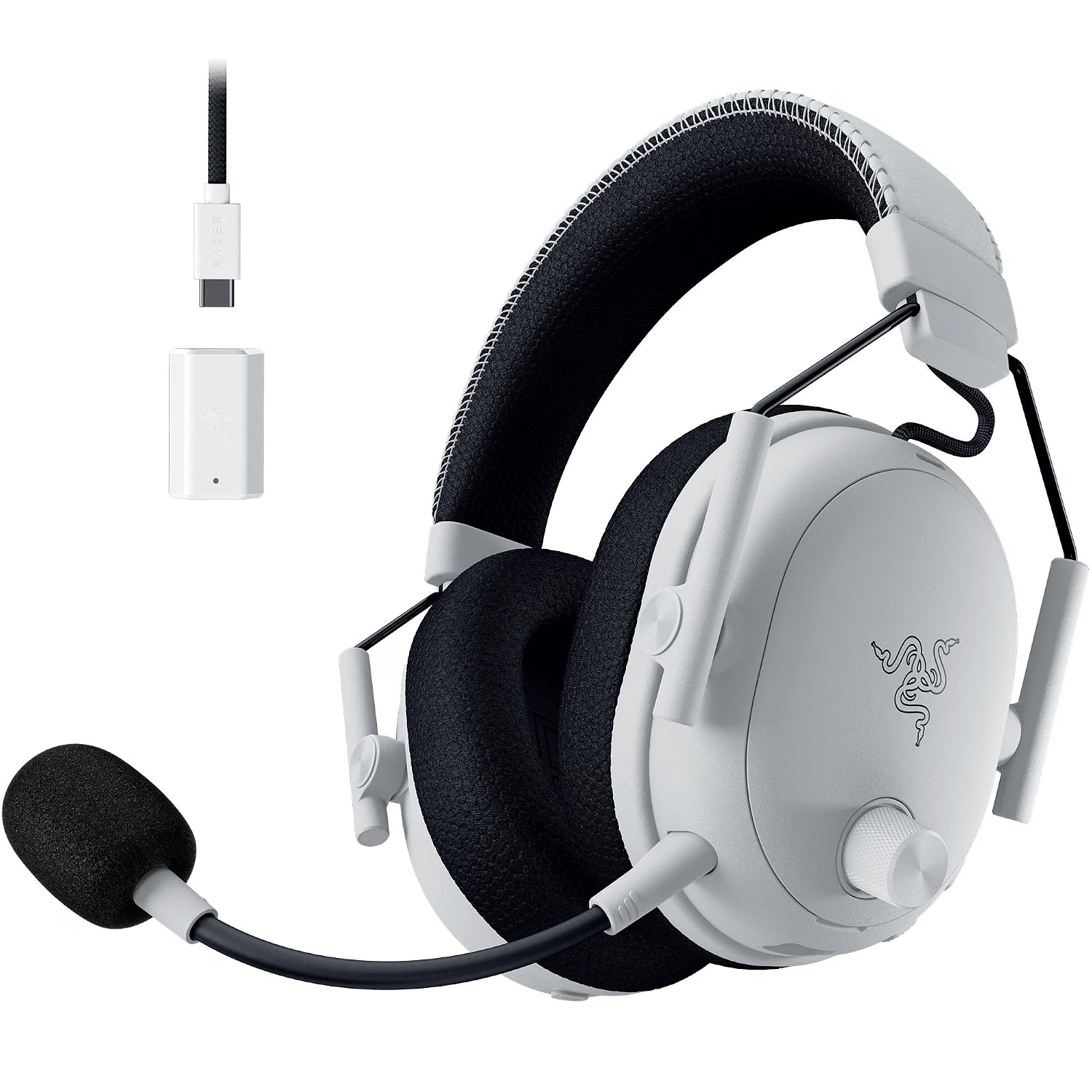
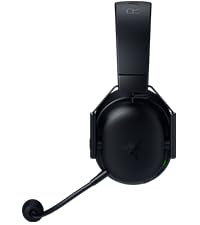
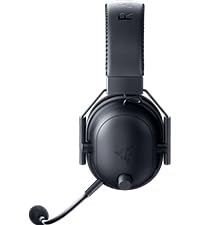
First, this listing is the PC version in White (model RZ04-05400200-R3U1). Razer sells a separate, officially Xbox-licensed version of the same headset — and as covered below, that distinction matters a lot if you game on console.
Second, this is the Pro model. Razer also sells a non-Pro BlackShark V3 Wireless for roughly $100 less, which shares the 50mm drivers and 70-hour battery but drops the ANC. Several reviewers argue directly that the cheaper model is the better buy, so it’s worth understanding what the premium actually gets you.
The spec sheet is strong: TriForce Bio-Cellulose 50mm Gen-2 drivers, a 12 Hz–28 kHz frequency range, HyperSpeed Wireless Gen-2 with latency as low as 10ms, hybrid active noise cancellation, a detachable HyperClear Full Band 12mm microphone, four connection types (2.4GHz, Bluetooth, USB-C, and 3.5mm analog), simultaneous 2.4GHz and Bluetooth, and up to 70 hours of battery life. List price is $249.99.
Comfort and build: near-universal praise
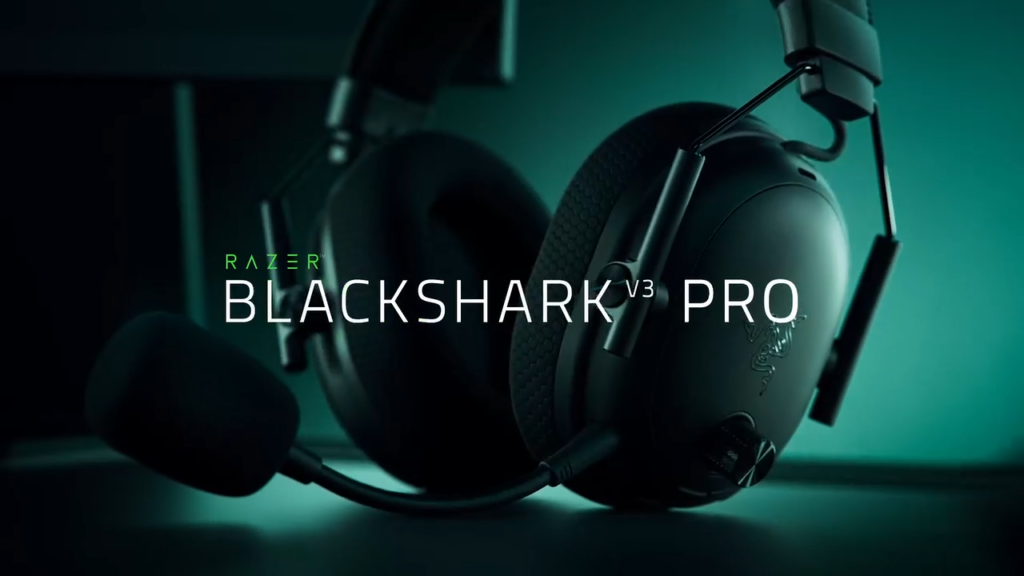
This is the one area where basically every reviewer agrees. Tom’s Guide called it the most comfortable headset they’d tested, crediting the breathable memory foam earcups and pressure-relieving headband. TechRadar — whose reviewer noted they’d been testing headsets for 14 years — praised the comfort levels, the redesigned smoother hinges over the V2, and the build quality, calling it one of the easiest recommendations they could make. Tom’s Hardware described it as surprisingly comfortable and noted the versatility of having four connectivity options plus the ability to mix audio from multiple inputs at once.
RTINGS did flag one meaningful comfort caveat: the sound profile changes noticeably depending on whether you have long hair, a larger head, or wear glasses — a fit-dependent seal issue that’s worth knowing if any of those apply to you.
Sound and latency: consistently strong
Reviewers line up positively here too. RTINGS described a slightly V-shaped sound profile that suits most game audio well, with full customization available in Razer’s Synapse app, which they rated as excellent. Tom’s Guide called the sound outstanding and immersive, highlighting the 7.1.4 spatial audio. The 10ms HyperSpeed wireless latency also earns consistent praise for competitive FPS play, and PC Gamer — despite being critical elsewhere — called it a great-sounding headset without qualification.
The ANC: this is where reviewers genuinely split
Here’s the most important thing to understand, and it’s a real, unusual divergence rather than a minor difference of degree. ANC is the headline feature justifying the Pro premium, and expert opinion on it ranges from glowing to dismissive:
Positive: Tom’s Guide called the ANC fantastic and highly effective, describing it as making you feel lost in the game.
Middling: RTINGS rated it decent but placed it a couple of tiers below the best on the market, noting it can’t block engine rumble well enough for frequent flyers. TrustedReviews called it “a tad weak-kneed.” TechRadar landed in the middle, saying the ANC isn’t perfect but is more than fit for purpose.
Negative: PC Gamer was the most direct, concluding that the headline ANC feature simply didn’t deliver for them and — critically — that this made the price premium over the excellent non-Pro BlackShark V3 hard to justify. They also noted the passive isolation is weak, since the soft memory foam cups leak some sound on their own, which undercuts the ANC’s job before it starts.
That’s a genuine disagreement you should weigh rather than average out. The practical takeaway: if ANC is the specific reason you’re paying the Pro premium, there’s meaningful risk it won’t meet your expectations, and the cheaper non-Pro model may serve you better.
The microphone: also contested
Tom’s Guide and TechRadar both described the mic as crystal clear, and RTINGS rated the boom mic as very good, praising how naturally it reproduces voice and how well it separates speech from background noise. But Tom’s Hardware headlined their review with the claim that you’ll sound worse on this model, and at least one 2026 review put the mic’s noise rejection in louder environments behind the SteelSeries Nova Pro Wireless. For quiet-room gaming it appears to perform well; in noisier settings, results seem less reliable.
The console limitation — read this if you game on PS5 or Xbox
This PC version connects to PS5, Xbox, and Switch via Bluetooth only — not through the HyperSpeed 2.4GHz dongle. That means higher latency, reduced audio quality, and no access to Synapse EQ settings on console. It’s workable for casual console play but genuinely not ideal. If console is your primary platform, look at the Xbox-licensed variant or a headset with dedicated console wireless support instead.
Other practical annoyances
The dongle setup draws consistent criticism. TechRadar flagged that the HyperSpeed dongle requires a USB cable to connect to a PC or console, meaning the wireless headset’s dongle is itself… wired. Additionally, the neater USB-C dongle from the BlackShark V2 won’t pair with V3 models, so there’s no upgrade path there. Tom’s Guide called the dongle “a little annoying” even in an otherwise glowing Editor’s Choice review.
Battery life, while long at roughly 70 hours, is not an improvement over the previous generation — a point TrustedReviews specifically noted. And the design is unapologetically a gaming headset: the earcups don’t swivel flat, so it’s not a travel-friendly or lifestyle option.
Worth noting for context: the Amazon customer rating sits at 4.0 out of 5 across roughly 112 reviews, which is respectable but noticeably below the near-universal acclaim in professional reviews — suggesting some real-world owners have run into issues the review units didn’t surface.
$249,00
|
$149,00
|
$89,99
|
||
|---|---|---|---|---|
| Connection Type | 2.4GHz / BT 5.3 / USB / 3.5 mm | 2.4 GHz / BT 5.2 | 2.4GHz / BT 5.3 / USB | 2.4GHz / BT 5.3 / USB |
| Audio Driver | Bio-Cellulose 50 mm Gen-2 | Titanium 50 mm | Titanium 50 mm Gen-2 | 50 mm Gen-2 |
| Surround Sound | THX Spatial Audio 7.1.4 | THX Spatial Audio | THX Spatial Audio 7.1.4 |
7.1 Surround Sound |
| Microphone | Full Band 12 mm Mic |
Super Wideband 9.9 mm Mic |
Super Wideband 9.9 mm Mic |
Cardioid 9.9 mm Mic |
| Ear Cushions | Dual-Layered Flowknit Foam | Flowknit Memory Foam | Hybrid Sportsweave Memory Foam | Hybrid Sportsweave Memory Foam |
| Battery Life | 70 hours | 70 hours | 70 hours | 70 hours |
| Weight | 367 g | 320 g | 270 g | 270 g |
| Platform Compatibility | PC, PS, Mac, Switch, Mobile | PC, PS, Mac, Switch, Mobile | PC, PS, Mac, Switch, Mobile | PC, PS, Mac, Switch, Mobile |
Pros and Cons
Verdict
Strip out the ANC debate and the BlackShark V3 Pro is close to unanimous: outstanding comfort, excellent sound, strong low-latency wireless, and a good mic in quiet conditions. The complication is that ANC is exactly what you’re paying the Pro premium for, and reviewers whose testing is otherwise reliable landed in genuinely opposite places on it — Tom’s Guide calling it fantastic while PC Gamer concluded it doesn’t justify the price over the non-Pro model. That’s not a caveat to average out; it’s a real risk to factor in.
Practical guidance: if you game on PC in a reasonably quiet room and want a superbly comfortable, great-sounding competitive headset, this delivers, and the ANC becomes a nice bonus rather than the deciding factor. If ANC is your main reason for buying, consider saving $100 on the non-Pro BlackShark V3 and spending the difference elsewhere. And if you primarily game on PS5 or Xbox, this specific PC variant is the wrong product — look at the Xbox-licensed version or a console-first headset instead.

Related Posts

Etekcity Multifunction Kitchen Scale Review (2026): Solid Value, With a Few Caveats
The Etekcity stainless steel kitchen scale has spent years near…
ANCEL AD310 OBD II Scanner Review: The Beginner’s Check Engine Light Fix
Overview The ANCEL AD310 Classic Enhanced Universal OBD II Scanner…
ASUS ROG Strix G16 (2025) Review: RTX 5060 Performance Without the Flagship Price
Review This specific configuration — model G615JMR-AS74 — pairs an…
