
Overview
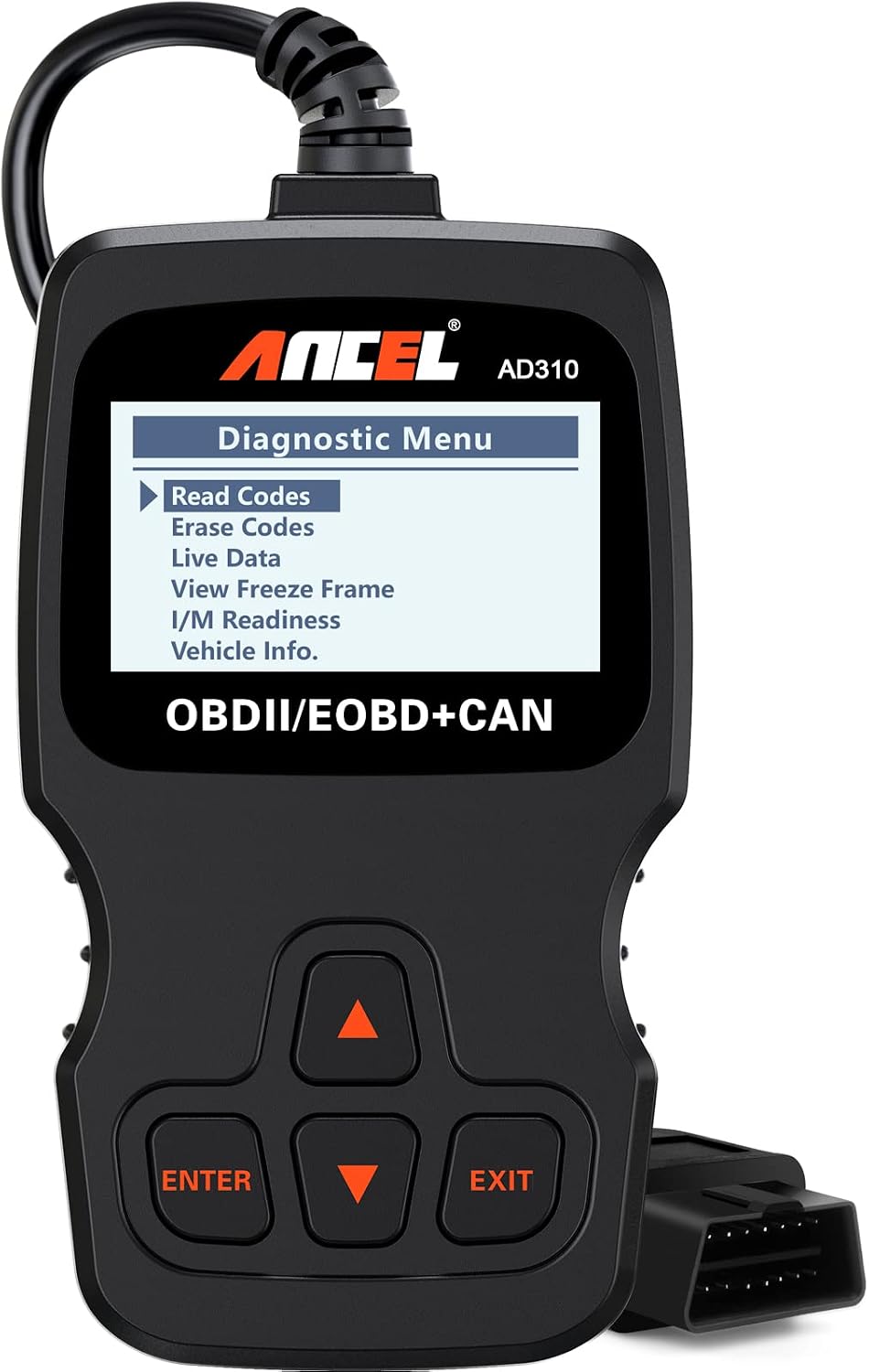
The ANCEL AD310 Classic Enhanced Universal OBD II Scanner is a budget entry-level code reader built to answer one specific question fast: why is my check engine light on? It plugs directly into a vehicle’s OBDII port (standard on nearly all 1996-and-newer US vehicles, 2000-and-newer EU and Asian vehicles) and draws power straight from the car, meaning no batteries or charging are ever required. It supports all major OBDII protocols — KWP2000, J1850 VPW, ISO9141, J1850 PWM, and CAN — and can read and clear trouble codes, view live data and freeze frame data, and check I/M readiness. It’s compact at 8.9 x 6.9 x 1.4 inches and 12 ounces, and it’s one of the best-selling scanners in its category, with a reported seller rating around 4.88 out of 5 and endorsements from figures like YouTube mechanic Scotty Kilmer.

Ease of Use
This is where the AD310 consistently earns its reputation, across both everyday buyer reviews and in-depth hands-on testing. The Drive’s Guides & Gear editors specifically tested it as part of a broader OBDII scanner review series and described the process as genuinely plug-and-play — connect it, turn the ignition partway, and you’re ready to diagnose. A more recent month-long hands-on test from CarXplorer backed this up in a real-world scenario, reading and helping clear a P0420 engine code on a 2013 sedan in under 60 seconds, and specifically praising its plug-and-play simplicity for beginners. Amazon buyers echo this consistently, with several describing it as blowing away expectations for how easy and fast it is to use, especially compared to paying an auto parts store or mechanic just to read a code.

Accuracy and Performance
Multiple independent reviewers who specifically compared the AD310 against professional-grade scanners found its code reading to be accurate and fast for what it’s designed to do — engine-related, emissions-system diagnostic codes. CarXplorer’s month-long test across three different family vehicles, benchmarked directly against a professional-grade scanner, is a particularly strong validation point here, and it landed on a 4.2 out of 5 rating overall.
It’s important to be clear about the scanner’s real limitation, though: it can only read and clear codes related to the engine and emissions system. If a fault is unrelated to emissions — transmission, ABS, airbag, or other vehicle systems — the AD310 simply won’t see it, since it only supports the OBDII interface and protocol set tied to emissions diagnostics. This isn’t a flaw so much as a deliberate scope limitation for a scanner at this price, but it’s worth knowing before you buy if you’re hoping for whole-vehicle diagnostics.
Build Quality
The Drive’s review, while overall positive, was refreshingly candid about the AD310’s dated feel, comparing the experience to using an old-school “brick phone” — functional and reliable, but with old, unattractive black-and-white graphics, text that scrolls a bit slowly, and an outdated Mini-B USB port that gives the whole unit a somewhat cheap feel in hand. Other reviewers describe the physical build more favorably, citing a sturdy, compact design with a 2.5-foot thick, flexible cable that’s long enough to avoid awkwardly hunching over the OBD port, and clearly labeled buttons that keep operation simple. The device also lacks software update functionality, running on a fixed Linux system rather than one designed to be periodically upgraded.

Compatibility
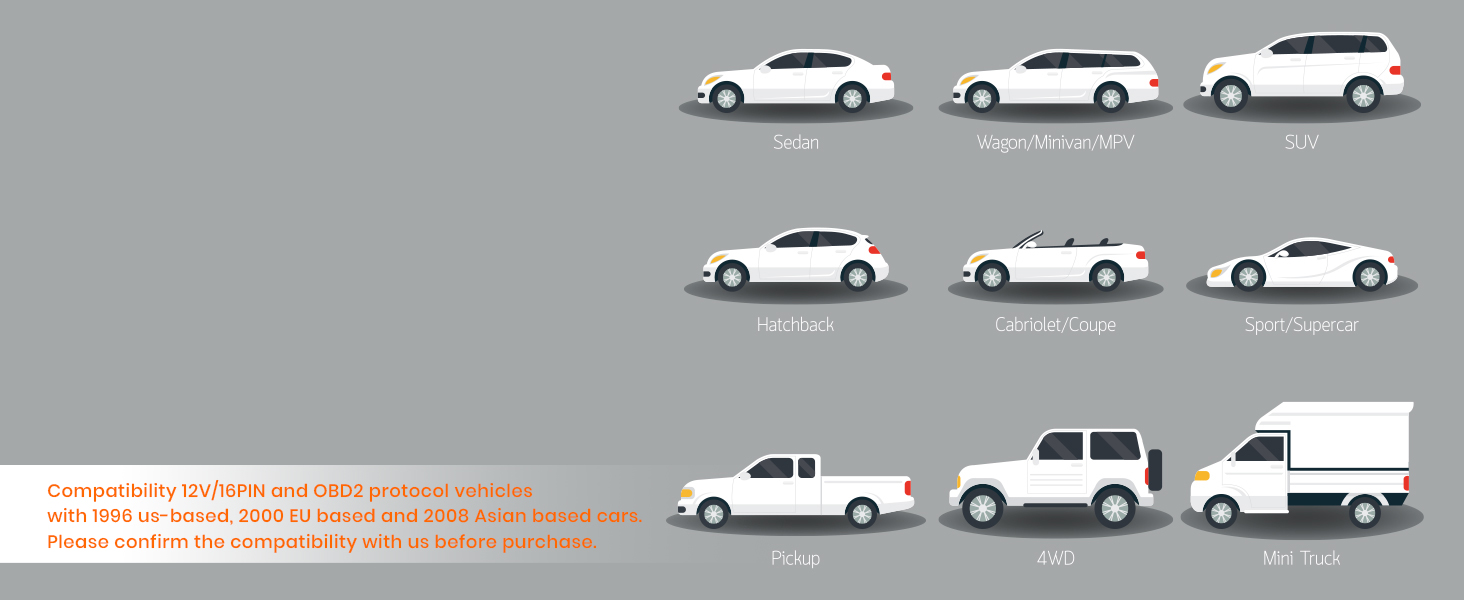
The AD310 covers a wide swath of the market: most 1996-and-newer US vehicles, 2000-and-newer European and Asian vehicles, and any newer OBD2/CAN-protocol domestic or import car. That said, it’s explicitly incompatible with older OBDI-interface vehicles, even with an adapter, so it’s worth double-checking your specific vehicle’s OBD generation before buying, particularly if you’re working on an older or unusual model.
Value
At its low price point, reviewers consistently frame the AD310 as an easy way to avoid unnecessary trips to a mechanic or auto parts store just to read a code — several buyers specifically mention it paying for itself the first time it saves them a diagnostic fee. One long-time DIYer described using it to accurately identify issues they were then able to search and fix themselves, without needing a shop visit for problems within their own skill level.
Pros and Cons
Verdict
The ANCEL AD310 does exactly what a budget OBDII scanner should: it reads and clears check engine light codes quickly and accurately, without draining your wallet or requiring any real technical know-how. Independent hands-on testing backs up its core promise, and for DIYers or casual car owners who just want to know why that dashboard light came on before deciding whether a mechanic visit is actually necessary, it’s genuinely hard to beat at this price. Just go in understanding its real limits — it’s an engine and emissions code reader, not a full-vehicle diagnostic tool, and the dated display reflects its budget positioning. For its intended purpose, it remains one of the most trusted entry-level scanners on the market.
Related Posts
Alienware Aurora (ACT1250) Review: A Striking, Capable Prebuilt — If You Accept Its Upgrade Limits
Alienware Aurora (ACT1250) Review Overview This review covers the Alienware…

Samsung 32-Inch H5000F Smart TV Review: A Genuinely Good Budget Pick, With One Important Catch
Samsung 32-Inch H5000F Smart TV Review The Samsung H5000F is…
Goodbaby No-Touch Digital Forehead Thermometer Review: A Solid, Affordable Family Basic
Overview The Goodbaby No-Touch Digital Forehead Thermometer is an infrared,…
