Overview
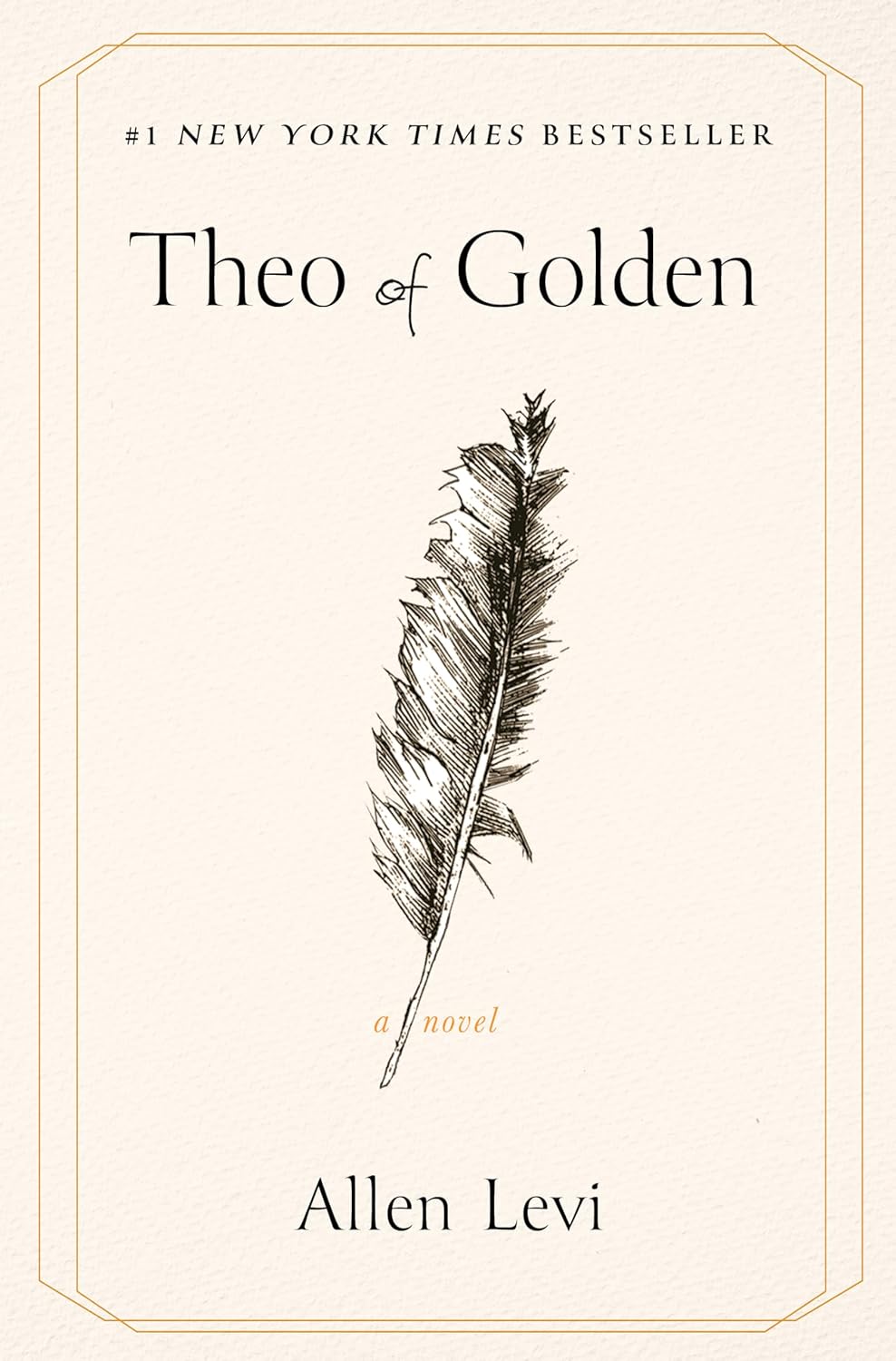
Theo of Golden is a novel by first-time author Allen Levi, originally self-published in 2023 and later picked up and republished by Atria Books (an imprint of Simon & Schuster) in October 2025. What makes its story almost as compelling as the book itself is the path it took to get here: Levi, in his sixties at the time, built the novel’s following through grassroots, word-of-mouth promotion before it caught the attention of a major publisher and went on to spend months on the New York Times Best-Selling Combined Print & E-Book Fiction list, reaching the No. 1 spot.
The story follows a mysterious elderly man named Theo who arrives one spring morning in the fictional small Southern town of Golden. Without much explanation, he visits the local coffeehouse, where ninety-two pencil portraits of local residents hang on the walls, and begins purchasing them one by one — returning each portrait to the person it depicts, and asking only for their story in return. Portrait by portrait, secrets are revealed, relationships shift, and the community is quietly transformed.

Strengths: Atmosphere, Tenderness, and a Clear Moral Core
Critics and readers alike consistently point to Levi’s prose as one of the book’s strongest assets — his descriptions carry a gentle, reverent quality, and several individual scenes are singled out as landing with real emotional weight. The novel’s central theme, built around the inherent worth and dignity of every person, runs through nearly every encounter Theo has, and reviewers describe his kindness as feeling genuine rather than performative.
That sincerity has clearly resonated widely. Several reviewers describe an unexpectedly powerful emotional reaction to the book, with one describing being moved to tears within the first fifty pages despite going in expecting a light, cozy read. Others point to the novel’s larger cultural moment — arriving at a time when readers, especially in the U.S., seem hungry for stories that center generosity and people simply being good to one another.
Where Critics Push Back
Not every reaction has been uniformly glowing, and it’s worth being upfront about the disagreements. A recurring criticism is pacing: several reviewers describe the novel’s middle section as sluggish, noting that some of the individual portrait-and-backstory episodes start to feel similar to one another by the book’s midpoint. One critic went further, describing Theo himself as somewhat flat as a central character and noting that the novel doesn’t shy away from repeating its central moral message rather explicitly throughout.
There’s also a divide over subtlety and tone. Some readers embrace the book’s directness and its overtly hopeful, faith-inflected worldview — Levi has said he turned down offers from a Christian publisher specifically to keep the book from being marketed strictly as religious fiction, though its themes lean in that direction. Others found the prose overwrought or the dialogue exhausting, and felt the large cast of side characters didn’t always land as fully realized people. A handful of readers also flagged the novel’s late-book device of using letters to resolve some of its central mystery as a structural shortcut that undercuts what came before.

Reception and Cultural Moment
Whatever the critical split, the commercial and word-of-mouth success is hard to overstate. The novel has earned praise from high-profile figures including Hoda Kotb, and comparisons — however generous — to To Kill a Mockingbird have appeared in coverage of the book. It’s also been selected for both the Katie Couric Book Club and the Jen Hatmaker Book Club, further fueling its momentum well over a year after its original self-published release.

Theo of Golden: A Novel
Theo of Golden earns its breakout success honestly: it’s a warm, sincere novel with a strong emotional core and a premise that’s easy to fall into, built around the simple, powerful idea of returning something meaningful to the people who need it most. It’s not a flawless book — the pacing dips, the message is delivered without much subtlety, and its protagonist doesn’t always feel fully three-dimensional — but for readers looking for a hopeful, feel-good story about generosity and connection, it’s easy to see why word of mouth carried this one all the way to the top of the bestseller list.
