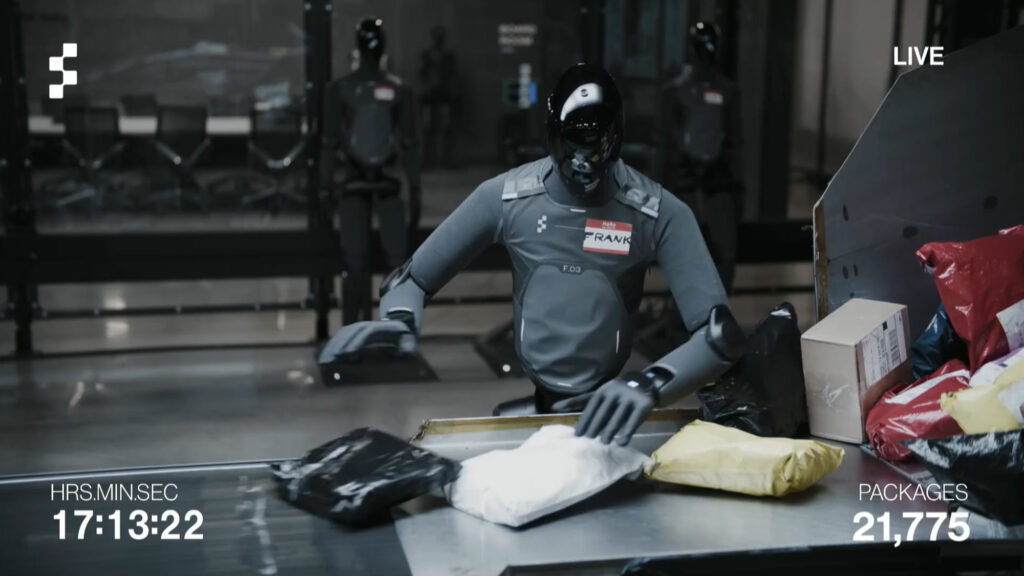
A surprising human-versus-machine challenge has gone viral after a worker reportedly outperformed an AI-powered robot during a 10-hour live logistics test organized by Figure AI.
The competition placed a human worker directly against an autonomous robot in a real-world package handling marathon designed to measure:
- speed,
- consistency,
- endurance,
- and operational efficiency.
According to the live results shared during the experiment, the human participant successfully handled:
- 12,924 packages
while the robot completed:
- 12,734 packages
over the same 10-hour period.
The result surprised many viewers because the robot reportedly operated continuously without:
- food breaks,
- restroom pauses,
- or rest periods.
Meanwhile, the human worker needed several interruptions throughout the challenge yet still managed to maintain a slightly higher overall productivity rate.
The event quickly generated intense discussion online surrounding:
- automation,
- artificial intelligence,
- robotics,
- and the future of human labor.
Supporters of automation pointed out that the robot maintained remarkable consistency throughout the entire test, while others highlighted the adaptability, decision-making, and flexibility still demonstrated by human workers in complex physical tasks.
Figure AI has become one of the most closely watched robotics companies in the artificial intelligence industry, developing humanoid robots designed for:
- warehouses,
- manufacturing,
- logistics,
- and repetitive industrial operations.
Experts note that while AI robotics continue advancing rapidly, humans still maintain important advantages involving:
- problem-solving,
- situational awareness,
- adaptability,
- and unexpected task management.
The challenge also reflects growing global debate over how automation could reshape industries involving:
- logistics,
- delivery systems,
- manufacturing,
- and warehouse operations.
As robotics technology continues evolving, many analysts believe future workplaces may increasingly combine:
- AI systems,
- humanoid robots,
- and human workers
rather than fully replacing human labor in the near future.
Related Posts

Microsoft Adopts “Too Dangerous” AI to Boost Cybersecurity Defenses
Photo: Chesnot/Getty Images Microsoft has confirmed plans to adopt a…

U.S. Hotels Face Low Booking Demand Ahead of FIFA World Cup 2026 Despite Massive Hype
Hotel owners across several host cities in the United States…
Fed Shake-Up: What It Means for Your Money in 2026
The era of Jerome Powell at the U.S. Federal Reserve…
