
Russian President Vladimir Putin announced that Russia will deploy its new RS-28 Sarmat nuclear missile system by the end of the year, calling it “the most powerful missile in the world.” The announcement comes amid growing global tensions and increasing concerns over a new international arms race.
Known in Western media as “Satan II,” the Sarmat missile was developed to replace older Soviet-era intercontinental ballistic missiles and forms part of Russia’s broader nuclear modernization strategy. Russian officials claim the weapon can carry multiple nuclear warheads and bypass existing missile defense systems.
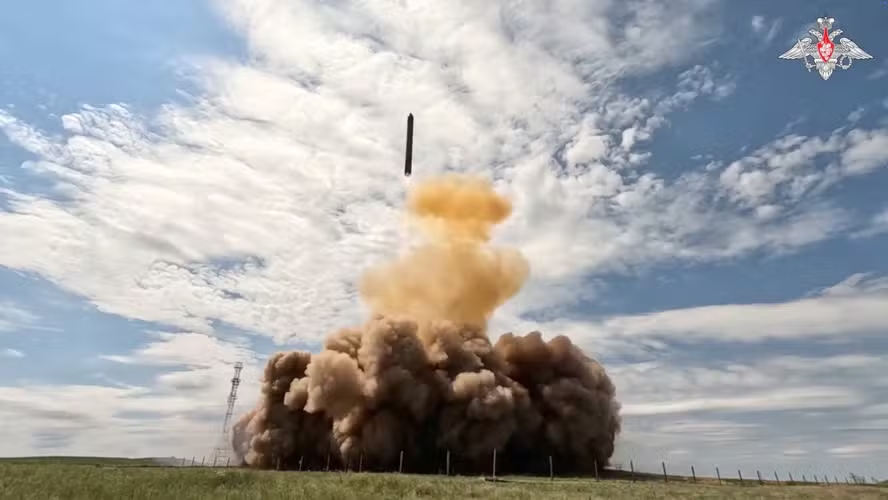
Why the Sarmat Missile Is Raising Global Concern
According to Russian statements, the missile has:
- a range exceeding 35,000 kilometers,
- the ability to carry multiple independently targeted warheads,
- and advanced capabilities designed to evade anti-missile defenses.
Defense analysts say the missile represents one of the most powerful strategic weapons ever developed by Russia, although some Western experts argue Moscow may be exaggerating parts of its capabilities.
Russia Continues Expanding Nuclear Arsenal
Since the start of the Ukraine conflict, Putin has repeatedly highlighted Russia’s nuclear strength as a warning against deeper Western military involvement.
The Sarmat program is one of several advanced weapons systems Russia has promoted in recent years, alongside:
- hypersonic glide vehicles,
- nuclear-powered cruise missiles,
- and underwater nuclear drones.
Analysts warn that continued deployment of next-generation nuclear systems by Russia, China, and the United States could accelerate a new era of strategic military competition.
Failed Tests and Delays
Despite the announcement, the Sarmat program has faced technical setbacks and delays over the past several years.
Multiple reports indicated previous failed launches, including one 2024 incident that reportedly created a large crater near a launch silo during testing.
Russian officials now claim the latest launch test was successful and confirmed the missile is entering operational deployment.
Global Security Implications
The announcement arrives during a period of heightened geopolitical instability involving:
- NATO,
- the Ukraine war,
- tensions in the Middle East,
- and expanding military modernization programs worldwide.
Security experts say deployment of the Sarmat system could increase pressure on global nuclear deterrence policies and further strain relations between Russia and Western countries.
Related Posts
Xbox Series X Review: Is Microsoft’s Powerful Console Still Worth Buying in 2026?
The remains one of the most powerful gaming consoles available,…

Telegram Crypto Surge: Toncoin Jumps 36% After Billionaire Takes Control of Network
The cryptocurrency linked to Telegram is making headlines after a…
SpaceX Starship V3 completes its first test flight and “delivered” on all goals — a key milestone ahead of the largest IPO in history
The world's largest and most powerful rocket lifted off from…
