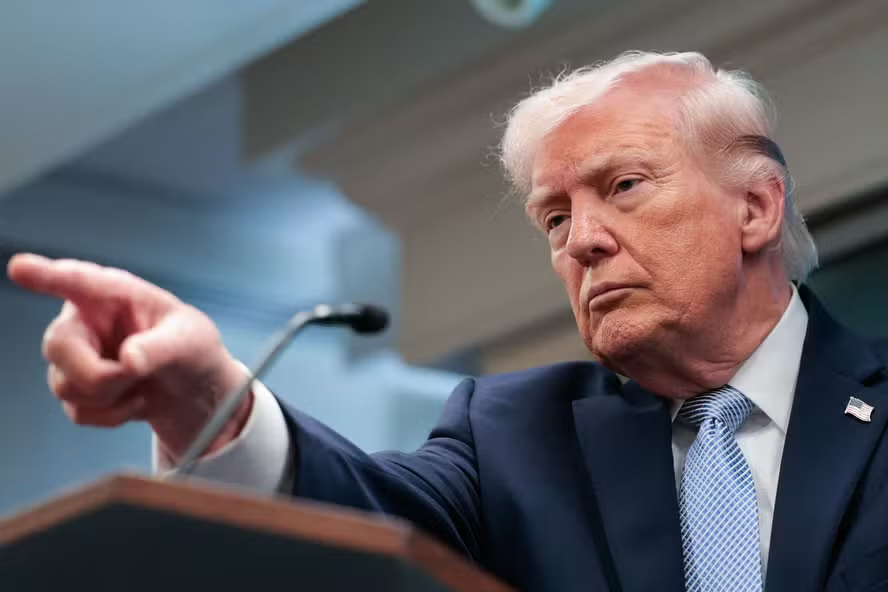
The ceasefire between Israel and Lebanon has been extended for an additional three weeks, according to an announcement made by Donald Trump on Thursday.
The decision follows a new round of discussions held in Washington involving senior officials from both sides.
Ongoing Negotiations in Washington
The truce, which initially began on April 16 with a planned duration of 10 days, will now remain in effect at least until mid-May.
Trump stated that the latest meeting at the White House included key figures such as Vice President JD Vance and Secretary of State Marco Rubio, along with diplomatic representatives from Israel and Lebanon.
He described the discussions as productive and indicated that the United States would continue working with Lebanon to strengthen its security situation.
Continued Violence Despite Truce
Despite the extension, the situation on the ground remains unstable. Recent days have seen renewed exchanges of fire between Israeli forces and Hezbollah.
Reports indicate that rockets were launched toward northern Israel, while Israeli airstrikes in southern Lebanon resulted in casualties, including civilians.
A Fragile Situation
Tensions remain high along the border, where Israeli troops are reportedly maintaining a security zone extending several kilometers into Lebanese territory.
This marks one of the most challenging periods since the ceasefire began, with multiple incidents raising concerns about its effectiveness.
Historical Context
Israel and Lebanon have technically been in a state of conflict since 1948. In Lebanon, military actions are largely associated with Hezbollah, a group backed by Iran.
Recent escalations are linked to broader regional tensions, including developments involving Iran and military actions earlier this year.
Outlook
US-mediated negotiations are ongoing, with Lebanon advocating for an extension of the ceasefire as a step toward discussing troop withdrawals and border arrangements.
Israel, on the other hand, has emphasized security concerns and the need to address threats along its northern border.
While the extension provides temporary relief, uncertainty remains over whether a longer-term agreement can be reached.
Related Posts
Melania Trump Demands Action Against Jimmy Kimmel After Controversial Joke
The First Lady of the United States, Melania Trump, has…
Trump Says US Does Not Need Xi Jinping’s Help on Iran as Middle East Tensions Continue Rising
US President Donald Trump stated that the United States does…

Vale a pena comprar o Mixer Power Inox Elgin Lunar 3 em 1?
Se você está cansado de perder tempo na cozinha ou…
