
Xbox Series X 1TB Digital Edition Review
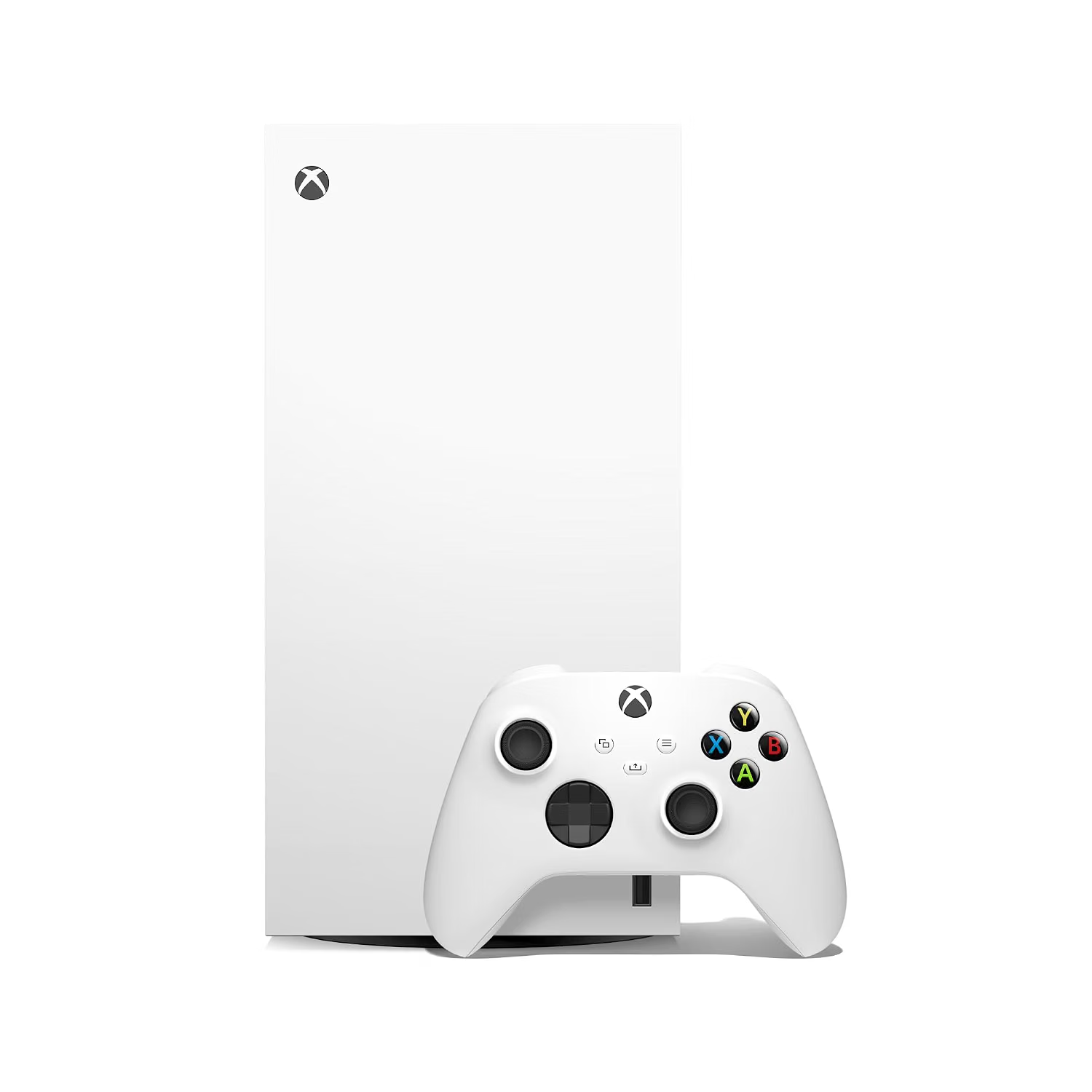
A quick clarification first, since search listings for terms like “PS5 Pro” and “PS5 Slim” sometimes surface this product: this is Microsoft’s Xbox Series X 1TB Digital Edition in Robot White, not a PlayStation console. It’s the all-digital version of the Series X — identical internals to the flagship, with the 4K Blu-ray disc drive removed entirely. The Amazon listing includes the console, one Xbox Wireless Controller, an ultra-high-speed HDMI cable, a power cable, and two AA batteries. Some retailers sell a two-controller bundle of this same console, so check what’s actually in the box on the listing you’re viewing.
The hardware is genuinely excellent
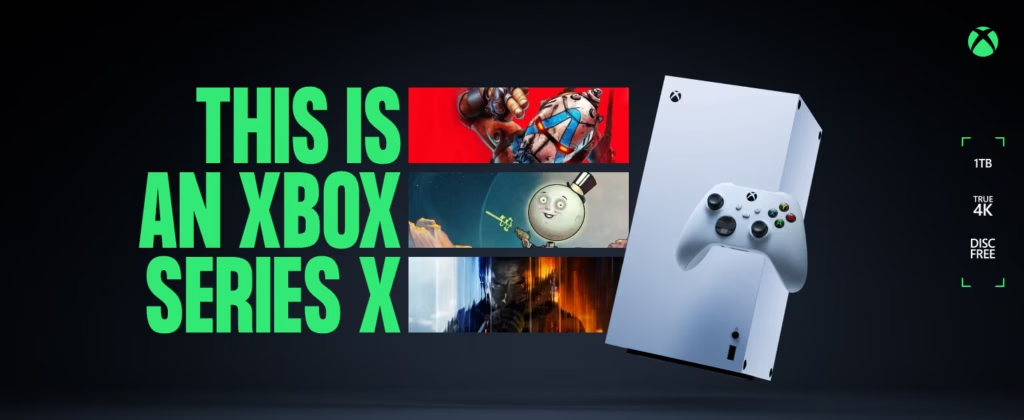
There’s no real dispute about the console itself. Internally it’s identical to the disc-drive Series X: the same custom AMD Zen 2 / RDNA 2 processor with 12 teraflops of GPU power, 16GB of RAM, a 1TB custom SSD, native 4K gaming, DirectX ray tracing, frame rates up to 120 FPS, and Xbox Velocity Architecture powering Quick Resume and fast load times. Backward compatibility spans four generations of Xbox games, and Smart Delivery automatically serves you the best version of any game you own.
TechRadar’s review of this exact model praised it for delivering full Series X power for less, called the Robot White colorway attractive, and specifically highlighted how quiet it runs in operation — describing performance as whisper-quiet and unintrusive. It’s also a strong pairing with Game Pass Ultimate, which is arguably the best argument for an all-digital Xbox in the first place.
The storage problem
Here’s the first real criticism, and it’s one TechRadar flagged as a genuine disappointment: despite removing the disc drive, Microsoft didn’t increase storage capacity. Of the advertised 1TB, only around 800GB is actually usable, since the rest is reserved for essential system software. That’s essentially the same usable space as the disc-drive Series X, meaning you get no storage benefit in exchange for losing physical media support. TechRadar’s conclusion was direct: extra storage capacity would have been a worthy trade-off for the absent disc drive, and without it the value proposition isn’t especially strong compared to either the disc model or the much cheaper 1TB Series S, which offers identical storage at a fraction of the price.
One additional practical consideration TechRadar raised: if your internet connection is slow or unreliable, avoid this model specifically. With no disc drive, you can’t install games offline and are fully dependent on downloads for everything.
The pricing problem — and this is the big one
This is the single most important thing to understand before buying in late 2026, and it’s changed dramatically since the console launched.
The Series X Digital Edition launched in holiday 2024 at $449.99, positioned as $50 cheaper than the flagship Series X. It has since been through three separate price increases. After a $50 bump in October 2025 brought it to $599.99, Microsoft announced on June 25, 2026 that effective August 1, all 1TB Xbox consoles would rise another $150. That put this console at $749.99 — with the disc-drive Series X at $799.99 and the entry-level Series S 512GB at $499.99.
Microsoft’s stated reason is the ongoing memory and storage component crisis: the company said it’s now paying more than 2.5x what it paid for DRAM and NAND in late 2025, largely because AI data centers are competing for the same supply, and it expects costs to double again by fall 2027. Microsoft also discontinued the 2TB Galaxy Black Series X entirely. As of September 2026, these prices remain fully in place across every major US retailer, with no sign of a rollback, and Microsoft has signaled a further increase is possible if memory costs keep climbing.
The uncomfortable math: this console now costs $300 more than it launched at, for hardware that is mechanically unchanged. No internal revisions accompanied any of the increases — same processor, same cooling, same 1TB SSD. And the gap to the disc-drive model is now just $50 on a $750 machine, which makes the digital-only trade-off considerably harder to justify. At that margin, many buyers would reasonably rather pay the extra $50 and keep access to physical games, used-game purchases, resale value, and 4K Blu-ray playback.
Who should still consider this
If you’re already deep in the Xbox Game Pass ecosystem, buy all your games digitally, have solid broadband, and specifically want the most powerful Xbox available, this still does exactly what it says on the box — and it does it well. Digital-only ownership also isn’t the disadvantage it once was: physical Xbox print runs have shrunk meaningfully, with some publishers moving toward digital-only releases, so the long-term practical value of a disc drive is genuinely declining.
But be honest with yourself about the price. This is a five-year-old console architecture at $749.99, and the cheaper Series S — while less powerful — offers the same 1TB of storage and the same Game Pass access for $150 less. If budget matters more than raw 4K performance, that comparison deserves serious thought.
Pros and Cons
Verdict
The Xbox Series X Digital Edition is a legitimately good console that has been undermined almost entirely by circumstances outside its own design. The hardware performs excellently, runs quietly, and remains the most powerful Xbox you can buy — none of that has changed. What has changed is the price, and dramatically: at $749.99 after three separate increases driven by the memory-chip crisis, this is a much harder recommendation than it was at its $449.99 launch. The storage situation compounds it, since removing the disc drive bought you no additional usable space. If you’re committed to Xbox, all-digital, and Game Pass, it still delivers. But at current pricing, seriously weigh the $50 step up to the disc model for the flexibility it retains, or the $150 saving on a 1TB Series S if outright performance isn’t your priority. Buy this because you specifically want it — not because it represents good value right now, because at these prices it doesn’t.

Related Posts
ANCEL AD310 OBD II Scanner Review: The Beginner’s Check Engine Light Fix
Overview The ANCEL AD310 Classic Enhanced Universal OBD II Scanner…
Marsail Ergonomic Office Chair Review: Solid Adjustability for Under $150
Overview The Marsail Ergonomic Office Chair is a high-back mesh…
Crock-Pot 8-Quart Programmable Slow Cooker (Black Stainless) Review: Great Capacity, But Read the Complaints First
Overview This review covers the Crock-Pot Large 8-Quart Programmable Slow…
