President Trump’s first visit to China since 2017 produced a sweeping set of agreements at the Great Hall of the People on Thursday — including China’s first major Boeing purchase in nearly a decade, a new bilateral framework called “constructive strategic stability,” a commitment not to send military equipment to Iran, and an offer from Xi to help broker a Hormuz deal. Taiwan delivered the summit’s sharpest moment.
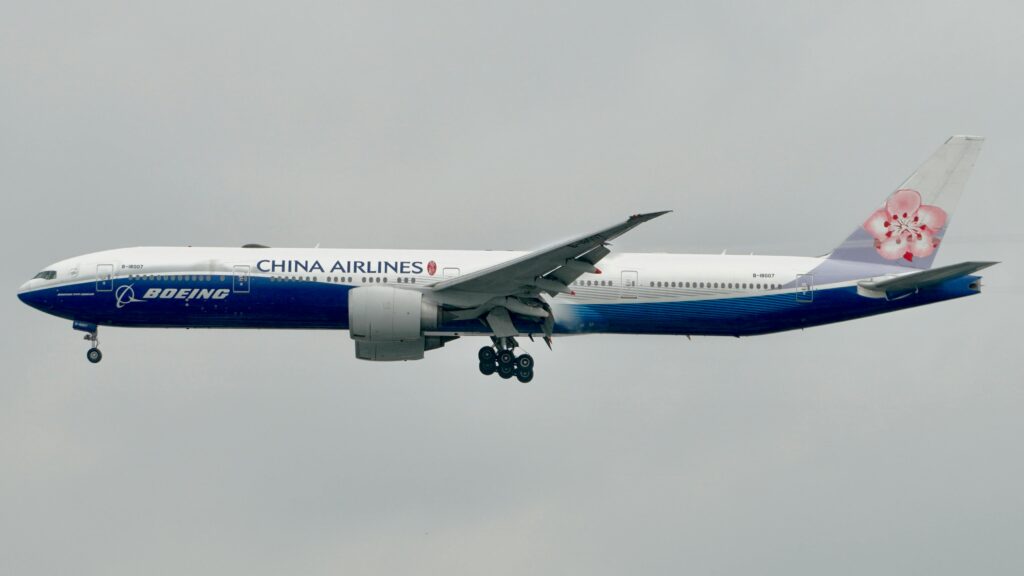
The headline deal: 200 Boeing jets — fewer than expected, but historic
Trump announced in a Fox News interview on Thursday evening that China had agreed to purchase 200 Boeing aircraft — the first major U.S. commercial jet purchase by China in nearly a decade. Boeing CEO Kelly Ortberg and GE Aerospace CEO Larry Culp were among the American executives who accompanied Trump to Beijing.
“One thing he agreed to today, he’s going to order 200 jets… Boeing wanted 150, they got 200. 200 big ones.”
— President Donald Trump, Fox News interview, May 14, 2026
The 200-jet figure was far fewer than the 500-jet deal that industry sources had said was under discussion, and analysts at Jefferies had estimated the order could reach up to 500 aircraft. Boeing shares fell 4.8 percent following the announcement — a counterintuitive reaction that reflected market disappointment at the gap between expectations and the actual figure. It remained unclear whether Trump was referring to single-aisle 737 MAX jets or larger twin-aisle 777X or 787 aircraft used on long-haul routes.
China hasn’t unveiled a major Boeing order since Trump last visited the country in 2017, when Beijing agreed to buy 300 Boeing airplanes. Subsequent trade disputes effectively shut Boeing out of the Chinese market, which it once dominated, as Chinese airlines turned to Airbus. Even at 200 planes, the deal marks a significant reopening of a market that Boeing urgently needs.
200 – Boeing jets ordered by China (vs. 500 expected)
~9 yrs – since China’s last major Boeing purchase
-4.8% – Boeing share price reaction on the day
The diplomatic framework: “constructive strategic stability”
The summit’s centerpiece was a new bilateral framework that Xi and Trump agreed to call a “constructive China-U.S. relationship of strategic stability.” Xi described it as providing “strategic guidance for China-U.S. relations over the next three years and beyond.” In Xi’s formulation, the framework means “positive stability with cooperation as the mainstay, healthy stability with competition within proper limits, constant stability with manageable differences, and lasting stability with expectable peace.”
“A stable bilateral relationship is good for the world. We should be partners, not rivals.”
— President Xi Jinping, Great Hall of the People, May 14, 2026
“We’re going to have a fantastic future together.”
— President Donald Trump, state banquet, May 14, 2026
It was the American and Chinese leaders’ first face-to-face meeting since October, and the first visit to China by a U.S. president since Trump traveled to Beijing in 2017. Trump invited Xi and his wife for a reciprocal visit to the White House on September 24.
Iran: Xi offers to help, pledges no military equipment to Tehran
One of the most strategically significant disclosures of the summit came on the Iran file. Trump told Fox News that Xi had agreed not to send military equipment to Iran during their bilateral meeting — “He said he’s not gonna give military equipment. That’s a big statement,” Trump said.
Xi also offered to help broker a resolution to the Hormuz crisis: “President Xi would like to see a deal made… He did offer, he said ‘if I can be of any help at all, I would like to be of help,'” Trump said. The offer is significant given China’s economic leverage over Tehran: China bought roughly 1.4 million barrels of Iranian oil daily in 2025 and into 2026 — representing over 90 percent of Iran’s total oil exports. Xi’s willingness to apply that leverage, or at least to signal it, gives Washington a potential new channel into Tehran at a moment when direct negotiations remain stalled.
The two leaders also discussed China buying oil from the United States — a proposal that would simultaneously reduce Beijing’s dependence on Iranian crude and provide Washington with an economic incentive to push for a Hormuz resolution.
Trade: “generally balanced and positive outcomes”
Xi told Trump that “China-U.S. economic ties are mutually beneficial and win-win in nature” and that the economic and trade teams had produced “generally balanced and positive outcomes” on the eve of the summit — describing it as “good news for the people of the two countries and the world.” No specific tariff rollback figures were released in Thursday’s readouts, and the White House did not immediately provide details beyond the Boeing announcement. Treasury Secretary Scott Bessent had earlier said he expected the Boeing order announcement, suggesting the commercial aviation deal was the pre-agreed centerpiece of the trade portion of the summit.
Taiwan: Xi’s sharpest warning of the day
Xi had stern words for Trump on Taiwan, warning of potential “clashes and even conflicts” if the issue is not “handled properly,” according to Chinese state media. The warning was the summit’s most pointed moment and reflected Beijing’s consistent position that Taiwan is a non-negotiable red line in the relationship. Secretary of State Marco Rubio confirmed after the meeting that U.S. policy on Taiwan remains unchanged.
Key outcomes at a glance
What was agreed at the Trump-Xi Beijing Summit
✅China orders 200 Boeing jets — first major purchase in nearly a decade
✅”Constructive strategic stability” framework adopted as bilateral guiding principle for 3+ years
✅Xi pledges no military equipment to Iran
✅Xi offers to help broker Hormuz/Iran deal resolution
✅China-U.S. oil trade discussed — China to potentially buy U.S. crude
✅Xi invited to White House for reciprocal visit — September 24
⚠️Taiwan — Xi warns of “clashes and conflicts” if not handled properly; U.S. says policy unchanged
⚠️Boeing order at 200 jets — below the 500 industry sources had anticipated
What comes next
The Beijing summit was the highest-profile diplomatic event of Trump’s second term to date, and its outcomes will reverberate across multiple ongoing crises. Xi’s offer to facilitate an Iran deal introduces a new and potentially decisive variable into the stalled U.S.-Iran negotiations — China’s economic leverage over Tehran is unique, and its willingness to apply that leverage, even subtly, could shift the calculus in ways that direct U.S. pressure alone has not. The Boeing deal, while smaller than expected, reopens a commercial relationship that both sides have strong incentives to expand. And the “constructive strategic stability” framework, if implemented with substance, would represent the most stable footing for the U.S.-China relationship in years.
The Taiwan warning is the summit’s clearest unresolved tension — and a reminder that beneath the cooperative framing, the structural competition between the two powers remains intact.
Related Posts
Federal Reserve Enters New Era as Kevin Warsh Faces Economic and Political Uncertainty
The Federal Reserve is entering a new phase of leadership…

Trump Considers Pressuring UK by Reviewing Support for Falklands Dispute
Photo: Getty The administration of Donald Trump is reportedly considering…

Groundbreaking In-Utero Surgery Corrects Spinal Defect in Unborn Babies
A new medical procedure is offering hope to families by…
